The First Five Minutes as a Lead: Setting Up a Theme Park Team Before the Rush
A team can begin a shift with the right staffing, equipment, and operating plan and still struggle if nobody establishes priorities before the first major rush.
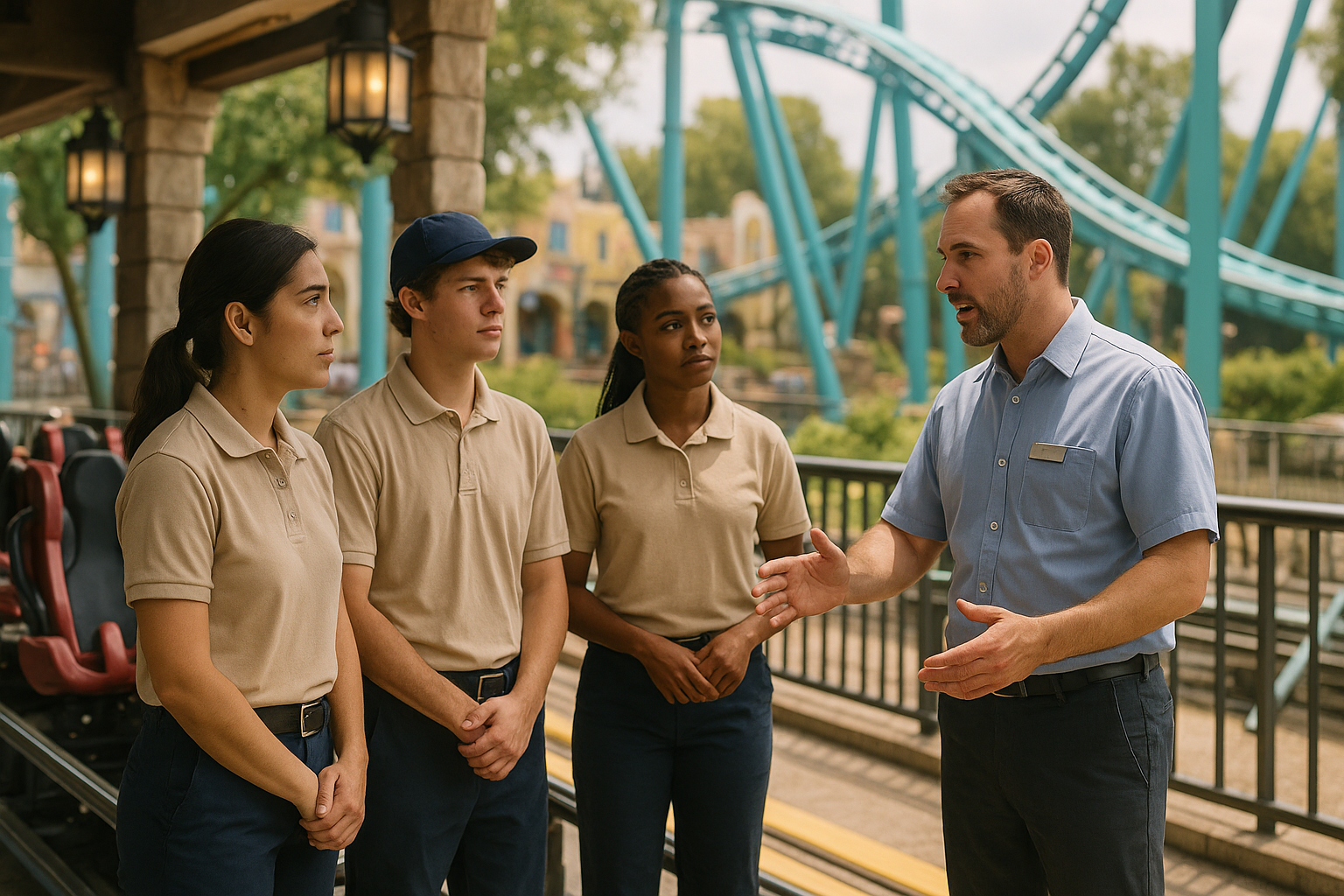
For theme park leads, supervisors, coordinators, and experienced employees asked to guide a team, the opening minutes of a shift are more than a routine check-in. They are an opportunity to reduce confusion, identify risks, and give employees a clear understanding of what matters most. A focused start can influence the entire day, especially when the operation becomes busy.
The best pre-shift setup does not require a long speech. It requires useful information, realistic expectations, and a leader who notices what the team needs before problems become visible to guests.
Why the Start of the Shift Matters
Theme park employees often arrive from different schedules, experience levels, and departments. One person may know the location well, while another may be working their first busy day. Some employees may already understand the day’s event schedule, while others may not know that a parade, school group, private event, or weather concern could change normal traffic patterns.
When the team begins without a shared picture, employees tend to make individual assumptions. They may not know who is covering breaks, which task has priority, where supplies are located, or when to ask for support.
A strong shift opening creates alignment around a few basic questions:
- What does the team need to accomplish?
- What conditions could make the shift more difficult?
- Who is responsible for each important area?
- How should employees communicate when conditions change?
- What does good performance look like today?
This applies across the industry. A food and beverage lead may prepare for a high-volume meal period. An attractions lead may review staffing positions and expected attendance. A retail supervisor may identify a new product launch or a stockroom constraint. A hotel leader may prepare the front desk for a wave of arrivals.
Start With the Operation, Not a Speech
One common mistake is treating the pre-shift meeting like a presentation. Long announcements can cause employees to lose focus, especially if most of the information does not affect their role.
Instead, begin with the conditions that will shape the work. Keep the message brief and organized around what employees need to know immediately.
Cover the essentials first
- Staffing: Who is assigned to each position or area?
- Operational priorities: What must be ready before opening or before the next rush?
- Known challenges: Are there staffing gaps, equipment concerns, supply limitations, or schedule changes?
- Guest impact: Is there anything likely to affect wait times, availability, access, or service?
- Support plan: Who should employees contact when they need help?
The goal is not to predict every possible problem. The goal is to help employees recognize the most important conditions before they step into the operation.
For example, a restaurant team may need to know that a nearby show is expected to end shortly before lunch service reaches its busiest period. A retail team may need to understand that one register is unavailable and that replenishment should happen during quieter windows. An attractions team may need to know that a neighboring location is operating with reduced capacity, which could affect guest flow in the area.
Give New Employees a Clear Place to Begin
New employees can become overwhelmed when a leader gives them a broad instruction such as, “Watch the area and help wherever needed.” The request sounds reasonable, but it leaves too many decisions unanswered.
A better approach is to provide a specific starting point and a clear definition of success.
Instead of saying:
“Help with the queue.”
Try:
“Start near the entrance, make sure guests can see the posted information, and let me know if the line reaches the marked point. I’ll check in with you after the first cycle.”
Specific instructions help new employees build confidence without suggesting that they should work beyond their training. They also give the leader a natural opportunity to follow up.
Experienced employees benefit from clarity as well. A person who has worked the same location for several seasons may understand the normal routine, but they still need to know what is different today.
Assign Ownership Without Creating Silos
Good delegation gives people responsibility while keeping the team connected. Employees should know what they own, but they should also understand how their work affects the rest of the operation.
A strong assignment might sound like this:
- “You are watching the entrance and guest questions.”
- “You are responsible for checking supplies before the next rush.”
- “You are covering this position until the scheduled break rotation begins.”
- “You are our contact for maintenance support if the equipment issue returns.”
After assigning responsibilities, explain when employees should communicate changes. Ownership does not mean someone is expected to solve every problem alone. It means they are the first person watching that area and know when to alert the appropriate leader or support department.
This distinction is especially important during busy periods. Without it, several employees may respond to the same small issue while another important task is left unattended.
Set the Communication Standard Early
Radio and face-to-face communication can determine whether a busy operation stays organized. A pre-shift reminder about communication expectations can prevent unnecessary confusion later.
Keep the guidance practical:
- Use clear locations instead of vague descriptions.
- Share the problem before offering a long explanation.
- State what action has already been taken.
- Identify what support is needed.
- Repeat critical information when confirmation is necessary.
For example, “We need help over here” gives a leader very little to work with. “Guest entrance is reaching the posted queue marker; requesting one additional team member for the next ten minutes” is more useful and easier to act on.
Leaders set the standard by communicating calmly themselves. If the first messages of the day are rushed, unclear, or overly emotional, employees may copy that pattern when the operation becomes stressful.
Build in a Quick Check-In
The first five minutes should not be the only time a leader communicates with the team. A short follow-up after the operation begins can reveal problems that were not visible during the initial briefing.
Check in with employees who are:
- Working a new position
- Handling a high-volume guest area
- Learning a new process
- Working with unfamiliar equipment or coworkers
- Covering an area affected by changing conditions
Ask focused questions rather than simply asking, “Are you okay?” For example:
- “What is slowing you down right now?”
- “Are guests asking the same question repeatedly?”
- “Do you have what you need for the next rush?”
- “Is the assignment clear, or should we adjust it?”
These questions help employees raise concerns before they become service issues. They also show that the leader is paying attention to the actual work, not just the schedule.
Use the Opening Routine to Build Your Leadership Reputation
Employees remember leaders who make the shift easier to understand. They notice who prepares the team, follows up on assignments, communicates changes, and provides support without creating unnecessary drama.
A reliable opening routine can help an employee demonstrate leadership before receiving a formal title. It develops skills in prioritization, delegation, communication, situational awareness, and coaching—abilities that transfer across attractions, food and beverage, entertainment, hospitality, retail, maintenance, and guest services.
The first five minutes will not prevent every challenge. Theme park operations are too dynamic for that. But a clear start gives the team a better foundation for responding when attendance rises, equipment changes, guests need assistance, or the plan has to be adjusted.
Keep the Start Focused and Useful
A successful pre-shift setup does not need to be impressive. It needs to be relevant.
Give employees the information they need, assign clear responsibilities, explain how to request help, and check back once the operation is underway. When leaders do those things consistently, employees can spend less time guessing and more time serving guests, supporting coworkers, and keeping the operation moving.
ThemeParkConnections.com gives people working throughout the theme park and attractions industry a place to connect with other professionals, share experiences, learn about different departments, discover career opportunities, and expand their professional networks. For employees developing leadership skills, it is also a useful place to compare approaches with people who understand the realities of park operations.