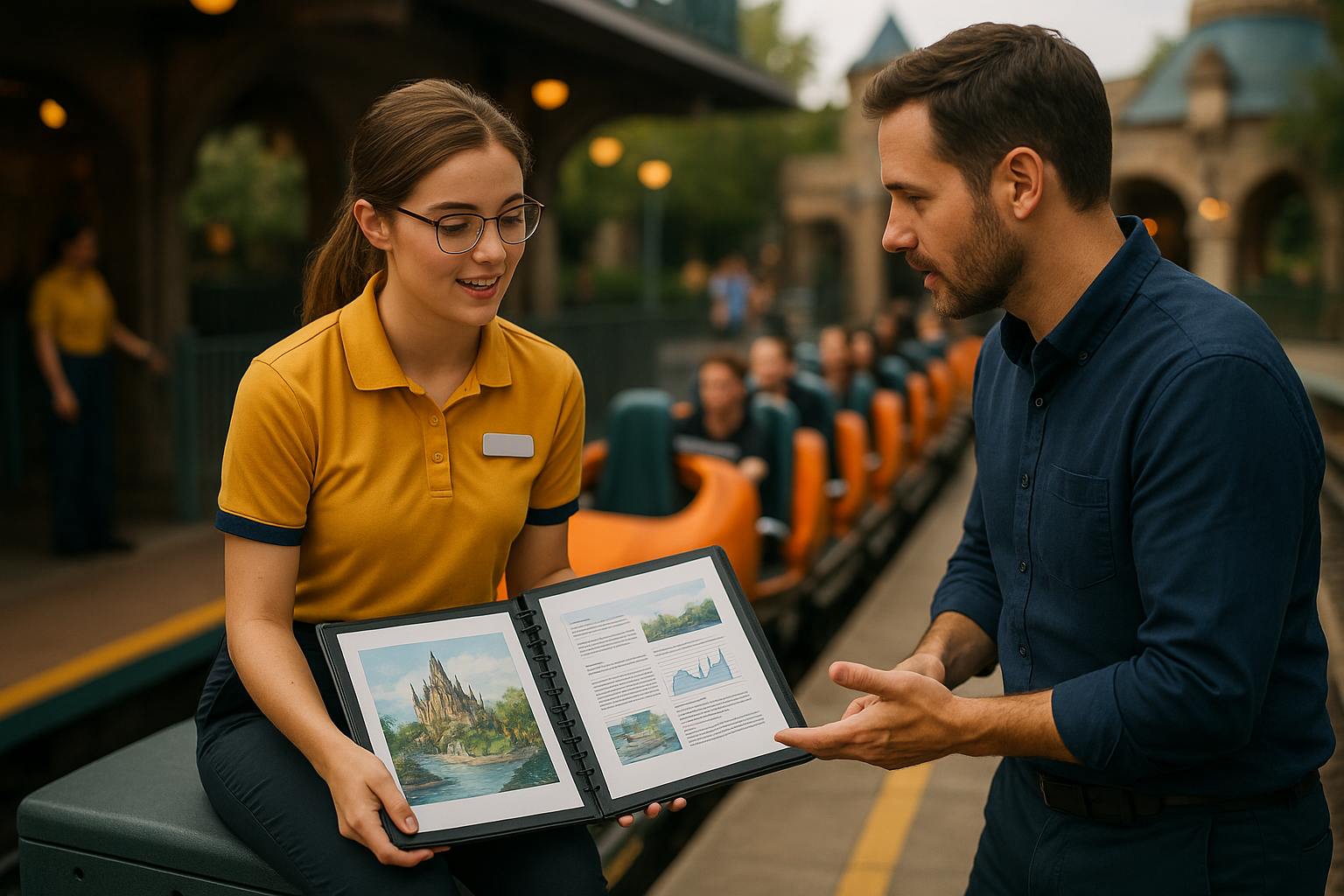
How to Build a Theme Park Career Portfolio That Gets Noticed
For many theme park careers, a resume is only part of the application. Hiring teams for entertainment, attractions, design, technology, marketing, events, and operations often want to see how you think, create, solve problems, and contribute to a guest experience. A focused theme park career portfolio can help employers understand your abilities before you ever speak with them.
You do not need to have worked at Disney, Universal, SeaWorld, Six Flags, or another major attraction to create a strong portfolio. School projects, volunteer work, freelance assignments, personal creations, and customer service experiences can all demonstrate relevant skills when presented thoughtfully.
Choose the Right Type of Theme Park Portfolio
Your portfolio should match the kind of work you want to pursue. A single collection of unrelated projects can make it difficult for employers to see your direction. Start by identifying the roles that interest you and select work that reflects those responsibilities.
- Entertainment: Include performance clips, character work, choreography, event concepts, costumes, scripts, or show-related projects.
- Design and creative development: Feature concept art, storyboards, scenic designs, guest journey maps, model-making, or themed environment projects.
- Technology: Show software projects, interactive experiences, technical diagrams, data dashboards, automation examples, or documentation.
- Marketing and communications: Include campaign concepts, social media content, photography, video, copywriting, or audience research.
- Operations and guest experience: Present process improvements, training materials, event plans, service recovery examples, or projects demonstrating organization and problem-solving.
If you are exploring several career paths, create a core portfolio and organize it into clearly labeled sections. That allows you to adapt the emphasis for different theme park jobs without rebuilding everything from scratch.
Build Each Project Around a Story
Do not simply upload an image, video, or document and expect the work to explain itself. Every portfolio piece should answer four basic questions: What was the project? What was your role? What challenge did you address? What was the result or lesson?
A useful project format
- Project: Give the work a clear, specific title.
- Context: Explain whether it was completed for school, work, a client, a volunteer organization, or personal development.
- Your contribution: Describe exactly what you handled, especially if the project involved a team.
- Process: Show how you researched, planned, tested, revised, or solved problems.
- Outcome: Share the finished result, feedback received, or what you learned.
For example, instead of labeling a project “Event Design,” explain that you developed a family activity concept for a community festival, created the guest flow, coordinated volunteer assignments, and revised the plan after identifying a potential crowding issue. That description demonstrates skills relevant to attractions operations and guest experience.
Show Skills That Matter in Attractions Careers
Theme park work is highly collaborative and guest-focused. A portfolio should show more than technical ability or artistic talent. It should also reveal how you work with others and consider the complete guest experience.
Look for opportunities to demonstrate skills such as safety awareness, accessibility, storytelling, communication, organization, attention to detail, adaptability, and cross-functional collaboration. A design project can explain how you considered sightlines and accessibility. A marketing project can show how you adjusted messaging for different audiences. An operations project can highlight how you balanced efficiency with hospitality.
These details help connect your past experience to the realities of working in an attractions environment, even if your previous job was outside the theme park industry.
Use Realistic Personal Projects If You Lack Experience
Entry-level candidates often assume they need professional theme park experience before creating a portfolio. They do not. A well-designed personal project can demonstrate initiative and give you a way to practice industry-relevant skills.
You might create a fictional queue entertainment concept, develop a guest communication plan for a seasonal event, design a small themed retail display, or document a process improvement idea based on a past customer service job. Be clear that the project is self-directed. The goal is not to pretend it was commissioned by an employer; the goal is to show how you approach real attractions challenges.
Students can also include class assignments, student productions, campus events, internships, club leadership, and volunteer work. Focus on the decisions you made and the skills you applied rather than relying on the name of the organization.
Make Your Portfolio Easy to Review
Hiring professionals may review many applications, so usability matters. Choose a simple format that loads quickly and works on both desktop and mobile devices. A personal website, organized PDF, or professional platform can all work if the content is easy to navigate.
- Place your strongest and most relevant project first.
- Use descriptive file names instead of labels such as “final2” or “projectnew.”
- Keep videos short and make sure links work.
- Compress large files without making images difficult to view.
- Include captions or written explanations for visual and video content.
- Remove confidential information, private guest details, and work you do not have permission to share.
A portfolio does not need to be elaborate. Clear organization and thoughtful explanations are usually more valuable than excessive animations or complicated graphics.
Refresh It as Your Career Develops
Treat your portfolio as an evolving career tool, not a one-time assignment. After completing a project, save the final materials, write down your contribution, and record any feedback while the experience is fresh. Review the portfolio before applying for theme park jobs and remove pieces that no longer represent your goals.
You can also ask instructors, coworkers, mentors, or attractions professionals for feedback. Instead of asking whether they “like” the portfolio, ask specific questions: Is my target role clear? Do these projects show guest-focused thinking? Is it obvious what I personally contributed?
Connect Your Portfolio to Industry Relationships
A strong portfolio can open more than application opportunities. It gives you something specific to discuss when networking with theme park professionals. You can ask someone in entertainment, attractions operations, technology, or marketing for feedback on a project and use their advice to improve your work.
ThemeParkConnections.com helps aspiring and experienced attractions professionals connect, share career experiences, explore different roles, and build relationships across the industry. Join the community to meet people who can offer perspective on your portfolio and help you better understand the career paths you are pursuing.
When your portfolio clearly shows what you can do, how you think, and why your work supports memorable guest experiences, it becomes a practical tool for getting hired and building a long-term theme park career.