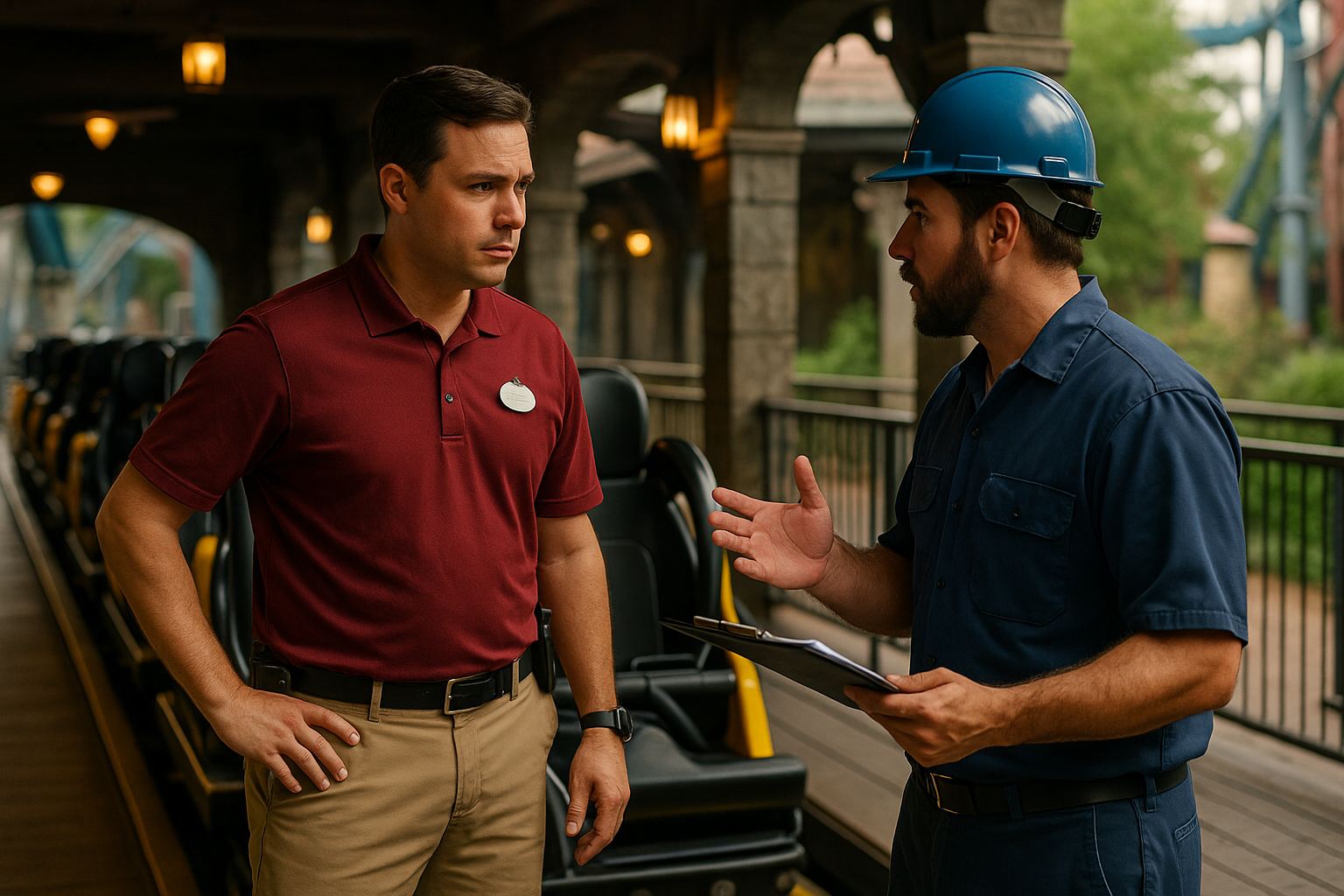
When an Attraction Goes Down: Building Better Shift Handoffs Between Operations and Maintenance
Attraction downtime is part of operating a theme park. A ride may stop because of a sensor fault, an unusual sound, a guest concern, a weather condition, or a problem that requires inspection before reopening. The technical issue matters, but so does what happens afterward: how clearly the situation is communicated to the next team.
A strong shift handoff can help maintenance technicians understand what happened, help operations employees manage guest expectations, and reduce the chance that important details disappear between departments. A weak handoff can lead to repeated troubleshooting, conflicting information, and unnecessary frustration for both employees and guests.
For anyone working in attractions, maintenance, leadership, or dispatch, learning to give and receive useful handoffs is a valuable operational skill.
Why Attraction Downtime Handoffs Matter
When an attraction stops operating, several groups may become involved. Operations employees may be responsible for securing the area and communicating with guests. Maintenance may inspect equipment or investigate a fault. Leadership may coordinate staffing, queue decisions, or guest recovery. Guest Services may need accurate information if guests ask about delays or accessibility concerns.
Each group sees a different part of the event. The operations team may know exactly when the attraction stopped and what guests or employees observed. Maintenance may understand the technical condition but not the sequence of events leading up to the shutdown. A good handoff connects those pieces.
The goal is not to assign blame or create a lengthy report during a busy shift. The goal is to provide accurate, relevant information that helps the next person make a sound decision.
What a Useful Handoff Should Include
A helpful handoff answers the basic questions without forcing the receiving employee to reconstruct the situation from scattered details.
1. What happened?
Begin with a clear description of the event. Avoid vague statements such as “the ride just stopped” when more specific information is available.
Useful details might include:
- Whether the attraction stopped during dispatch, while vehicles were moving, or at a station
- Whether the stop was initiated by the system, an employee, or a guest concern
- Whether the issue occurred once or multiple times
- Whether the attraction had recently reopened from another interruption
The first explanation does not need to be a diagnosis. “The attraction stopped during the final portion of the cycle” is more useful than guessing, “It probably lost power.”
2. When did it happen?
Timing helps maintenance and leadership connect the event to other information. Include the approximate time of the stop, how long the attraction had been operating beforehand, and whether anything changed immediately before the issue occurred.
For example, an operations employee might explain that the attraction completed several cycles normally, then stopped shortly after dispatching a particular vehicle. That does not prove a cause, but it gives the next team a clearer starting point for investigation.
3. What did employees observe?
Observations are valuable when they are stated objectively. Describe what was seen, heard, or communicated rather than adding assumptions.
Examples include:
- An unusual noise heard from a specific area
- A warning indicator observed on an operating panel
- A vehicle that appeared to stop in an unexpected location
- A guest reporting a smell, sound, movement, or discomfort
- A repeated message or error displayed by the system
“There was a loud sound near the loading area” is an observation. “The drive system is failing” is a conclusion that may not be supported by the person giving the handoff.
4. What actions have already been taken?
The next team should know what has already happened so work is not duplicated and no step is overlooked. Explain whether the attraction was placed out of service, whether guests were assisted, whether a reset or other authorized action was attempted, and whether a supervisor or technician has already been contacted.
Only describe actions you personally observed or completed. If you are unsure whether something occurred, say so. Guessing creates confusion and can make the handoff less reliable.
5. What remains unresolved?
A handoff should make clear what is still unknown. The attraction may be waiting for inspection, the source of the issue may not yet be identified, or the team may be waiting for a decision from leadership.
Stating what has not been determined prevents premature assumptions. It also gives the next team a realistic understanding of the situation rather than suggesting that the problem is already solved.
Common Handoff Mistakes During Downtime
Relying on memory alone
Downtime can involve radio calls, guest questions, multiple employees, and changing conditions. Important details are easy to forget. Use the communication tools and documentation methods provided by your employer, and make notes as soon as practical.
Using emotional or judgmental language
Statements such as “the operator panicked” or “maintenance took forever” do not help the next team respond. They may also damage working relationships. Focus on the sequence of events, observable conditions, and actions taken.
Leaving out changes in conditions
A situation may change while a team is waiting. A warning may clear, a guest may report a new concern, or weather conditions may shift. If the status changes, update the appropriate people rather than assuming the original message is still accurate.
Assuming everyone has the same information
Employees often believe that someone else already explained the situation. That assumption can create gaps between operations, maintenance, leadership, and guest-facing teams. When in doubt, confirm who has been notified and what information they received.
Making Handoffs Easier During Busy Periods
Peak attendance, special events, and long queues can make detailed communication more difficult. A practical approach is to organize the handoff around five short points:
- Event: What happened?
- Time: When did it happen?
- Observation: What was seen or heard?
- Action: What has already been done?
- Status: What is still needed?
This structure is simple enough to use during a busy shift while still providing useful context. It can also help employees communicate clearly over a radio or during an in-person briefing, depending on local procedures.
When giving a verbal handoff, speak at a steady pace and avoid unnecessary speculation. When receiving one, repeat back critical information if clarification is needed. A brief confirmation can prevent a major misunderstanding.
Handoffs Are Also a Career Skill
Employees who communicate well during operational interruptions often become trusted resources for their teams. Clear handoffs demonstrate attention to detail, calm judgment, accountability, and respect for other departments.
These skills apply beyond attraction downtime. They are useful during opening procedures, weather responses, staffing changes, equipment inspections, guest incidents, and end-of-shift transitions. Employees who consistently provide accurate information are often better prepared for trainer, coordinator, lead, and supervisory responsibilities.
Strong communication does not mean having every answer. It means knowing what you observed, separating facts from assumptions, identifying what has been done, and making sure the next person understands what remains unresolved.
Build Connections Across the Attractions Industry
Many of the best operational lessons are learned by comparing experiences with people who work in different departments and venues. An attractions employee may gain useful insight from a maintenance technician, while a new leader may learn from someone who has managed downtime during a major seasonal event.
ThemeParkConnections.com gives professionals throughout the theme park and attractions industry a place to connect with one another, share experiences, learn about different departments, expand their professional networks, and discover career opportunities. Those connections can help employees understand how their work affects the larger operation—and continue building the communication skills that keep attractions running safely and efficiently.