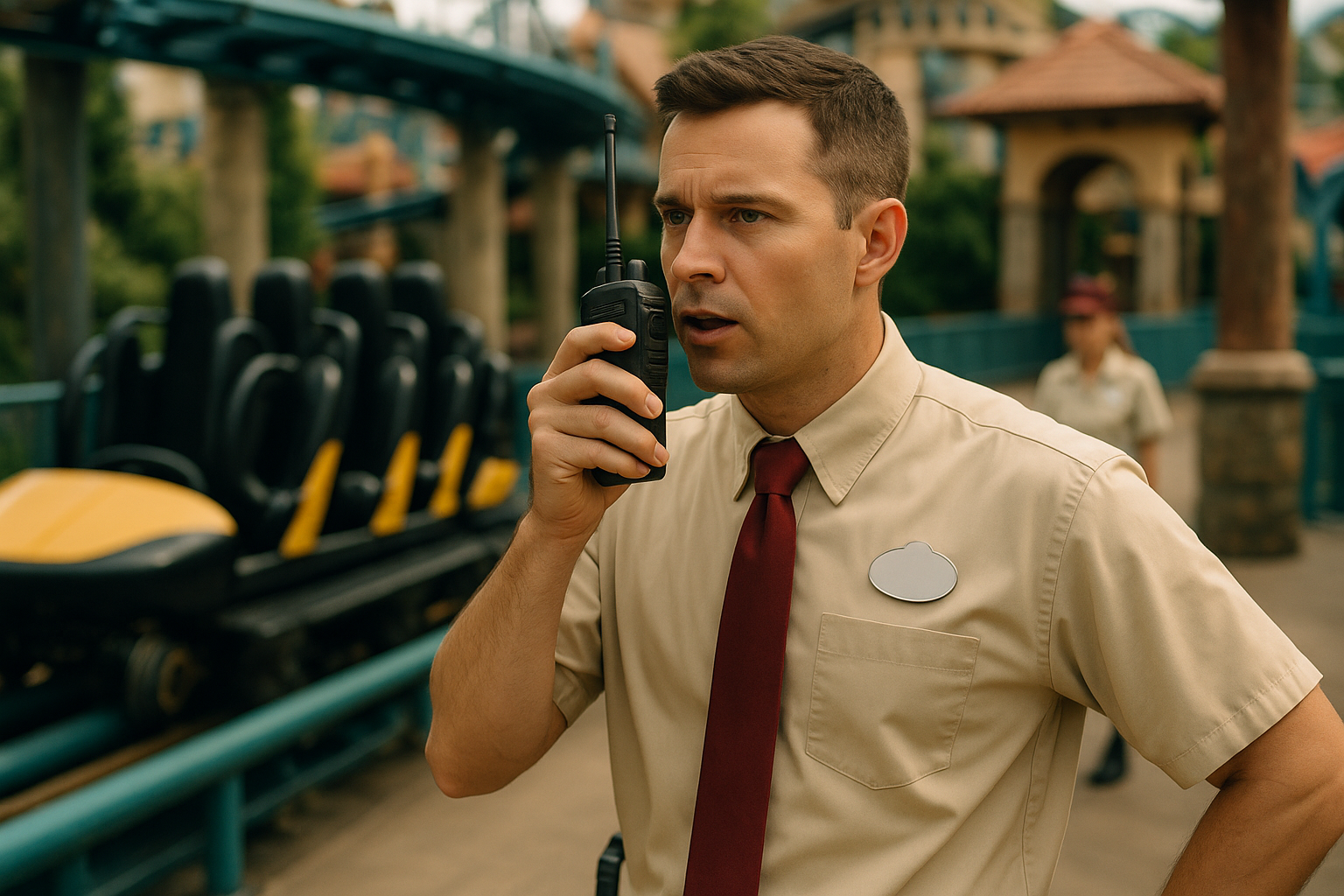
The Handoff That Keeps a Ride Downtime Response Moving
When an attraction goes down, guests usually see a closed entrance, a stopped vehicle, or an employee explaining that the experience is temporarily unavailable. Behind that moment, several departments may be working at once: ride operations, maintenance, guest services, crowd control, communications, and sometimes leadership.
The quality of the response often depends less on how quickly one person reacts and more on how clearly information moves between teams. A strong downtime handoff helps employees make better decisions, prevents conflicting messages, and allows the attraction to reopen—or remain closed—based on accurate information.
Why Ride Downtime Communication Matters
Attraction downtime creates uncertainty. Operations employees may know that the ride has stopped but not yet know why. Maintenance may be investigating a technical issue while guest services is receiving questions about refunds, accessibility, or return options. Leaders may need an update before they can decide how to redeploy employees or adjust the surrounding operation.
Without a clear handoff, small gaps can quickly become larger problems. One team may tell guests the attraction will reopen soon while another knows that troubleshooting has just begun. Employees may repeat outdated information because no one has clearly identified who is responsible for the next update.
Good communication does not require employees to predict the future. It requires them to share what is known, identify what is still being investigated, and make clear when the information may change.
What a Useful Downtime Handoff Includes
A downtime update should be concise enough to communicate quickly but complete enough for the receiving employee or department to act on it. The exact process varies by employer, but most useful handoffs address several basic points.
- What happened: Describe the observable issue without guessing at the cause.
- When it happened: Include the approximate time and whether the attraction was loading, dispatching, operating, or unloading.
- Where guests are located: Note whether guests are in the queue, at the loading platform, inside a theater, on a vehicle, or elsewhere in the attraction.
- What action has already been taken: Explain whether operations paused dispatches, stopped admitting guests, contacted maintenance, or moved guests to another location.
- Who has been contacted: Identify the department or role currently responding.
- What is still unknown: Be direct about whether there is an estimated reopening time, an active investigation, or no timeline yet.
- When the next update is expected: A scheduled check-in prevents employees from relying on old information.
For example, “The attraction is down” is rarely enough. A more useful update might be: “The ride stopped during normal operation at approximately 2:15 p.m. Guests are being assisted from the unloading area, maintenance has been contacted, and there is no reopening estimate at this time. Operations will provide another update after the initial inspection.”
Separate Facts From Assumptions
One of the most common communication mistakes during downtime is turning a guess into an announcement. Employees may hear a sound, notice a warning indicator, or observe a guest evacuation and assume they know the cause. Sharing that assumption as fact can create confusion and may lead to inappropriate guest messaging.
Use language that reflects the information available:
- “The attraction stopped during the cycle” is better than “The ride broke because of the sensor.”
- “Maintenance is evaluating the issue” is better than “It will be open in ten minutes.”
- “We do not have a reopening estimate yet” is better than offering a timeline based on hope.
This distinction is especially important when information crosses departments. A guest services employee does not need a technical theory to assist guests. A retail or food and beverage employee helping redirect traffic may only need to know that a nearby walkway is being used for guest movement. Sharing only verified information keeps everyone aligned.
Assign One Clear Communication Path
Downtime becomes harder to manage when every employee tries to provide updates independently. A strong response identifies who is responsible for communicating with each audience.
Internal communication
Operations may communicate with maintenance and leadership through the approved radio or reporting process. The important point is that employees know where updates originate and which person or role is responsible for relaying them.
Guest communication
The employee speaking directly with guests should receive an approved, current message. That message can explain that the attraction is temporarily unavailable, that the appropriate team is responding, and that additional options may be available depending on the circumstances.
Surrounding-area communication
Nearby departments may need practical information rather than technical details. They might need to know whether to expect increased foot traffic, whether a queue entrance is closed, or whether guests are being directed toward another location.
One clear communication path reduces the risk of multiple employees giving different answers. It also makes it easier to correct outdated information when the situation changes.
Make the Handoff Two-Way
A handoff is not complete when one employee sends an update. The receiving person should confirm that the message was understood and clarify anything needed to continue the response.
A simple read-back can help:
“To confirm, the attraction is closed, maintenance is investigating, there is no estimated reopening time, and we will receive another update after the inspection.”
This may feel unnecessary during a routine shift, but it becomes valuable when radios are busy, multiple attractions are experiencing issues, or employees are working in noisy environments. A read-back can identify misunderstandings before they reach guests.
Update the Message When Conditions Change
Downtime information has a short shelf life. A message that was accurate twenty minutes ago may no longer be accurate after maintenance arrives, guests are relocated, or leadership changes the operating plan.
Employees should avoid repeating an old statement simply because it is the last one they heard. Instead, ask:
- Has the status changed?
- Has the guest impact changed?
- Is there now an estimated reopening time?
- Are guests being offered different options?
- Does another department need to be notified?
If there is no new information, saying so is still useful. “The status is unchanged; the attraction remains closed and there is still no reopening estimate” gives other teams a current reference point.
Practice Calm, Consistent Guest Language
Guests may be disappointed, especially if they have waited in line or planned their day around one attraction. Employees do not need to overexplain or become defensive. A calm, consistent message usually works best.
A professional explanation can include three parts:
- Acknowledge the interruption.
- Explain that the attraction is temporarily unavailable and being evaluated.
- Share the next available step without promising an outcome that has not been confirmed.
Employees should also avoid criticizing another department, speculating about the cause, or blaming guests for the delay. Even casual comments can be repeated and create a perception that teams are not working together.
Build Downtime Communication Skills for Your Career
Employees who communicate well during operational disruptions become valuable beyond their immediate position. They demonstrate situational awareness, judgment, accountability, and the ability to work across departments.
To strengthen these skills, practice:
- Summarizing complicated situations in one or two accurate sentences.
- Using specific times and locations instead of vague descriptions.
- Separating confirmed facts from personal observations.
- Confirming that the receiving employee understood the message.
- Following up when promised, even if there is no new information.
- Documenting important details according to department expectations.
These habits apply far beyond ride downtime. They are useful during weather interruptions, guest incidents, special events, equipment issues, parade route changes, and unexpected staffing challenges.
Connections Make Stronger Operations Possible
Theme park work depends on relationships between departments. A ride operator who understands the needs of guest services, a maintenance technician who communicates clearly with operations, and a leader who keeps surrounding teams informed all contribute to a smoother workplace.
ThemeParkConnections.com gives professionals throughout the theme park and attractions industry a place to connect with other industry employees, share experiences, learn about different departments, discover career opportunities, and expand their professional networks. Those connections can offer new perspectives on the operational challenges that employees face every day.
When an attraction goes down, the technical issue may not be within every employee’s control. The quality of the communication is. Clear handoffs help teams respond with confidence, protect the guest experience, and keep the operation moving toward the next decision.