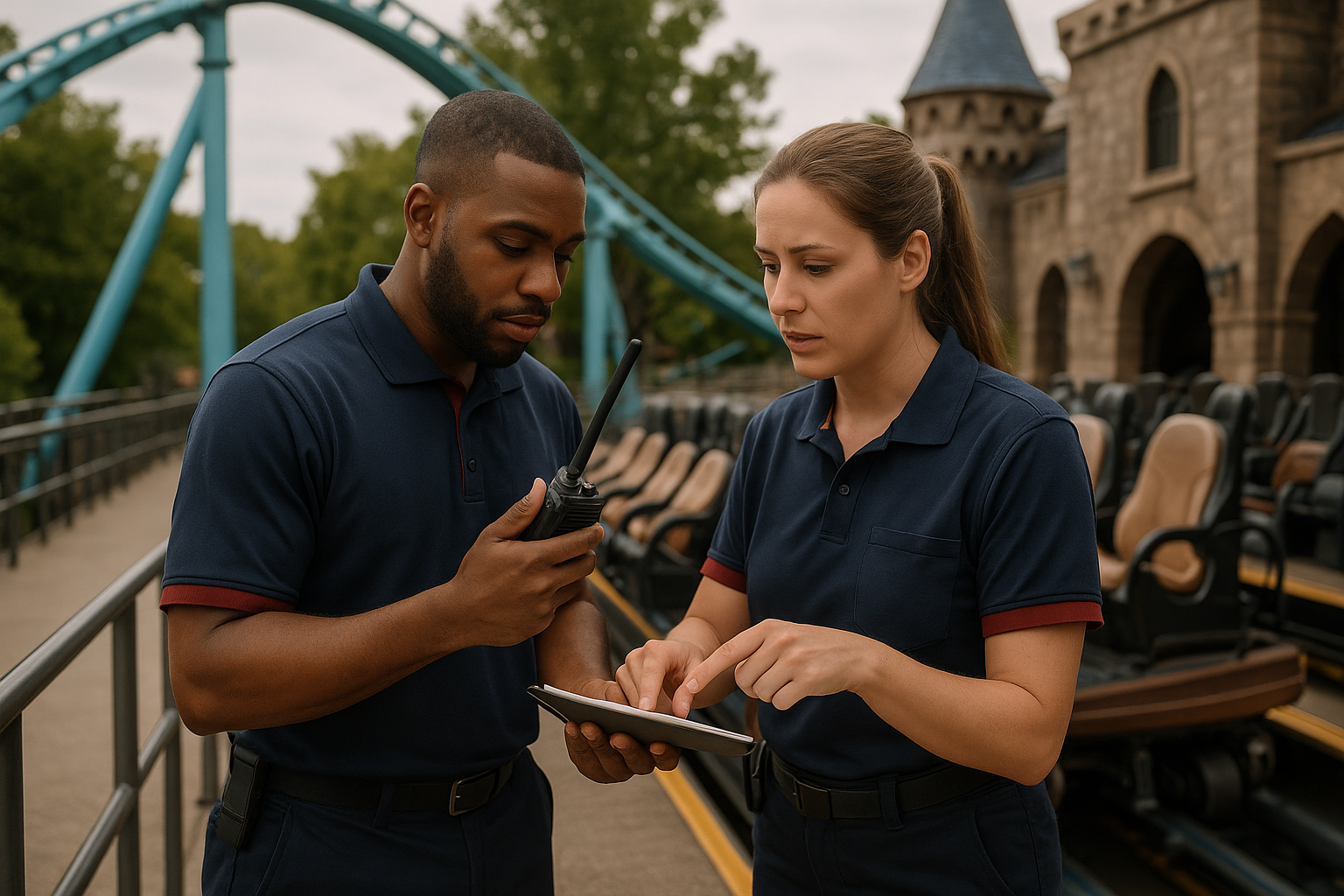
The Shift Handoff Is More Than a Quick Update: Building Better Continuity Across Theme Park Operations
A shift handoff can look simple from the outside. One employee clocks out, another clocks in, and a few notes or radio messages pass between them. Inside a theme park, however, that transition can influence safety, guest service, efficiency, and the rest of the day’s operation.
A missed detail during a handoff can lead to repeated work, delayed responses, frustrated guests, or confusion between departments. A strong handoff gives the incoming team a clear picture of what has happened, what still needs attention, and what conditions may affect the next part of the shift.
This applies far beyond attractions. Food and beverage, entertainment, retail, housekeeping, maintenance, guest services, and resort operations all depend on accurate information moving from one team to the next.
Why Shift Handoffs Matter in Theme Parks
Theme park operations are built around changing conditions. A queue may grow quickly, weather may affect an outdoor show, a delivery may arrive late, or a piece of equipment may require additional monitoring. The incoming team needs more than a general statement such as “It was busy” or “Everything is fine.”
A useful handoff answers several practical questions:
- What happened during the previous shift?
- What issues are still unresolved?
- Which guests, work areas, or assets need follow-up?
- What temporary adjustments are currently in place?
- Who has already been contacted?
- What should the incoming employee watch for next?
Good handoffs reduce the amount of time employees spend reconstructing events. They also help prevent the common problem of multiple people responding to the same issue while another important task is overlooked.
The Information Every Handoff Should Include
The exact process varies by department, but most effective handoffs contain the same basic elements. Think of the conversation as a short operational briefing rather than a casual status update.
1. Current conditions
Start with what is happening now. This might include a long queue, a reduced menu, a delayed performance, a crowded stockroom, a room requiring additional attention, or an area affected by weather.
Use specific descriptions whenever possible. “The line is heavy” is less useful than “The queue has been consistently full since the last parade and is moving more slowly than usual because one position has been unavailable.”
2. Actions already taken
Explain what has already been done so the incoming team does not repeat the same steps. If a supervisor was notified, a maintenance request was submitted, a guest was offered a recovery option, or a product was moved to a different location, include that information.
This is especially important when several departments may become involved. A clear record of previous actions helps the next employee understand the situation without making assumptions.
3. Outstanding tasks
Be direct about what remains unfinished. If a checklist is incomplete, a follow-up call is expected, or an item needs to be rechecked after a certain condition changes, identify it clearly.
Whenever possible, assign responsibility. “Someone should check the storage area later” creates uncertainty. “Please check the storage area before the next delivery and let the lead know if the access path is still blocked” gives the incoming employee a workable next step.
4. Time-sensitive information
Some details matter only if they are acted on quickly. A scheduled delivery, upcoming performance, anticipated crowd increase, weather concern, equipment observation, or guest callback should be identified as time-sensitive.
If there is a deadline, state it. Employees should not have to guess whether an issue can wait until later in the shift.
Common Handoff Mistakes
Most poor handoffs are not caused by a lack of effort. They happen because employees are tired, busy, interrupted, or unsure which information matters. Recognizing the most common problems can make the process more reliable.
Relying on memory alone
Even experienced employees can forget details during a long or demanding shift. A short written note, approved log, checklist, or department communication tool can support the verbal handoff. Written information should follow the department’s established process and should never replace required reporting.
Using vague language
Words such as “soon,” “a lot,” “probably,” and “still kind of broken” leave too much room for interpretation. Replace vague statements with observable facts. Describe what happened, when it happened, and what the next employee should do.
Only discussing problems
A handoff should not become a list of everything that went wrong. Positive information can matter too. If a new setup worked well, a guest concern was resolved, or a particular workflow helped the team handle demand, share that context. The incoming team may be able to continue what is working.
Passing along opinions as facts
There is a difference between reporting an observation and speculating about a cause. “The refrigeration unit has been cycling unusually often” is an observation. “The unit is definitely failing because it is overloaded” may be an assumption.
Separating facts from interpretations helps maintenance, leadership, and other departments respond appropriately.
Having the conversation in a distracting location
A handoff conducted beside a loud attraction, crowded service counter, or busy backstage corridor can result in missed information. When possible, move to an appropriate location, reduce interruptions, and confirm important details before the outgoing employee leaves.
Making Handoffs Work During Busy Periods
Peak attendance, special events, holidays, and weather disruptions can make a full handoff difficult. That is when structure becomes even more valuable.
Use a priority order:
- Safety or security concerns
- Active guest-impacting issues
- Operational changes
- Outstanding tasks and follow-ups
- Useful background information
If there is only a minute available, begin with the information that could affect immediate decisions. Additional details can be documented or discussed when the operation allows.
Employees should also avoid assuming that a handoff has occurred simply because they were standing near one another. Make the transition explicit. A quick confirmation such as “Can you repeat back the two items that need follow-up?” can prevent misunderstandings without turning the exchange into a formal meeting.
Handoffs Are a Professional Skill
Employees who communicate well during shift transitions often become valuable resources to their departments. Accurate handoffs demonstrate organization, judgment, awareness of the larger operation, and respect for the team that follows.
These skills are useful when pursuing roles such as trainer, lead, coordinator, supervisor, event operations specialist, or department administrator. They also transfer across divisions. A strong handoff in retail may look different from one in maintenance, but both require the ability to identify priorities, communicate clearly, and think beyond one individual shift.
The goal is not to make every handoff long. The goal is to make it useful. A concise, organized transition can protect the operation just as effectively as a lengthy conversation filled with unnecessary detail.
Building a Culture of Continuity
When teams treat handoffs as part of the work rather than an interruption before clocking out, departments become more consistent. Employees know what information to share, incoming teams feel better prepared, and unresolved issues are less likely to disappear between shifts.
That culture starts with everyday habits: documenting accurately, speaking in specifics, confirming priorities, and recognizing that the next employee should not have to start from zero.
ThemeParkConnections.com gives professionals across the attractions industry a place to connect with other industry employees, share experiences, learn about different departments, expand their professional networks, and discover career opportunities. Conversations about practical skills such as communication and shift continuity can help employees understand how their daily responsibilities connect to the wider theme park operation.