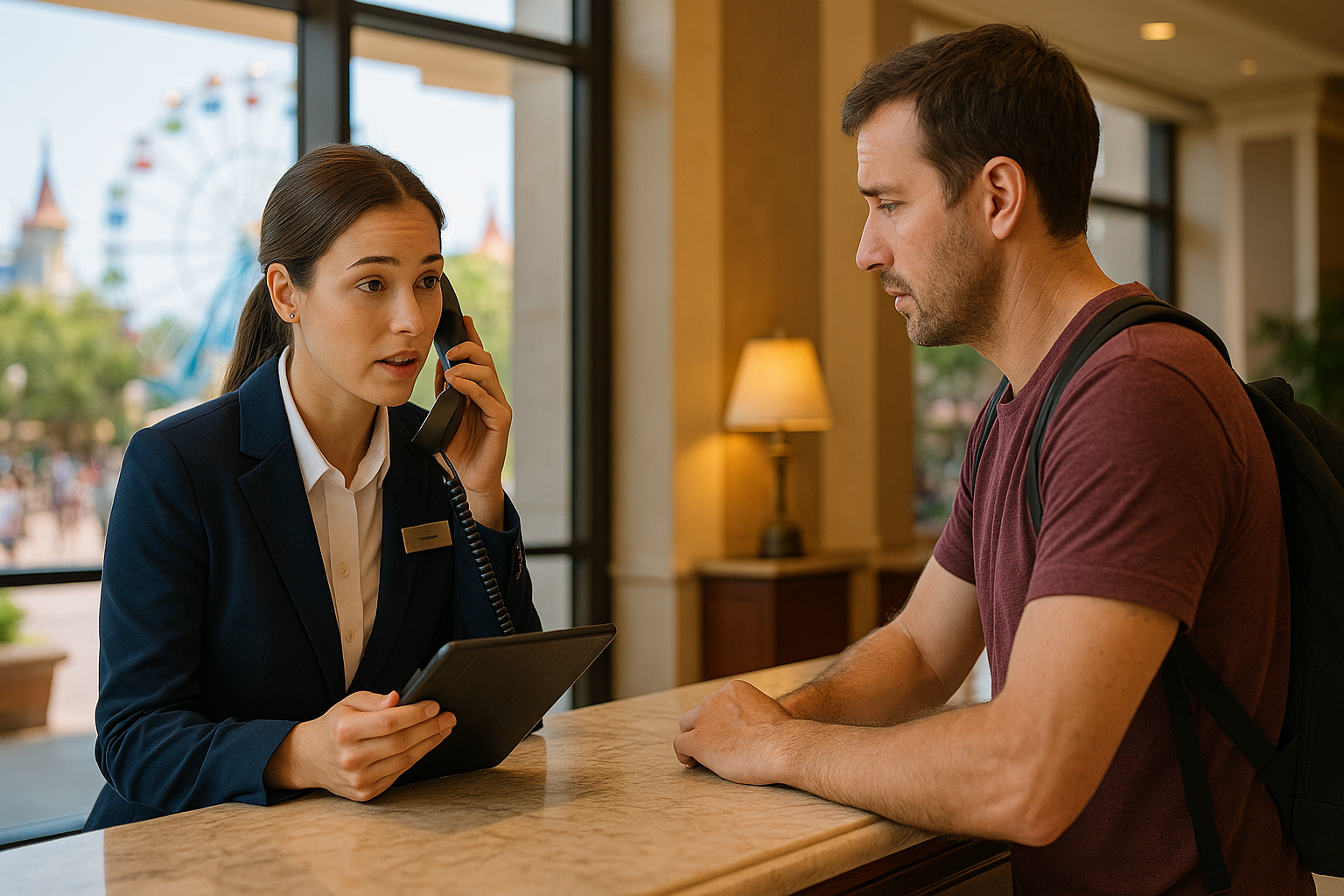
When a Resort Room Isn’t Ready: Coordinating Late Check-Ins Without Losing the Guest
At a theme park resort, a delayed room can create problems far beyond housekeeping. A guest may have spent the day in the park, traveled for hours, or arrived with tired children, only to learn that their room is not ready at the expected time. The front desk must explain the situation, housekeeping must provide an accurate update, and other departments may need to help the guest while they wait.
Handling a late check-in well requires more than apologizing. It depends on clear communication, realistic time estimates, accurate room-status information, and teamwork between resort departments. For employees in hospitality, learning how these pieces fit together can build valuable skills in guest recovery, prioritization, and operational communication.
Why Room Readiness Is a Team Issue
A room may be unavailable for several reasons. Housekeeping may still be cleaning it, maintenance may need to resolve a repair, a previous guest may have checked out late, or the room may require an additional inspection before it can be released.
From the guest’s perspective, the reason may matter less than the result: they cannot access the space they paid for and expected to use. That is why late check-ins often become a front desk problem even when the original delay began elsewhere.
The strongest resort teams avoid treating the issue as a disagreement between departments. Front desk employees need accurate information from housekeeping and maintenance, while those departments need the front desk to communicate guest needs clearly and respectfully. The shared goal is to release a clean, safe, guest-ready room as efficiently as possible without creating additional errors.
Start With Accurate Information
The most damaging phrase during a delayed check-in is often an overly confident estimate. Telling a guest that their room will be ready “in five minutes” when no employee has confirmed that timeline can create more frustration than giving a longer but realistic update.
Before speaking with the guest, verify the room’s actual status. Depending on the resort’s communication systems, this may involve checking the room-status platform, contacting a housekeeping coordinator, or confirming whether maintenance has completed its work.
Useful questions include:
- Has cleaning started, or is the room still waiting for service?
- Is housekeeping waiting for a repair or inspection?
- Has the room been cleaned but not yet released in the system?
- Is there a confirmed estimated completion time?
- Does the room require any special preparation?
Employees should avoid guessing when the information is unclear. A guest can usually accept that a team is still confirming the timing. They are less likely to accept receiving several inaccurate updates.
Prioritizing Without Creating Confusion
Resorts often have many rooms being prepared at the same time. During busy arrival periods, employees may need to identify which rooms require immediate attention while still following established operating procedures.
Priority may be influenced by factors such as:
- Guests with accessibility needs
- Families traveling with young children
- Guests who have been waiting for an extended period
- Rooms delayed by a maintenance issue that has already been resolved
- Special circumstances communicated through the reservation or front desk team
Prioritization should never mean skipping required cleaning, inspection, or safety steps. It means communicating the guest’s circumstances clearly so the appropriate team can make an informed operational decision.
A vague message such as “Room 418 is urgent” does not give another department enough context. A more useful handoff might identify the room, the guest’s situation, the current status, and what information the guest has already received. Clear details reduce duplicated calls and prevent different employees from giving conflicting answers.
What the Front Desk Should Tell the Guest
Guests do not need a long internal explanation, but they do need an honest and useful update. A strong conversation usually includes four elements:
- Acknowledge the inconvenience. Recognize that the delay affects the guest’s plans.
- Explain the current status. Share only information that has been confirmed.
- Provide the next update point. If there is no reliable completion time, give the guest a specific time when someone will check back.
- Offer available options. This may include luggage assistance, access to approved resort facilities, directions to another location, or contact information for follow-up.
For example, an employee might say that the room is still being prepared and that housekeeping has been contacted for an updated status. Instead of promising immediate access, the employee can commit to checking again at a specific time and explaining what support is available while the guest waits.
This approach is more effective than blaming another department. Statements such as “housekeeping is behind” or “maintenance caused the problem” may be technically accurate, but they do not help the guest and can damage trust in the resort team.
Keeping the Handoff Moving
Late check-ins often become difficult when information stops moving between departments. A front desk employee may call housekeeping once, receive no answer, and then leave the guest without an update. A supervisor may assume someone else is monitoring the room. A maintenance request may be completed, but the room status may not be updated promptly.
Good handoffs have ownership attached to them. Someone should know:
- Who is monitoring the room
- Which department is taking the next action
- When the next update is due
- How the guest will be contacted
- What should happen if the estimate changes
Written notes, approved messaging systems, radios, phones, and in-person communication may all be part of a resort’s workflow. The specific tool matters less than the quality of the information being passed along. Messages should be brief, factual, and complete enough for the next employee to act without starting the investigation over again.
Handling an Escalated Guest
A guest who has already waited may be frustrated, tired, or upset. Employees do not need to accept disrespectful behavior, but they should avoid responding defensively. Arguing about whether the delay is reasonable usually makes the interaction worse.
Instead, focus on what can be done next. Listen without interrupting, summarize the concern, and explain the available path forward. If the employee cannot resolve the issue within their role, involving a supervisor early may prevent repeated explanations and additional waiting.
Employees should also be careful with compensation discussions. Offers, refunds, upgrades, or other remedies depend on the employer’s policies and the employee’s authorization. Do not promise something that another department or manager may not be able to provide.
Lessons Employees Can Build From These Situations
Room delays are challenging, but they provide useful professional development opportunities. Employees who handle them well demonstrate skills that apply throughout the attractions industry:
- Prioritization: Identifying the most urgent needs while maintaining required standards
- Operational communication: Sharing information that is accurate, concise, and actionable
- Guest recovery: Helping someone feel heard even when the original problem cannot be fixed immediately
- Cross-department collaboration: Working effectively with housekeeping, maintenance, luggage services, and leadership
- Expectation management: Giving realistic updates instead of making unsupported promises
These abilities can help employees move into coordinator, supervisor, front office, housekeeping leadership, or broader resort operations roles. Leaders often notice the employees who remain organized and calm when several departments must respond at once.
Turn a Delayed Check-In Into a Better Handoff
A room that is not ready can quickly become a negative first impression, but the response does not have to be disorganized. Accurate status updates, clear ownership, respectful communication, and realistic expectations can make the experience easier for both the guest and the employees involved.
For hospitality professionals, these situations are reminders that the guest experience is rarely owned by one department alone. The front desk may deliver the update, but the outcome depends on coordinated work across the resort.
ThemeParkConnections.com gives professionals throughout the theme park and attractions industry a place to connect with other employees, expand their professional networks, share experiences, and learn how different departments operate. Whether you work in resort hospitality, housekeeping, front office operations, attractions, food and beverage, or another area, those connections can help you discover career opportunities and build a stronger future in the attractions industry.