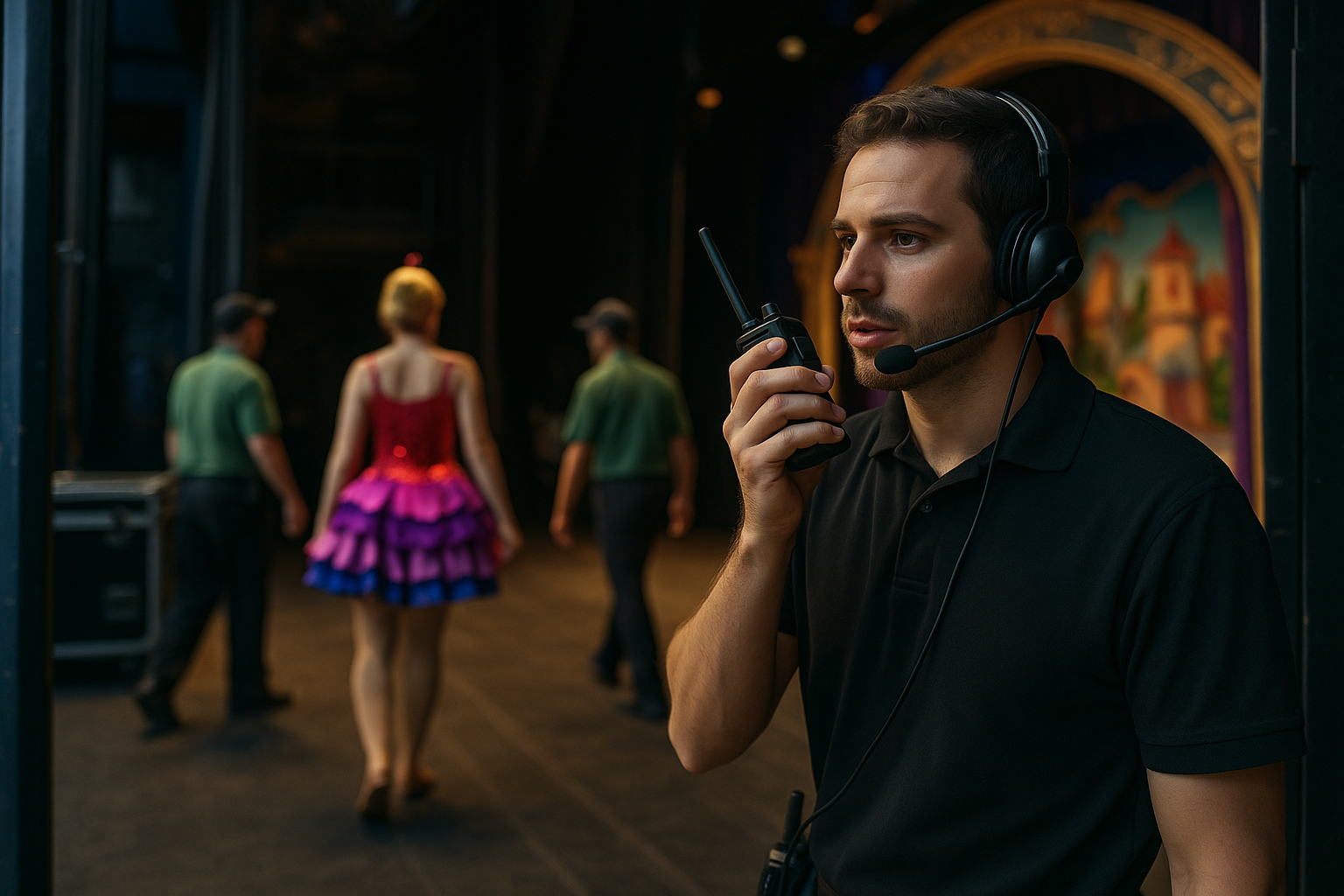
Backstage Communication: The Skill That Keeps Theme Park Shows Moving
A live entertainment show can look effortless to guests, but backstage it depends on constant communication. Performers, stage technicians, wardrobe teams, makeup artists, production assistants, custodial employees, and leaders may all be working within the same space, often on tight schedules and with little room for error.
For anyone entering theme park entertainment, learning how to communicate backstage is just as important as learning equipment, choreography, or show procedures. A clear radio call, a well-timed handoff, or a quick warning about a blocked path can prevent delays and protect both employees and performers.
Backstage communication is not about talking constantly. It is about sharing the right information, with the right people, at the right time.
Why Backstage Communication Matters
Theme park entertainment operates in an environment that is both highly organized and constantly changing. A performer may need a costume adjustment moments before an entrance. A prop may be out of position. A technical issue may affect a lighting cue. A guest-related situation may temporarily change access to a performance area.
When information does not move quickly, small problems can become visible problems. A delayed entrance, an unsecured prop, or an unexpected person in a crossover area can affect the show and create a safety concern.
Strong backstage communication helps teams:
- Coordinate entrances, exits, and scene changes
- Identify hazards before they affect a performance
- Keep performers informed about schedule changes
- Reduce confusion during busy transitions
- Protect guest-facing quality without rushing unsafe decisions
- Build trust between entertainment and operations departments
It also creates a more professional work environment. People are more likely to stay calm and solve problems effectively when they know where to get accurate information.
Use Clear, Useful Radio Communication
Many entertainment teams rely on radios, headsets, phones, or in-person communication. Whatever system a department uses, the basic principle is the same: keep messages concise and specific.
A useful message usually answers three questions:
- Who needs to know?
- What is happening?
- What action is needed?
For example, saying “There’s a problem backstage” does not give the team enough information to respond. A clearer message might identify the location, describe the issue briefly, and state whether assistance is needed.
Employees should also avoid unnecessary details over shared communication channels. Long explanations can prevent other team members from reporting urgent information. If a situation requires a detailed discussion, acknowledge the initial message and move the conversation to a more appropriate channel.
Listen Before Speaking
Radio discipline involves more than speaking clearly. Listening is equally important. Before transmitting, take a moment to determine whether someone else is already using the channel. Interrupting an important call can result in missed information or repeated instructions.
When receiving an assignment, repeat back key details if there is any possibility of confusion. A brief confirmation can prevent someone from waiting in the wrong location or preparing the wrong item for a scene change.
Respect Backstage Traffic Patterns
Backstage areas are workplaces, not hallways for casual conversation. Costumes may restrict visibility, performers may be carrying large props, and technicians may be moving equipment. Some areas may also be intentionally kept dark or quiet to protect a performance cue.
Employees should learn the normal traffic patterns of their work area and follow them consistently. Before crossing a pathway, check for approaching performers, carts, scenery, or equipment. If visibility is limited, use the communication method established by the department instead of assuming the path is clear.
New employees sometimes focus so closely on reaching their destination that they overlook the people already working around them. Moving with awareness is a professional skill. It shows respect for the show, the workspace, and the employees responsible for keeping the area safe.
Handle Last-Minute Changes Without Creating Panic
Live entertainment rarely follows a perfect script behind the scenes. A performer may be delayed, a costume may require attention, or a technical element may need to be adjusted. The response should be urgent when necessary, but urgency does not require panic.
When a change occurs, focus on the facts:
- What has changed?
- Which performance or segment is affected?
- Who has authority to make the decision?
- What is the safest immediate option?
- Who needs an update after the situation is resolved?
Avoid broadcasting guesses as though they are confirmed information. Speculation can spread quickly and create conflicting instructions. If you do not know the answer, say that you are checking rather than filling the silence with assumptions.
For example, a team member who notices that a performer has not arrived should report the absence through the proper communication channel. They should not independently change the running order, promise that the performer is on the way, or give instructions outside their role.
Know When to Speak Up
Backstage professionalism does not mean staying silent. Employees should report anything that could affect safety, show quality, or another team member’s ability to work.
Examples might include:
- A loose item near a performer’s path
- A spill or obstruction in a crossover area
- A prop that appears damaged or improperly placed
- A costume issue that could limit movement or visibility
- An unexpected person entering a restricted work area
- A communication gap that leaves a team member without needed information
Raise the concern calmly and use the reporting process taught during training. You do not need to dramatize the issue to make it important. A direct, factual report gives the appropriate person the opportunity to respond.
Speaking up is especially important for newer employees. You may assume that experienced team members have already noticed something, but they may be focused on another responsibility. A respectful report is better than remaining quiet and hoping someone else handles it.
Build Better Handoffs Between Teams
Many backstage problems happen during handoffs. One team finishes a task while another assumes the task is complete. A performer receives a schedule change but the wardrobe team does not. A technician resets an area without knowing that another department still needs access.
A good handoff should include the current status, any outstanding issue, and the next expected action.
Instead of saying, “The props are ready,” a more useful handoff might explain that the props are in position, one item is being monitored, and the next team should confirm the setup before the scene begins.
When possible, identify the person receiving the handoff. Direct communication reduces the chance that information will be lost between shifts or departments. If written notes, checklists, or digital logs are part of the operation, update them promptly rather than relying only on memory.
Turn Communication Into a Career Skill
Employees who communicate well backstage often become trusted with more responsibility. Leaders notice the person who provides accurate updates, stays composed during changes, and helps different departments understand what is happening.
These skills can support future opportunities as a performer, technician, production assistant, trainer, lead, or entertainment manager. They also transfer well to other areas of the attractions industry, including attractions operations, guest services, hospitality, and event production.
To strengthen your communication habits, practice:
- Giving concise status updates
- Confirming instructions before acting
- Separating facts from assumptions
- Using the proper reporting channels
- Staying calm when plans change
- Following up after a problem has been resolved
The most effective backstage employees are not necessarily the loudest people in the room. They are the ones others can rely on for accurate information, thoughtful judgment, and steady teamwork.
Find Your Place in the Attractions Community
Every department has its own communication habits, challenges, and professional lessons. Connecting with people outside your immediate team can help you understand how entertainment, operations, hospitality, maintenance, retail, and guest services work together to create a successful park experience.
ThemeParkConnections.com gives people throughout the theme park and attractions industry a place to connect with other professionals, expand their networks, share experiences, learn about different departments, discover career opportunities, and build lasting connections across the industry.
Backstage communication may happen out of sight, but its impact reaches every part of the guest experience. Learning to communicate with clarity, awareness, and respect is one of the most valuable skills an entertainment professional can develop.