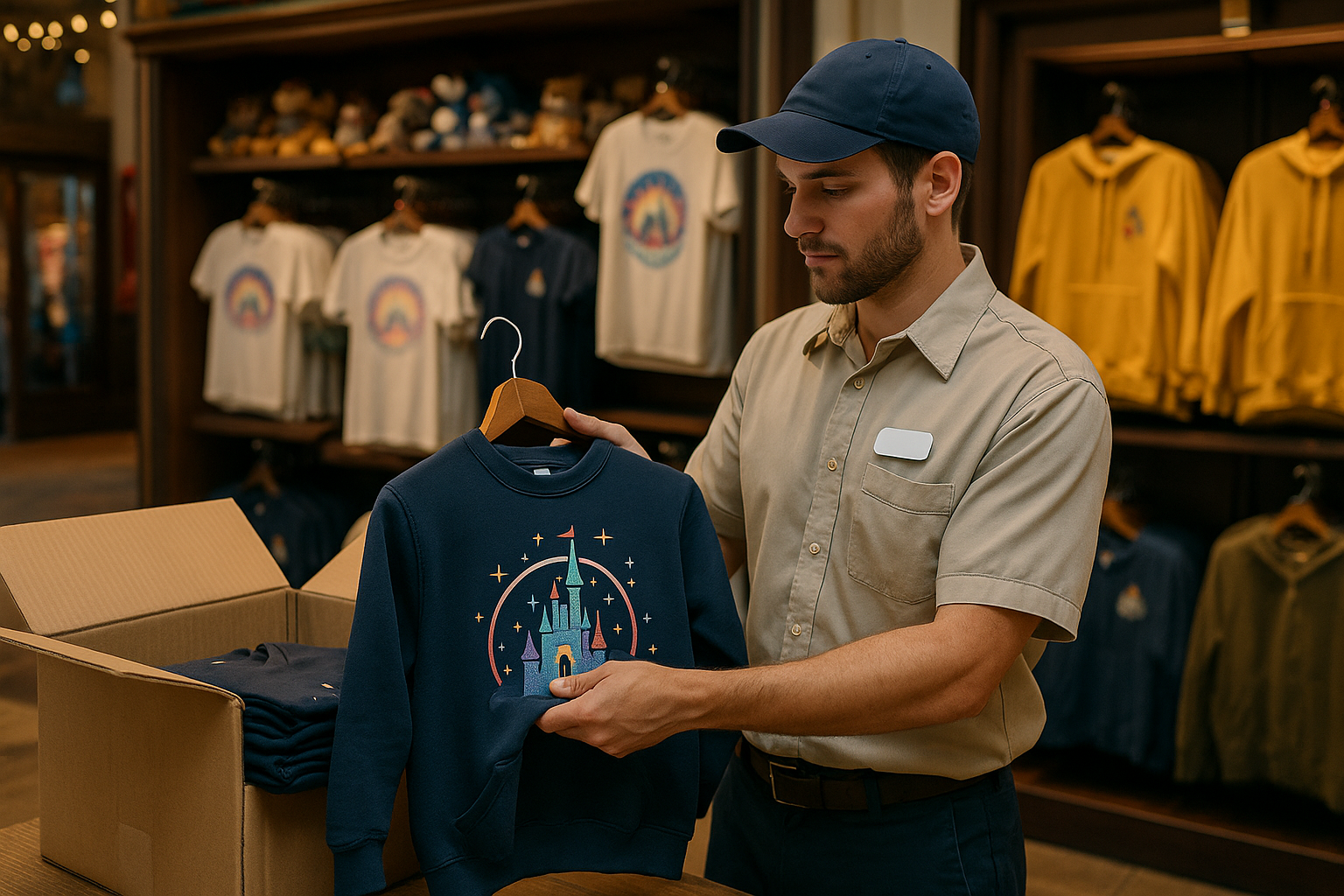
The Stockroom Is Part of the Show: Building Better Merchandise Replenishment Habits
Guests may notice the displays, costumes, music, and carefully arranged shelves in a theme park shop, but they rarely think about what keeps those shelves full. Behind many retail locations is a stockroom team managing deliveries, replenishment, inventory accuracy, damaged merchandise, and constant requests from the sales floor.
In a busy park, merchandise replenishment is not simply a matter of carrying more items to the front. It is a timing, communication, and organization challenge. A well-run stockroom helps the sales floor stay ready for guest demand without creating clutter, confusion, or unnecessary work for the team.
Why Merchandise Replenishment Matters
A shop can lose sales when popular products are unavailable on the sales floor even though they are sitting in the stockroom. Guests may assume an item is sold out, move on to another location, or decide not to purchase at all.
Replenishment also affects the guest experience in less obvious ways. Empty fixtures make a location feel neglected. Overfilled shelves can make products difficult to browse. Cartons left in guest areas create an untidy appearance and may interfere with traffic flow.
Strong retail employees understand that their work supports several goals at once:
- Keeping high-demand merchandise available
- Maintaining clean and organized displays
- Reducing time spent searching for product
- Supporting accurate inventory counts
- Helping sales-floor employees focus on guests
- Protecting merchandise from damage
Start With Stockroom Organization
Fast replenishment begins before anyone needs to pull a product. If the stockroom is difficult to navigate, every request takes longer and the chance of errors increases.
Product should have a logical home, even when space is limited. That may mean organizing by product type, collection, size, character, department, or sales-floor location. The exact system will vary by operation, but employees should be able to answer three questions quickly:
- Where is this product stored?
- How many units are available?
- Is there another location where the same item may have been placed?
Keep frequently requested merchandise easy to reach when possible. High-volume items should not be buried behind slow-moving products or placed where employees must move several boxes to access them.
Use the Same Language as the Team
Small differences in wording can create major confusion. One employee may call an item a “hoodie,” another may refer to it by its collection name, and a third may use a product number. Agreeing on consistent terms helps the stockroom and sales floor communicate more efficiently.
When a new product arrives, take time to learn its name, location, sizes, colors, and related items. That knowledge becomes especially valuable during busy periods when a sales-floor employee needs a quick answer.
Read the Sales Floor Before Pulling Product
Replenishment is more effective when employees look at the entire presentation rather than simply filling the first empty space they see. A display may need a specific size or color, while another item may need to be folded, rehung, or returned to its proper location.
Before leaving the stockroom, confirm what the floor actually needs. If a request comes over the radio or through a handheld device, clarify details such as:
- Product name or description
- Size, color, or style
- Quantity requested
- Specific sales-floor location
- Whether the item is needed immediately or during the next routine pass
This prevents unnecessary trips and reduces the chance of bringing the wrong product. During peak periods, combining several replenishment requests into one organized trip can save time, provided urgent needs are handled first.
Prioritize Based on Guest Demand
Not every empty space requires the same response. A missing size in a popular apparel collection may deserve immediate attention, while a low quantity of a slower-moving item can wait for the next replenishment cycle.
Good retail judgment comes from observing patterns. Employees may notice that certain products sell quickly after a parade, during a special event, near park closing, or when a new attraction opens. Weather can also change demand. Rain gear, sweatshirts, cooling accessories, and seasonal products may suddenly become priorities.
Watch for More Than Empty Shelves
Guest demand is not always visible as an empty fixture. Pay attention to:
- Repeated guest questions about a particular product
- Employees frequently leaving the sales floor to search for sizes
- Displays that become disorganized shortly after replenishment
- Products that sell through one location faster than another
- Items being held at registers or service counters
Sharing these observations with a lead or supervisor can help the team adjust replenishment priorities. Front-line employees often see demand changes before inventory reports reflect them.
Protect the Presentation While You Replenish
Bringing product to the floor is only part of the job. The final presentation matters just as much.
Before leaving a display, check that items are facing the correct direction, sizes are ordered consistently, hangers are aligned, and packaging is clean. If a shelf is full of mixed products, simply adding more merchandise may make the display harder to shop.
Replenishment is also a good opportunity to remove damaged or unsuitable items. Look for torn packaging, loose tags, stains, broken hangers, or products that have clearly been handled too many times. Follow the location’s process for setting those items aside rather than returning them to the sales floor.
Work carefully around guests. If a fixture is in a narrow walkway, wait for an appropriate opening, use a smaller load, or coordinate with the sales-floor team. Moving quickly should never mean blocking guests or creating avoidable hazards.
Communicate Shortages Clearly
One of the most useful stockroom habits is reporting what cannot be filled. If a requested product is unavailable, do not leave the sales-floor employee guessing.
A helpful update might include:
- The exact item that was searched
- Whether all sizes or only some sizes are unavailable
- Whether additional product may be expected later
- Whether another location should be checked
- Whether the display needs a guest-facing update
Clear communication prevents repeated searches and allows the sales team to set accurate expectations. It also helps leaders identify recurring shortages, misplaced inventory, or possible count issues.
Skills That Transfer Beyond Retail
Merchandise replenishment develops more than product knowledge. It strengthens skills that are useful throughout the attractions industry:
- Prioritization: Deciding what needs attention first during a busy shift
- Attention to detail: Catching display, labeling, and inventory problems
- Operational awareness: Understanding how back-of-house work affects the guest experience
- Communication: Giving concise, useful updates to coworkers and leaders
- Problem-solving: Finding alternatives when product is missing or demand changes
- Physical organization: Working efficiently in a fast-moving, limited-space environment
These habits can prepare employees for roles in retail leadership, inventory control, visual merchandising, purchasing, warehouse operations, and other departments that depend on reliable coordination.
Make the Stockroom Part of the Guest Experience
Guests may never see the work behind a fully stocked shop, but they experience the results. A clean display, an available size, and a confident answer from an employee can turn a quick shopping stop into a successful part of the park day.
For retail employees, the goal is not simply to move boxes faster. It is to create a dependable system that connects the stockroom, the sales floor, and the guest. When those pieces work together, the operation feels effortless—even during the busiest days.
ThemeParkConnections.com gives people working throughout the theme park and attractions industry a place to connect with other professionals, share experiences, learn about different departments, and discover career opportunities. For retail employees interested in visual merchandising, inventory, leadership, or another area of park operations, building those connections can reveal career paths that are easy to miss from one location.