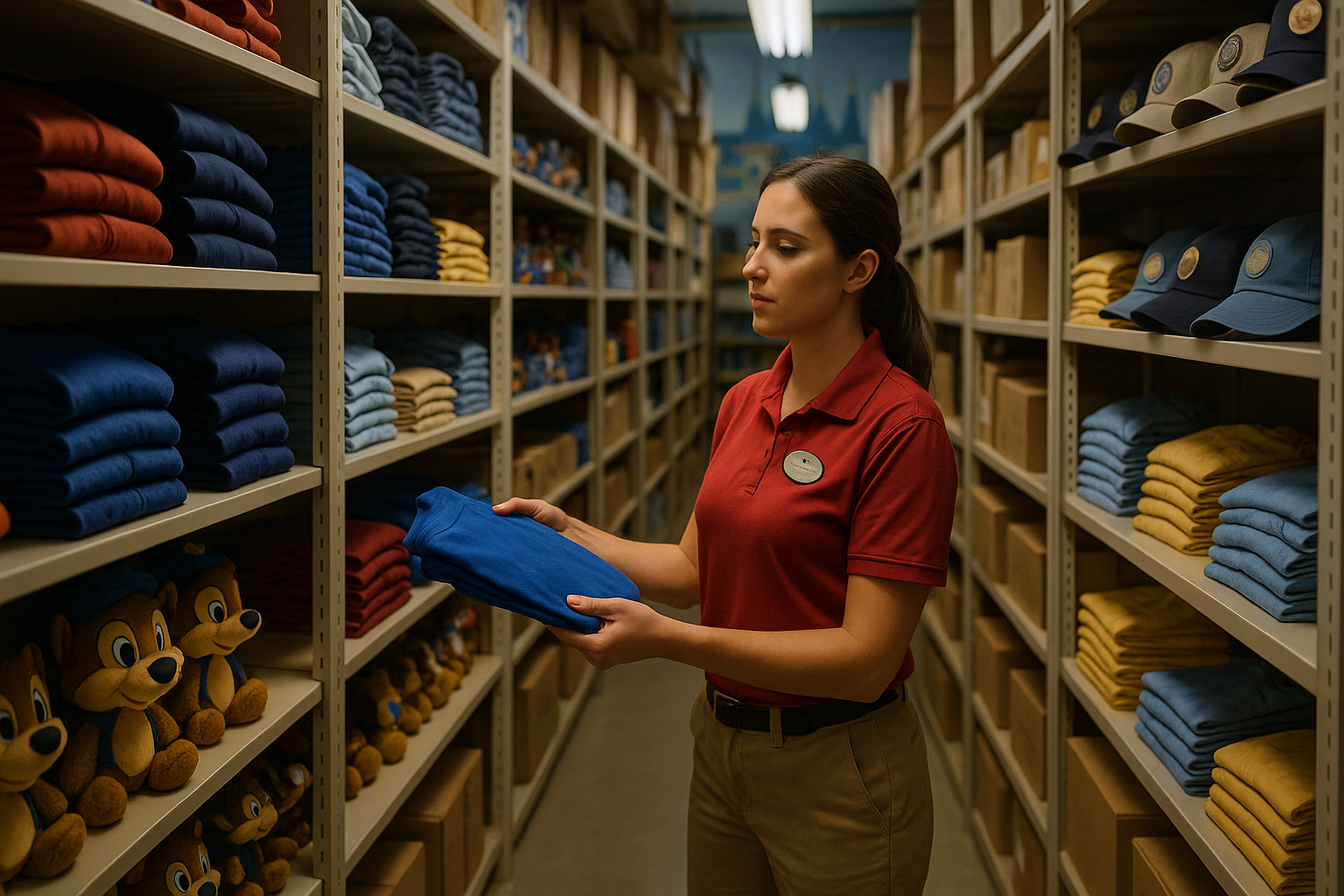
The Retail Stockroom Reset: Why Back-of-Backstage Organization Shapes the Guest Experience
A merchandise shop can look calm and inviting to guests even when the team behind it is moving quickly. Employees are checking sizes, replenishing shelves, answering product questions, processing transactions, and responding to sudden crowds from a nearby attraction or show. Much of that work depends on something guests never see: an organized, usable stockroom.
In theme park retail, stockroom organization is not just a housekeeping task. It affects sales, speed, employee confidence, inventory accuracy, and the guest’s impression of the entire shop. When employees can find the right item quickly, the front-of-house experience becomes smoother. When the stockroom is difficult to navigate, small delays multiply throughout the shift.
Why Stockroom Organization Matters in Theme Park Retail
Retail teams often work with limited space and a constantly changing assortment of merchandise. Popular items may sell rapidly, seasonal products may arrive in large quantities, and new collections may need to be placed on the sales floor with little notice.
A disorganized stockroom creates problems that are easy to underestimate:
- Employees spend more time searching for products.
- Guests receive inconsistent answers about availability.
- Replenishment takes longer during busy periods.
- Damaged or misplaced merchandise is harder to identify.
- New employees take longer to become independent.
- Closing teams leave a more difficult starting point for the next shift.
These issues can affect more than one transaction. A guest who waits several minutes while an employee searches for a size may decide not to purchase. Another guest may be told an item is unavailable even though it is buried behind unrelated boxes. Good stockroom habits help prevent both situations.
Build a System Employees Can Understand Quickly
The best stockroom system is not necessarily the most complicated one. It is the one that employees can understand during a busy shift, including seasonal employees and team members who are helping from another location.
Group Merchandise in a Logical Way
There are several ways to organize retail inventory, including by product type, collection, department, size, or sales-floor location. The right approach depends on the shop, but consistency matters more than the specific method.
For example, a stockroom might separate:
- Apparel by collection and size range
- Headwear and accessories by product line
- Souvenirs by category or land
- Seasonal merchandise in clearly marked areas
- High-demand items close to the main replenishment route
- Backstock or discontinued items away from active inventory
Labels should be easy to read and placed where employees can see them without moving several boxes. If a system relies on one experienced employee remembering where everything belongs, it is not yet a strong system.
Keep Fast-Moving Items Within Easy Reach
Some products will be requested repeatedly throughout the day. These may include common apparel sizes, popular character items, park-branded essentials, or merchandise connected to a seasonal event.
Placing high-demand products in convenient locations can reduce unnecessary walking and prevent employees from climbing over other inventory during peak periods. It also helps the team replenish the sales floor more efficiently after a rush.
This does not mean every popular item should be piled near the entrance. The stockroom still needs clear walkways and safe access. The goal is to make frequent tasks easier without creating new hazards.
The Stockroom Reset Should Happen Throughout the Shift
Many retail employees think of organization as a closing task. Closing is certainly an important time to restore order, but waiting until the end of the day can create problems during the busiest hours.
A quick reset can happen whenever the operation allows. After retrieving merchandise, return unopened boxes to the correct location. If an item is moved temporarily, make sure the next employee can still find it. Flatten packaging when appropriate and remove empty cartons before they begin taking over useful space.
Short resets are especially valuable after predictable surges, such as:
- Park opening
- Parade or show releases
- Attraction downtime that redirects guests
- Evening shopping before park close
- Special events or seasonal merchandise launches
The reset does not need to interrupt guest service. One employee can restore a section while another remains available on the sales floor. Even a few minutes of focused organization can make the next replenishment run easier.
Use Clear Communication When Inventory Is Uncertain
One of the most common retail challenges is answering the question, “Do you have this in the back?” The employee may find the item immediately, discover that the last one was sold, or encounter a stockroom that is still being processed.
When the answer is uncertain, avoid guessing. A confident but incorrect answer can create a larger service problem when the guest returns or finds the item elsewhere.
Useful communication between employees includes:
- Which items have already been checked
- Whether a delivery or shipment is still being processed
- Whether a product is reserved for another operational purpose
- Whether another nearby shop may carry the item
- When someone will check again, if a follow-up is possible
If your location uses a specific inventory system or communication process, follow that process rather than creating an informal workaround. The general principle is simple: share accurate information and be clear about what is known, what is unconfirmed, and what will happen next.
Protect the Stockroom as a Working Space
A stockroom is more than a place to store boxes. It is a workspace where employees may handle merchandise, prepare replenishment, receive deliveries, and move quickly during busy periods.
Good habits include keeping exits and walkways clear, placing heavier items where they can be handled safely, and avoiding unstable stacks. Employees should use the equipment and lifting practices required by their employer rather than improvising when a shipment is awkward or oversized.
It is also important to separate merchandise that is damaged, incomplete, returned, or awaiting a decision. Placing questionable items back into regular inventory can lead to an awkward guest interaction later. A clearly marked holding area helps the team distinguish sellable products from items requiring follow-up.
Make the Reset Part of the Handoff
A strong retail handoff does not need to be lengthy. The incoming team benefits from knowing which products are selling quickly, which sections need replenishment, whether a shipment arrived, and whether any inventory concern remains unresolved.
Before leaving, consider sharing:
- Popular items that may need attention during the next rush
- Products that guests requested but were unavailable
- Merchandise moved temporarily during a display change
- Damaged or questionable items awaiting review
- Any stockroom section that was reorganized
This information helps the next team begin with a clear picture instead of discovering every issue again from scratch.
Why This Skill Helps Your Career
Retail employees who maintain organized stockrooms develop skills that apply well beyond merchandise operations. They learn to prioritize, communicate clearly, notice patterns in guest demand, protect inventory, and improve the flow of daily work.
Those skills can support future opportunities in retail leadership, inventory control, visual merchandising, receiving, purchasing, operations coordination, and training. A manager may not see every replenishment run, but they will notice when a team consistently finds products quickly, keeps the shop prepared, and leaves the next shift in a better position.
A Better Guest Experience Often Starts Behind the Door
Guests may remember the product they purchased, the interaction with the cashier, or the look of the sales floor. They usually will not know whether the item came from a perfectly organized shelf or a chaotic stockroom.
That is exactly why stockroom discipline matters. The work stays mostly invisible when it is done well. Employees move with confidence, product questions are answered faster, replenishment feels routine, and the shop is ready for the next crowd.
ThemeParkConnections.com gives people working throughout the theme park and attractions industry a place to connect with other professionals, share experiences, learn about different departments, discover career opportunities, and build relationships across the industry. For retail employees, those connections can provide new ideas about inventory, merchandising, leadership, and career paths that may not be visible from one shop or park alone.