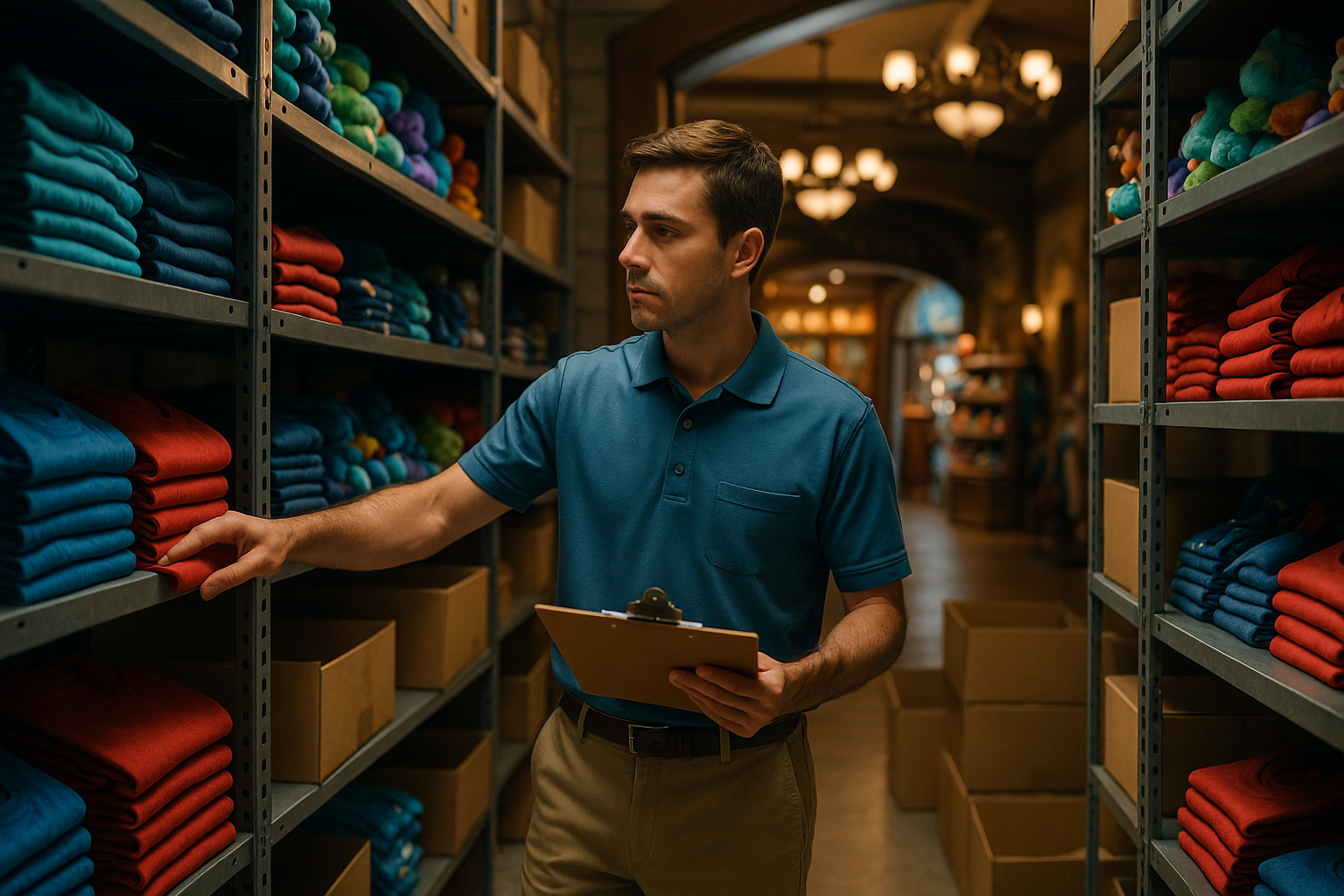
The Retail Stockroom Before Opening: Turning Inventory Into a Ready Shop Floor
Before the first guest enters a theme park shop, retail employees have already made dozens of decisions that affect the day ahead. Which products need to be replenished? Are high-demand items easy to reach? Is the sales floor ready for a sudden crowd after a parade or attraction opening? Are displays full without creating clutter?
Those answers often begin in the stockroom. Although guests may never see it, the stockroom is one of the most important workspaces in theme park retail. An organized, well-managed stockroom helps employees serve guests faster, maintain attractive displays, reduce unnecessary searching, and respond when demand changes throughout the day.
Why the Stockroom Matters in Theme Park Retail
Theme park merchandise operations are different from many traditional retail environments. Guest traffic can change rapidly based on weather, entertainment schedules, attraction closures, dining periods, and special events. A product that moves slowly in the morning may sell quickly after a parade, nighttime spectacular, character appearance, or major attraction opening.
Retail employees need to be prepared for those changes without leaving the sales floor unattended for long periods. When products are easy to locate and restock, the team can respond to demand instead of losing time searching through boxes or asking multiple people for help.
A strong stockroom supports several parts of the operation:
- Faster replenishment of popular merchandise
- More accurate inventory awareness
- Safer movement through crowded work areas
- Less time spent opening and sorting boxes
- Better coordination between sales floor and back-of-house employees
- A more consistent presentation for guests
Stockroom organization is not simply a housekeeping task. It is an operational skill that affects sales, guest service, safety, and team efficiency.
Start the Day With a Stockroom Walkthrough
A pre-opening stockroom check does not need to be complicated. The goal is to understand what the shop has available, what needs attention, and what could create a problem during the shift.
Look for Immediate Replenishment Needs
Begin by checking the products that are most visible or most likely to sell early in the day. This could include seasonal merchandise, limited designs, popular accessories, children’s items, or products connected to a nearby attraction or entertainment offering.
Do not wait until a shelf is completely empty before noticing it. A quick walkthrough can identify displays that need attention before guests arrive. If the shop uses established replenishment lists or department routines, follow those tools rather than relying entirely on memory.
Identify New Deliveries and Unsorted Product
New merchandise may arrive while the shop is closed or during a previous shift. Boxes left unsorted can create confusion when several employees are trying to find the same product later.
Separate incoming merchandise from product that is ready for the sales floor. If items require price labels, security devices, folding, hanging, tagging, or another preparation step, make that status clear to the team.
A product that has arrived is not necessarily ready to sell. Treating those stages as the same can lead to misplaced merchandise, incorrect presentation, or delays when a guest asks for an item that has not yet been processed.
Create Locations People Can Understand
The best stockroom system is one that a new employee can understand quickly. Labels and categories should be consistent enough that someone who did not put the merchandise away can still locate it.
Depending on the shop, useful categories may include:
- Product type, such as apparel, accessories, toys, home goods, or collectibles
- Character, attraction, land, or entertainment theme
- Size or color range
- Seasonal or event merchandise
- High-demand items needing frequent replenishment
- Backstock that is rarely requested
Try to avoid creating a system based only on personal habits. Saying “the extra boxes are in the back” may make sense to one employee but not to the rest of the team. Clear labels, consistent shelf assignments, and readable product groupings make the entire operation less dependent on one person’s memory.
Keep Frequently Needed Items Accessible
Products that need to be replenished several times during a busy shift should not be buried behind slow-moving inventory. Place commonly requested items where employees can reach them without moving several other boxes.
This is especially useful for basic sizes of popular apparel, commonly purchased accessories, shopping bags, and products featured prominently on the sales floor. Easy access reduces the time employees spend away from guests and lowers the chance of creating a traffic problem in a narrow stockroom.
Balance Speed With Safe Stockroom Habits
Busy retail environments can create pressure to move quickly, but rushing in a crowded stockroom can lead to injuries, damaged merchandise, or blocked exits and walkways. Employees should follow the safety expectations established by their employer, including rules for lifting, stacking, equipment use, and access routes.
Simple habits make a difference:
- Keep walkways clear rather than placing boxes temporarily in traffic areas.
- Store heavier items where they can be handled safely.
- Do not create unstable stacks to save space.
- Close or secure boxes that could spill product into a walkway.
- Return carts, ladders, and equipment to their designated locations.
- Report damaged shelving, leaks, poor lighting, or other facility concerns promptly.
A stockroom that is technically full but difficult or unsafe to navigate is not operating efficiently. Organization should make work easier, not simply make the room look orderly from the doorway.
Use the Sales Floor to Guide Stockroom Priorities
Stockroom work should be connected to what guests are actually seeing and requesting. A sales floor walkthrough can reveal information that inventory counts alone may not show.
For example, a display may still have product available, but the sizes guests request most often may be missing. A shelf may look full while one popular color has sold through. Another item may be receiving attention because guests are picking it up, even if sales have not yet reached the point that employees expected.
Share useful observations with the team during shift communication. A short update such as “the smaller youth sizes are moving faster than the adult sizes” can help employees prioritize the next replenishment trip.
Pay Attention to Event-Driven Demand
Theme park retail demand often follows the guest day. Merchandise may move differently before and after a show, near park closing, during a holiday event, or when weather changes suddenly.
Employees who notice these patterns can prepare more effectively. If rain begins, certain apparel and weather-related items may need more frequent replenishment. If a popular nighttime event is approaching, guests may begin looking for souvenirs connected to that experience.
The goal is not to guess perfectly. It is to observe, communicate, and adjust before the sales floor becomes difficult to manage.
Make Shift Handoffs Useful
A stockroom handoff should tell the next team what they need to know without turning into a long list of complaints. Focus on information that affects service during the next part of the day.
A helpful handoff might include:
- Products that sold through or are nearly out of stock
- Merchandise waiting to be processed or placed on the floor
- Items guests requested that were unavailable
- Displays that need rebuilding or replenishment
- Damaged product that has been separated for follow-up
- Upcoming events or traffic patterns that may affect demand
Be precise about status. “More shirts are in the back” is less useful than “additional medium and large shirts are on the labeled rack beside the folding table.” Clear information helps the next employee act without repeating the same search.
The Career Skills Hidden in Stockroom Work
Employees who become reliable in stockroom operations develop skills that can support future opportunities in retail and beyond. These include inventory awareness, prioritization, visual standards, physical organization, communication, and problem-solving under time pressure.
Those skills can be valuable when pursuing roles such as:
- Merchandise lead
- Stock or inventory coordinator
- Visual merchandising specialist
- Retail trainer
- Operations coordinator
- Department supervisor
If you want to grow in retail, do more than complete replenishment tasks. Learn why certain products are prioritized, how the team responds to changing demand, and how back-of-house decisions affect the guest experience. That operational understanding can distinguish someone who simply moves merchandise from someone who understands the business.
A Better Stockroom Creates a Better Shift
The strongest theme park retail teams treat the stockroom as part of the guest experience, not as a forgotten space behind the shop. When inventory is organized, safety concerns are addressed, and shift information is communicated clearly, employees can spend more time helping guests and less time searching for answers.
Small improvements—clearer labels, better product placement, more accurate handoffs, and regular walkthroughs—can make a noticeable difference during busy operating periods. They also help employees build the habits that lead to greater responsibility in merchandise and park operations.
ThemeParkConnections.com gives professionals across retail, attractions, food and beverage, entertainment, hospitality, guest services, and maintenance a place to connect with industry peers. Sharing experiences with employees from other departments can reveal new ways to solve operational challenges, expand your professional network, learn about different career paths, and discover opportunities throughout the attractions industry.