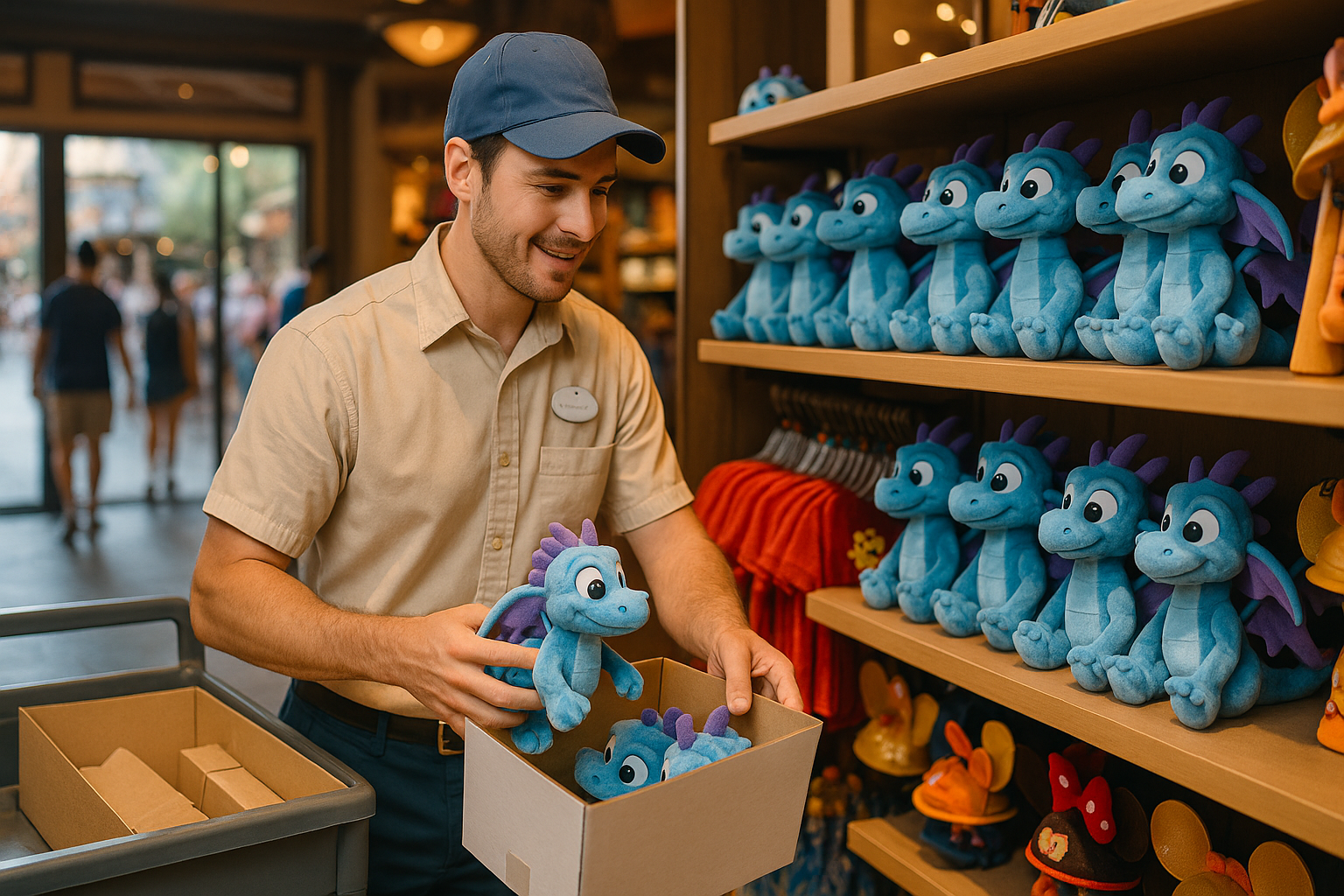
The Retail Replenishment Run: Keeping Park Stores Ready During Peak Hours
A busy theme park store can change in minutes. A display that looked full at opening may be nearly empty after a parade, a character appearance, or a sudden wave of guests leaving an attraction. For merchandise employees, keeping the sales floor stocked is not simply a matter of carrying products from the stockroom. Replenishment has to happen quickly, safely, and with as little disruption to guests as possible.
Strong retail replenishment supports sales, protects the appearance of the store, and helps the entire operation feel organized. It also requires skills that are valuable far beyond merchandise, including situational awareness, communication, prioritization, and careful attention to detail.
Why Replenishment Matters More Than It Looks
Guests may not know that a store team has just completed a major restock, but they notice when a popular item is missing. An empty fixture can lead to repeated questions, unnecessary trips to another location, or disappointment when a guest cannot find the souvenir they expected.
Replenishment also affects how guests move through a store. Boxes, carts, ladders, and open cartons can create obstacles in narrow aisles. A rushed restock can make a store feel crowded or unfinished, especially during the busiest parts of the day.
The goal is not to keep every item fully stocked at every second. The goal is to keep the right products available while maintaining a clean, safe, guest-ready environment.
Prioritize the Products Guests Are Most Likely to Seek
During a peak period, there may not be enough time to refill every fixture immediately. Retail employees need to recognize which products should receive attention first.
Priorities may include:
- High-demand seasonal merchandise
- Items connected to a special event or limited-time offering
- Popular sizes, colors, or character designs
- Products featured near the entrance or checkout
- Merchandise that guests are actively asking employees to locate
- Items with only a few units remaining on the sales floor
A nearly empty display of a popular item deserves attention before a less frequently purchased product with one missing unit. The best employees learn to identify these differences without needing someone to assign every task.
Read the Store Before Moving Product
Before leaving the stockroom with a box or cart, take a moment to assess the floor. Look at the overall guest flow, not just the fixture that needs merchandise.
Check the timing
A replenishment run during a quiet period may be simple. The same task during a parade release or a post-attraction surge may require a different approach. If guests are entering in large numbers, it may be better to delay nonurgent work, stage product discreetly, or ask a teammate to help create space.
Check the route
Choose the safest path between the stockroom and the sales floor. Avoid blocking narrow entrances, checkout queues, accessible routes, or heavily used aisles. If a large cart must pass through a crowded area, communicate with nearby employees and move deliberately rather than trying to rush.
Check the fixture
Do not assume that an empty-looking shelf needs the same product that was previously displayed there. The area may have been reorganized, a product may have moved to another fixture, or the remaining merchandise may need to be faced and organized before more inventory is added.
Replenish Without Creating a Bigger Problem
Efficient replenishment is not just about speed. It is about leaving the area better than you found it.
When restocking a display:
- Bring only the quantity that can be placed neatly and safely.
- Keep cartons and packaging out of guest walkways.
- Break down empty boxes promptly according to department expectations.
- Face products so labels and designs are visible.
- Keep sizes, styles, and product variations organized.
- Remove damaged or incomplete packaging from the sales floor.
- Check nearby fixtures for misplaced merchandise before leaving.
Overfilling a shelf can be just as unhelpful as leaving it empty. Products may fall forward, become difficult to remove, or create a cluttered appearance. When a fixture is full, use the designated backstock process instead of forcing additional product into the display.
Coordinate With the Team During Rushes
Peak periods often create competing priorities. One employee may be helping a guest locate a specific item while another is handling a long checkout line and a third is trying to restock a high-demand display. Without communication, multiple employees may respond to the same task while another urgent need is missed.
Useful communication should be brief and specific. For example:
- “I’m taking two boxes of the event shirts to the front fixture.”
- “The medium sizes are out on the floor, but more are staged in the stockroom.”
- “I’m helping this guest first, then I’ll replenish the display by the entrance.”
- “The cart is blocking the accessible route, so I’m moving it to the side before opening the carton.”
Clear updates help teammates understand what is already in progress. They also make it easier for a lead or supervisor to redirect work when guest volume changes.
Use Guest Questions as Inventory Information
Guest questions can reveal demand before a display becomes completely empty. If several guests ask for the same sweatshirt, plush, or souvenir, that information is operationally useful.
An employee who hears repeated requests should communicate the trend to the team. The item may need a faster replenishment, a clearer location, or a check of nearby stock. Even when the product is unavailable, a confident response is better than sending guests to search on their own.
For example, an employee might say, “That style is currently being replenished. Let me check whether we have more in the back,” or, “We do not have that size on this floor right now, but I can help you look for another option.”
This approach combines inventory awareness with guest service. It also prevents a common retail mistake: treating replenishment as a back-of-house task that has nothing to do with the guest experience.
Build Replenishment Skills That Support Career Growth
Retail replenishment develops habits that can prepare employees for additional responsibility. A strong merchandise employee learns to:
- Prioritize work based on demand and guest impact
- Notice safety concerns before they become incidents
- Protect visual standards during busy periods
- Communicate progress without overexplaining
- Recognize patterns in product demand
- Balance independent work with team coordination
These skills are useful for stockroom, visual merchandising, inventory, leadership, and operations roles. Employees who consistently keep their area organized and communicate effectively are often trusted with more complicated assignments because they demonstrate reliability under pressure.
Leave the Next Employee a Clear Starting Point
Good replenishment includes a handoff. If an item is temporarily unavailable, a shipment is still being processed, or a display needs follow-up, make sure the next employee or leader knows what happened.
A simple update can prevent duplicated work and help the team respond accurately to guest questions. The strongest retail teams do not rely on one person remembering every detail. They create enough communication that the operation can continue smoothly as employees move between breaks, registers, stockrooms, and sales-floor assignments.
The next time you complete a replenishment run, look beyond the box in your hands. You are helping shape the store’s appearance, guest flow, sales potential, and overall readiness. That kind of operational awareness is one of the most transferable skills in the attractions industry.
Keep Building Your Attractions Industry Network
Retail employees often understand parts of park operations that other departments rarely see, from product demand and guest behavior to stockroom logistics and special-event pressure. Sharing those experiences can help others understand the work and discover career paths they may not have considered.
ThemeParkConnections.com gives people working throughout the theme park and attractions industry a place to connect with other professionals, expand their networks, share experiences, learn about different departments, discover career opportunities, and build lasting connections across the industry.