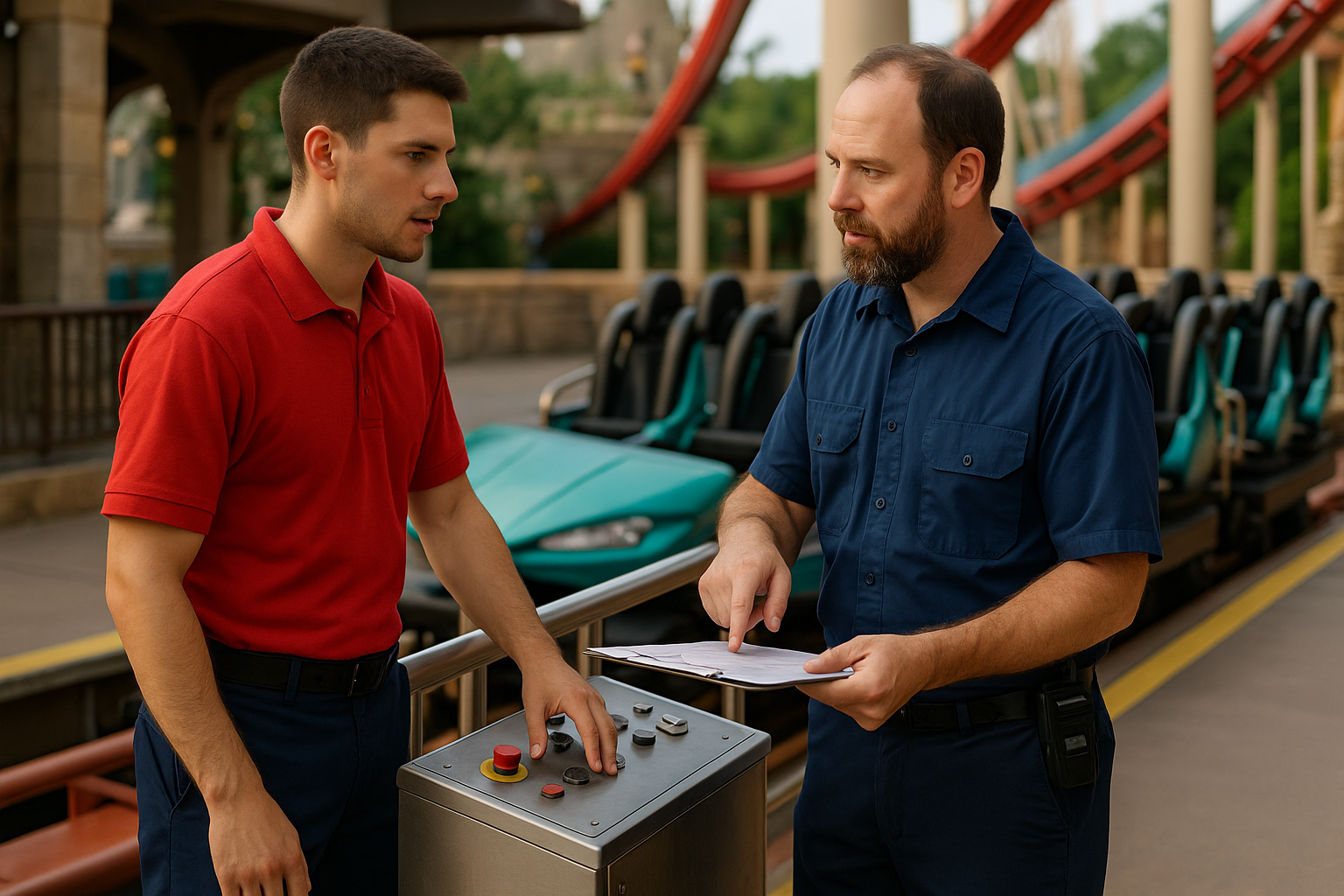
The Shift Handoff That Prevents Repeat Problems in Theme Park Operations
A strong shift handoff can be the difference between a minor issue being resolved quickly and the same problem disrupting operations all day. In a theme park, information moves constantly between attraction operators, maintenance technicians, custodial teams, food and beverage employees, entertainment crews, retail associates, and leadership. When important details are missed during that transition, the next team often has to spend valuable time retracing what already happened.
Effective shift handoffs are not limited to maintenance or leadership. Any department that works in rotations, manages equipment, serves guests, or responds to changing conditions benefits from a clear exchange of information.
Why Shift Handoffs Matter in a Theme Park
Theme park work rarely follows a simple start-to-finish pattern. One team may open an area, another may manage the busiest part of the day, and a third may close it. During that time, conditions can change several times.
A handoff helps the next team understand:
- What has already happened
- What is still in progress
- What needs attention soon
- Which concerns have already been reported
- What guests or coworkers may still be expecting
Without that information, employees may repeat troubleshooting, overlook a developing issue, give guests inconsistent answers, or assume someone else is handling a task. A clear handoff creates continuity even when the people involved have never worked together before.
What Belongs in a Useful Shift Handoff?
The best handoffs focus on information the next employee or team can act on. They are not a complete diary of everything that happened during the shift.
Current operating status
Begin with the present condition of the area, equipment, or operation. Is everything running normally? Is a location operating with a temporary adjustment? Is a piece of equipment unavailable? Has a performance, meal period, or guest activity been moved?
For example, a useful attraction handoff might explain that one dispatch position has been adjusted because of a staffing change, while a food and beverage handoff might note that a high-demand menu item is temporarily unavailable and an approved substitute is being offered.
Open issues
Identify anything that remains unresolved. Include enough context for the next team to understand what has already been attempted and what the next expected step is.
Instead of saying, “The register is acting up,” a stronger handoff might communicate that the register intermittently loses connection, a restart has already been attempted, the issue was reported through the appropriate channel, and employees are using a designated backup process until further instruction is provided.
Time-sensitive details
Some information matters because of when it will affect the operation. Mention upcoming breaks, scheduled inspections, event call times, deliveries, cleaning windows, weather-related concerns, or expected guest surges.
A closing team may need to know that a technician is expected to return later. An entertainment team may need to know that a performance area has a temporary obstruction. A resort team may need to know that a guest request is still pending and requires follow-up before the end of the evening.
Guest-impact information
If guests have been affected, the next team should know what happened without receiving unnecessary personal details. Explain the general situation, what communication has already occurred, and whether any follow-up remains.
This prevents guests from having to repeat the same story to multiple employees and helps the next team provide a consistent response.
Use a Simple Structure for Better Shift Notes
When employees are busy, a complicated reporting format is unlikely to be used consistently. A simple structure can make handoffs faster and more reliable.
One practical approach is:
- Status: What is operating normally, and what is not?
- Action taken: What has already been done?
- Next step: What needs to happen next?
- Owner: Who or which department is expected to follow up?
- Timing: When does the issue matter again?
This format works across departments. A maintenance employee can use it for an equipment concern. A supervisor can use it for a staffing adjustment. A retail associate can use it for a stockroom issue. An entertainment team member can use it for a change affecting a rehearsal or performance area.
Common Handoff Mistakes
Leaving out the outcome
Employees sometimes report that they contacted someone without explaining what happened afterward. “Maintenance was called” does not tell the next shift whether the issue was repaired, monitored, or still waiting for a response.
Whenever possible, include the current result rather than only the action taken.
Using vague language
Words such as “soon,” “later,” or “someone knows” can create confusion. If you do not know an exact time or person, say what you do know: “The issue has been reported through the department’s normal process and is still awaiting follow-up.”
Assuming the next team already knows the background
Handoffs often fail when the person giving them has been close to an issue for several hours. Details that seem obvious to one employee may be missing for someone arriving fresh to the situation.
Give enough background to make the information understandable, but avoid turning the handoff into a long story. Focus on facts, decisions, and next actions.
Relying only on memory
Busy theme park shifts involve interruptions, radio traffic, guest questions, and changing priorities. Even experienced employees can forget a detail when they are handing off several responsibilities at once.
Use the approved communication tools available in your workplace, whether that means written notes, a department log, a digital system, or a face-to-face briefing. Written information should support—not replace—any required verbal communication.
Making Handoffs More Effective During Peak Operations
During holidays, special events, and high-attendance periods, handoffs become even more important. The volume of activity makes it harder for employees to remember every open issue, while small delays can affect several departments at once.
Before ending a shift during a busy period, take a moment to identify the three most important items the next team needs to know. These may include:
- A condition affecting safety, service, or capacity
- A guest-facing issue that requires follow-up
- A staffing, equipment, or supply concern
If the handoff is happening over the radio, keep the message concise and follow local communication expectations. Sensitive guest or employee information should be shared only through appropriate channels.
Handoff Skills Can Strengthen Your Career
People who communicate well during shift transitions often become trusted resources in their departments. Their value is not simply that they remember details. They help the operation remain organized when conditions change.
Strong handoff habits demonstrate:
- Attention to detail
- Operational awareness
- Accountability
- Clear written and verbal communication
- Respect for the next team’s time
- The ability to prioritize under pressure
These skills can support future opportunities as a trainer, coordinator, lead, supervisor, or cross-department team member. Employees who understand how one shift affects the next are also better prepared to collaborate beyond their immediate work area.
Build Continuity One Shift at a Time
A good handoff does not need to be lengthy or complicated. It needs to be accurate, specific, and focused on what the next person can do with the information. When teams consistently explain the current status, previous actions, next steps, and guest impact, fewer issues disappear between shifts.
Theme Park Connections gives professionals throughout the attractions industry a place to connect with other employees, expand their networks, share experiences, learn about different departments, discover career opportunities, and build relationships across the industry. Those connections can provide new perspectives on familiar operational challenges—including the small communication habits that help a theme park run more smoothly.