How to Build a Theme Park Career in Accessibility and Inclusion
Theme park careers are not limited to rides, entertainment, food and beverage, or guest services. Behind every successful guest experience is a team working to make attractions, resorts, events, and environments welcoming to as many people as possible. Accessibility and inclusion roles are an increasingly important part of that work, offering meaningful career opportunities for people interested in operations, communication, training, guest experience, and community impact.
If you want to work in the theme park industry and are drawn to problem-solving, empathy, and practical improvements, accessibility may be an excellent career direction. You do not need to begin with a specialized job title. Many professionals build relevant experience through guest-facing roles, education, operations, safety, human resources, or training before moving into accessibility-focused positions.
What Accessibility and Inclusion Work Looks Like in Theme Parks
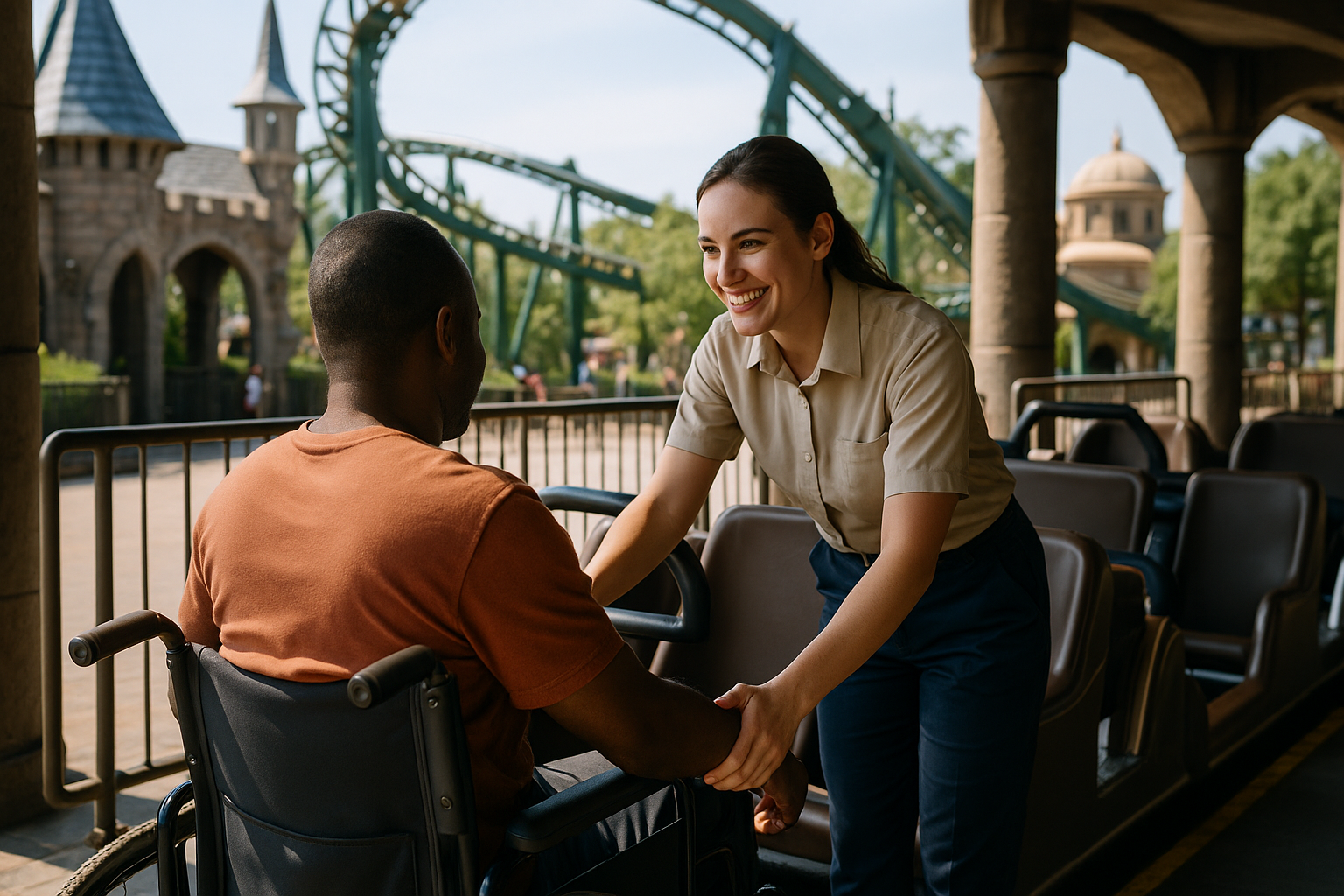
Accessibility in attractions is broader than wheelchair access. Professionals in this area may help improve experiences for guests with mobility, sensory, cognitive, hearing, visual, or communication-related needs. Their work can involve reviewing procedures, supporting employees, developing training materials, gathering guest feedback, and collaborating with park operations.
Depending on the organization, related responsibilities may include:
- Explaining attraction procedures and available accommodations to guests and employees
- Helping teams communicate clearly with guests who have different access needs
- Reviewing guest areas, queues, shows, and events for potential barriers
- Supporting accessibility information on websites, mobile applications, maps, and guides
- Creating or delivering training for cast members, team members, or seasonal employees
- Partnering with operations, entertainment, facilities, technology, and guest relations
- Listening to guest experiences and identifying opportunities for improvement
The work is both strategic and practical. One day may involve reviewing a process or training document; another may involve observing an attraction or helping a front-line team address a guest concern.
Start by Building Relevant Theme Park Experience
You do not always need direct accessibility experience to begin developing a career in this field. A guest-facing theme park job can teach you how park operations function, how employees communicate under pressure, and how different departments work together to deliver a consistent experience.
Guest services and park operations
Guest services roles can provide especially useful experience because they involve listening, explaining policies, resolving concerns, and adapting communication styles. Attractions, admissions, parking, transportation, and resort operations can also help you understand how guests move through a property and where confusion or barriers may occur.
Training and education
People with backgrounds in training, education, recreation, social services, special education, or organizational development may bring valuable skills to accessibility work. The ability to explain complex information clearly and respectfully is important when supporting both employees and guests.
Technology and digital content
Accessibility also connects with digital experiences. Websites, online ticketing, mobile applications, digital signage, and pre-visit information all affect how guests plan their trips. Experience in content writing, user experience, quality assurance, or technology can lead toward accessibility-related projects in the attractions industry.
Develop Skills Employers Can Use
To become a stronger candidate for theme park accessibility jobs, focus on skills that can be demonstrated through real examples. Employers need professionals who can combine compassion with organization, judgment, and follow-through.
- Clear communication: Practice explaining procedures without jargon or assumptions.
- Active listening: Learn to identify the actual concern behind a guest’s question.
- Process improvement: Look for ways to make instructions, handoffs, or workflows easier to understand.
- Collaboration: Build experience working with multiple departments that have different priorities.
- Training: Develop the ability to teach respectful, consistent service practices.
- Documentation: Become comfortable recording observations, feedback, and recommended next steps.
- Professional judgment: Understand when to provide information, when to involve a leader, and when a situation requires additional support.
Volunteer work, academic projects, community programs, and customer-service experience can all help you demonstrate these abilities. For example, organizing an inclusive community event may show planning and communication skills, while creating a clearer orientation guide may demonstrate process improvement.
Learn to Network Around the Work, Not Just the Job Title
Accessibility professionals may work under different titles, including guest experience, inclusion, compliance, training, accommodations, operations support, or community engagement. Searching for only one exact job title can cause you to miss relevant opportunities.
When networking, ask professionals about the problems they help solve rather than simply asking what position they hold. Useful questions include:
- Which departments most often collaborate on accessibility projects?
- What experience helped you move into this area?
- What skills make someone effective in accessibility-focused work?
- How can an entry-level employee learn more about inclusive guest experiences?
These conversations can help you understand the industry while building relationships naturally. Be prepared to discuss your own interests and relevant experiences, even if your current job is not directly connected to accessibility.
Show Your Perspective Through Practical Examples
When applying for a theme park role, do more than say that you care about inclusion. Explain how you have put that value into practice. You might describe a time you adjusted your communication for a customer, helped a team member understand a procedure, improved instructions, or supported someone who needed an alternative approach.
Keep examples specific and respectful. Avoid presenting yourself as the person who “speaks for” every guest with a disability. Instead, emphasize listening, learning, collaborating, and using feedback to improve the experience.
You can also follow accessibility developments in the attractions industry, observe how parks communicate pre-visit information, and pay attention to the details that shape a guest’s day. This preparation can help you ask better questions and contribute more thoughtfully in future roles.
Build Connections Across the Attractions Industry
A career in theme park accessibility often develops through relationships across departments and organizations. ThemeParkConnections.com gives aspiring and current attractions professionals a place to connect with industry peers, exchange experiences, explore career paths, and learn from people working in different areas of the business.
If you are interested in creating more welcoming guest experiences, join the Theme Park Connections community and start building relationships that can support your next step in the attractions industry.