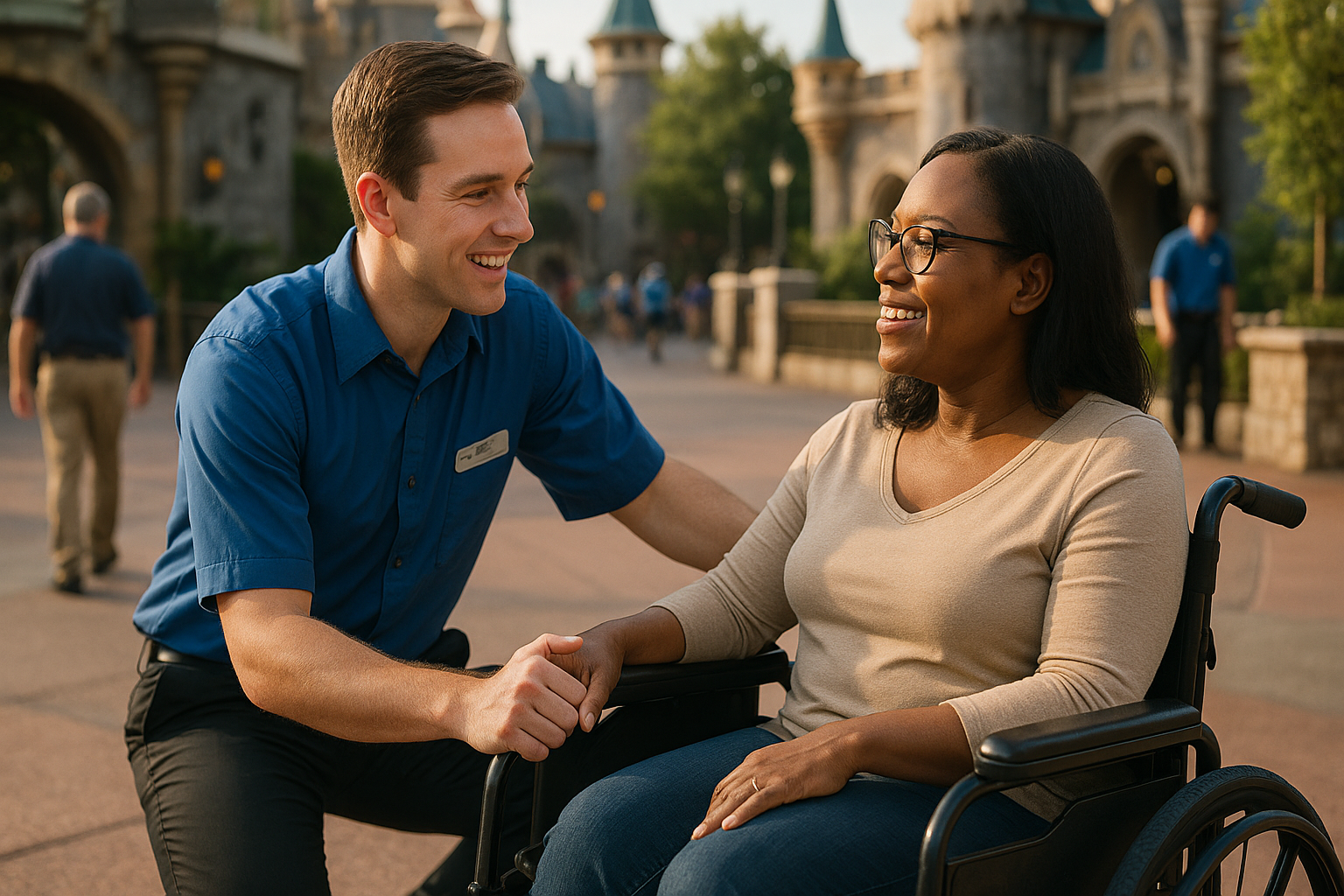
How to Build a Theme Park Career in Accessibility and Inclusion
Theme park careers are not limited to rides, entertainment, food and beverage, or guest services. As attractions work to create welcoming experiences for more visitors, accessibility and inclusion have become important parts of daily operations, planning, training, and guest communication.
If you are interested in helping guests navigate parks more comfortably and confidently, an accessibility-focused career may be a rewarding path. You do not necessarily need to begin in a specialized office role. Many professionals develop relevant experience through guest-facing positions, operations, education, human resources, or safety-related work.
What Accessibility Careers Look Like in the Attractions Industry
Accessibility work in theme parks can involve much more than answering questions about accommodations. Professionals may contribute to guest communications, attraction procedures, employee training, facility planning, digital information, event operations, and partnerships with internal departments.
Potential career areas may include:
- Guest accessibility services
- Guest relations and experience planning
- Employee training and learning
- Operations documentation and procedure development
- Safety and risk management
- Human resources and workplace inclusion
- Project coordination for new attractions or renovations
- Digital content, communications, and website accessibility
Job titles vary from one employer to another, so searching only for “accessibility coordinator” may limit your options. Look for related terms such as inclusion, guest experience, accommodations, compliance, training, universal design, community engagement, and accessibility services.
Start by Building Strong Guest-Facing Experience
Many accessibility challenges become clearer when you work directly with guests. Positions in guest services, attractions, admissions, merchandise, hospitality, or entertainment can help you understand how people move through a park and where confusion or barriers may occur.
In a frontline role, pay attention to questions guests ask repeatedly. Notice where signage is unclear, where instructions are difficult to understand, or where a procedure may create unnecessary stress. You are not expected to change policies on your own, but you can learn how the guest experience works in practice.
Keep a private record of lessons you learn, using no personal guest information. For example, you might note that guests benefit from clearer explanations of attraction procedures, quieter places to ask questions, or more consistent communication between departments. These observations can later help you describe your experience during career conversations.
Develop Skills That Accessibility Teams Value
Accessibility professionals need excellent communication, but the work also requires organization, patience, sound judgment, and the ability to collaborate across departments. Focus on developing skills that apply to both guest interactions and behind-the-scenes planning.
Clear communication
Practice explaining procedures in plain language without making assumptions about what a guest already knows. Strong communication also means listening carefully and confirming that information has been understood.
Process thinking
Theme parks rely on detailed operating procedures. Learn how to follow instructions consistently, identify gaps, and suggest improvements through the appropriate channels. Experience with checklists, documentation, scheduling, or operational briefings can be valuable.
Cross-functional collaboration
Accessibility decisions may affect attractions, transportation, food service, security, entertainment, facilities, and technology. Build a reputation as someone who can work respectfully with different teams and consider the impact of a decision beyond your immediate department.
Respectful problem-solving
Guests may arrive frustrated, anxious, or uncertain about how to navigate an experience. Learn to stay calm, protect privacy, and focus on practical next steps. Avoid treating accessibility as a special favor. It is part of delivering a thoughtful and effective guest experience.
Learn Without Overstepping
You can expand your knowledge by attending employer-provided training, studying accessibility standards from reputable sources, and following professionals who work in inclusive design, guest experience, and disability services. Be cautious about presenting yourself as an expert before you have the education or professional experience to support that claim.
It is also important to learn from disabled professionals and advocates rather than relying only on assumptions. Accessibility is not one-size-fits-all. Different guests may have different needs, and a solution that helps one person may not work for someone else.
When discussing improvements at work, use constructive language. Instead of saying that a procedure is “bad,” explain what you observed, who may be affected, and what question the team could explore. This approach demonstrates professional judgment and makes it easier for leaders to consider your ideas.
Use Networking to Discover Accessibility Career Paths
Accessibility roles are not always visible to people beginning their theme park careers. Networking can help you understand how professionals entered the field and which departments contribute to this work.
When connecting with someone in guest experience, training, operations, or inclusion, ask specific questions such as:
- What experiences helped you move into your current role?
- Which departments collaborate most often on accessibility projects?
- What skills should an entry-level employee develop first?
- Which projects helped you understand the guest experience more deeply?
Do not approach every conversation by asking for a job. Show genuine interest, listen carefully, and follow up with a thoughtful note about something you learned. Over time, these professional relationships can help you identify relevant departments, volunteer opportunities, educational resources, and career paths.
Show Your Interest Through Practical Examples
When applying for future opportunities, connect your experience to real situations. You might describe how you helped explain a complex procedure, supported a guest who needed additional assistance, organized information for coworkers, or collaborated with another department to resolve a service issue.
Keep the focus on your actions and professional growth. Do not share confidential guest details or imply that you made policy decisions outside your authority. A strong example demonstrates empathy, consistency, communication, and respect for established procedures.
Build Connections Across the Attractions Industry
A career in theme park accessibility can develop through many entry points. Guest-facing experience, operational knowledge, training skills, and relationships with professionals across the industry can all help you move toward this specialized area.
ThemeParkConnections.com gives aspiring and current attractions professionals a place to connect with industry peers, exchange experiences, explore career paths, and build relationships that support long-term growth. Join the community to meet people working across theme parks, resorts, entertainment, hospitality, and other attractions careers.