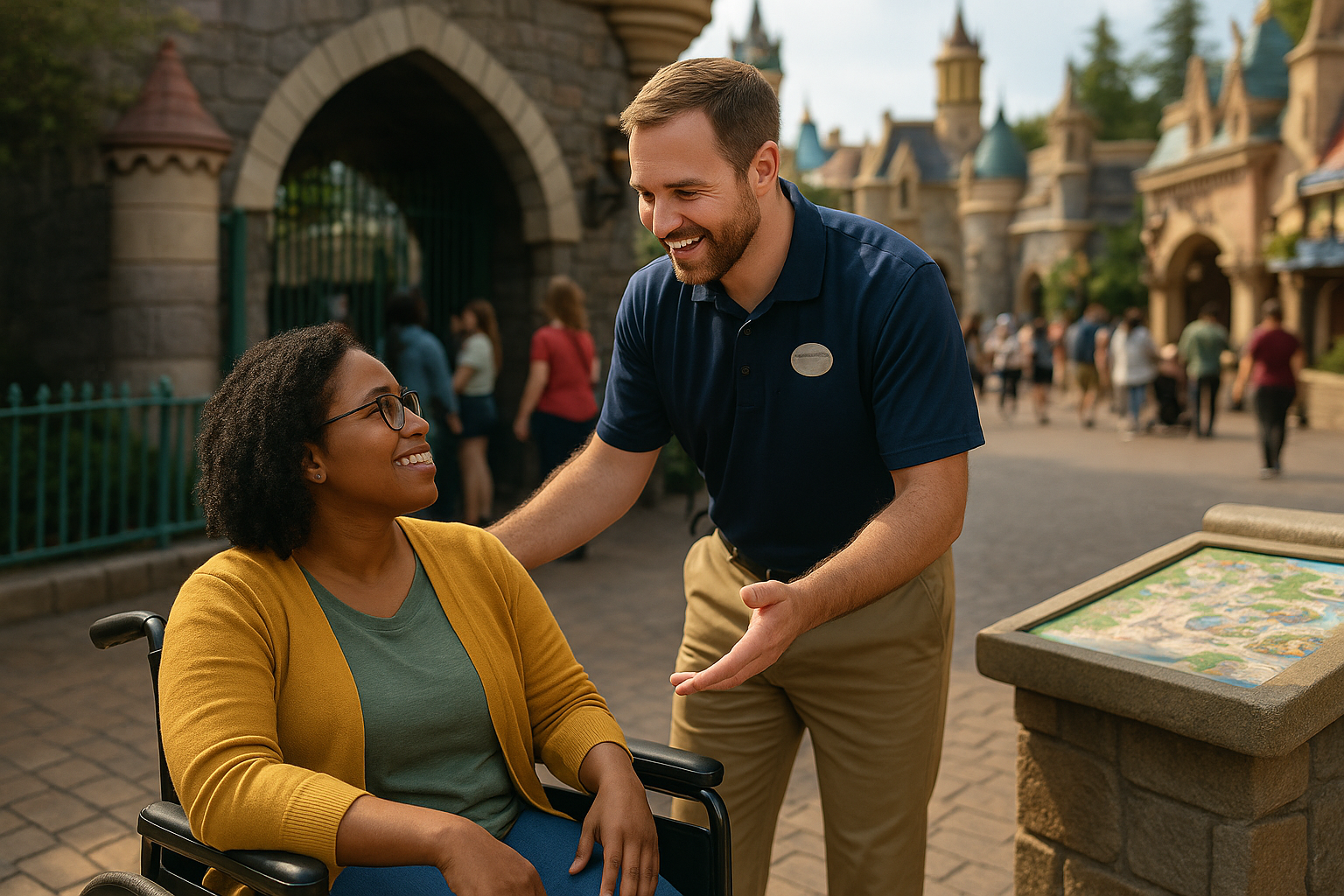
How to Build a Theme Park Career in Accessibility and Guest Inclusion
When people picture theme park careers, they often think of attractions, entertainment, food and beverage, or guest services. Those are important paths, but the attractions industry also needs professionals who help make parks more welcoming and accessible for guests with different abilities, needs, and experiences.
Careers connected to accessibility and guest inclusion can involve operations, communications, training, technology, guest relations, design, or project coordination. If you are searching for meaningful theme park jobs and want to use problem-solving and people skills in a specialized area, this career path is worth exploring.
What Do Accessibility and Inclusion Roles Involve?
Accessibility work in the theme park industry is not limited to one department. Responsibilities can vary by employer and position, but the work may include helping improve guest information, supporting accessibility programs, reviewing physical or digital experiences, assisting with training, and collaborating with multiple teams.
Professionals in this area may work with:
- Guest services: Helping create clear, respectful processes for guests who request accommodations or additional support.
- Operations: Identifying ways that attractions, queues, transportation, and daily procedures can better serve a wide range of guests.
- Entertainment: Considering accessibility in live shows, character experiences, parades, and event programming.
- Technology: Supporting accessible websites, mobile applications, digital maps, communication tools, or assistive features.
- Training and human resources: Helping team members understand inclusive service and effective communication.
- Design and development: Contributing guest perspectives during the planning or improvement of attractions and facilities.
Job titles may differ across theme parks, resorts, museums, zoos, aquariums, and other attractions. Search beyond the exact phrase “accessibility coordinator.” Related opportunities may use terms such as guest experience, inclusion, compliance, training, community engagement, project coordination, or universal design.
Skills That Help You Get Hired in This Area
You do not necessarily need to begin with a specialized accessibility job. Many people develop relevant experience through guest-facing or operational positions and gradually build expertise.
Start with strong communication skills
Accessibility work often involves translating complicated information into clear, respectful guidance. You may need to communicate with guests, frontline employees, managers, vendors, and creative or technical teams. Listening carefully and avoiding assumptions are just as important as speaking confidently.
Learn to think across the entire guest journey
Consider what a guest experiences from the moment they research a park to the time they leave. Can they find useful information online? Is signage easy to understand? Are team members prepared to answer questions? Are there clear ways to request support? This type of systems thinking is valuable in attractions careers.
Understand accessibility as a design principle
Accessibility is not only about responding to individual requests. It can also involve designing information, spaces, services, and experiences that work well for as many people as possible. Familiarity with concepts such as universal design, accessible communication, sensory considerations, and inclusive customer service can help you contribute more effectively.
If you are still in school, look for coursework, volunteer projects, student organizations, or community programs related to disability studies, human-centered design, hospitality, recreation, education, technology, or communications. These experiences can help you demonstrate genuine interest without overstating your expertise.
How to Gain Relevant Theme Park Experience
Frontline roles can provide valuable insight into accessibility challenges. Working in guest relations, attractions operations, ticketing, transportation, entertainment, or resort services allows you to observe where guests may need clearer information or additional support.
Keep a learning journal during your work or volunteer experience. Record questions such as:
- Where do guests commonly need extra explanation?
- Which procedures are difficult to understand or remember?
- How do different departments share information?
- What communication approaches help guests feel respected?
- How could a process be clearer without creating unnecessary barriers?
Do not treat guests as case studies or share private details. Instead, use your observations to develop thoughtful, general lessons about service and operations.
You can also build a portfolio of practical work. For example, create a sample accessible guest-information guide, evaluate the clarity of a public-facing attraction webpage, design a training outline for inclusive communication, or write a proposal for improving wayfinding. Make it clear that the project is an educational exercise rather than an official recommendation for a specific employer.
Networking with Professionals in Guest Inclusion
Networking can help you understand how accessibility careers actually function inside attractions organizations. Search ThemeParkConnections.com and professional communities for people working in guest experience, operations, training, design, technology, or inclusion-related roles.
When reaching out, avoid asking immediately for a job. Ask focused questions about the field instead:
- What entry-level experiences helped you move into this work?
- Which departments collaborate most often on accessibility?
- What skills do you wish you had developed earlier?
- What professional resources or events have been useful?
Be prepared to explain why the field interests you and what you are doing to learn. A thoughtful conversation may not lead directly to an opening, but it can help you identify better search terms, understand career paths, and build a professional reputation based on curiosity and respect.
How to Search for Accessibility-Focused Theme Park Jobs
Review employer career pages for parks, resorts, museums, zoos, aquariums, family entertainment centers, and destination attractions. Use combinations of keywords such as “guest experience,” “accessibility,” “inclusion,” “community relations,” “training,” “visitor services,” “universal design,” and “project coordinator.”
Also pay attention to roles that may not include accessibility in the title. A guest experience, operations support, digital content, or learning and development position may provide relevant responsibilities and connections.
Customize your application materials to show specific evidence of listening, problem-solving, teamwork, and inclusive service. Describe what you did, who you supported, and what you learned. Avoid claiming expertise you do not have; employers value self-awareness and a willingness to keep learning.
Build Your Attractions Network with Theme Park Connections
A career in accessibility and guest inclusion grows through knowledge, practical experience, and relationships across departments. ThemeParkConnections.com gives aspiring and current attractions professionals a place to connect with industry peers, share experiences, explore lesser-known career paths, and learn from people working throughout the theme park community.
Join the community to expand your network, ask thoughtful career questions, and discover connections that can help you take your next step in the attractions industry.