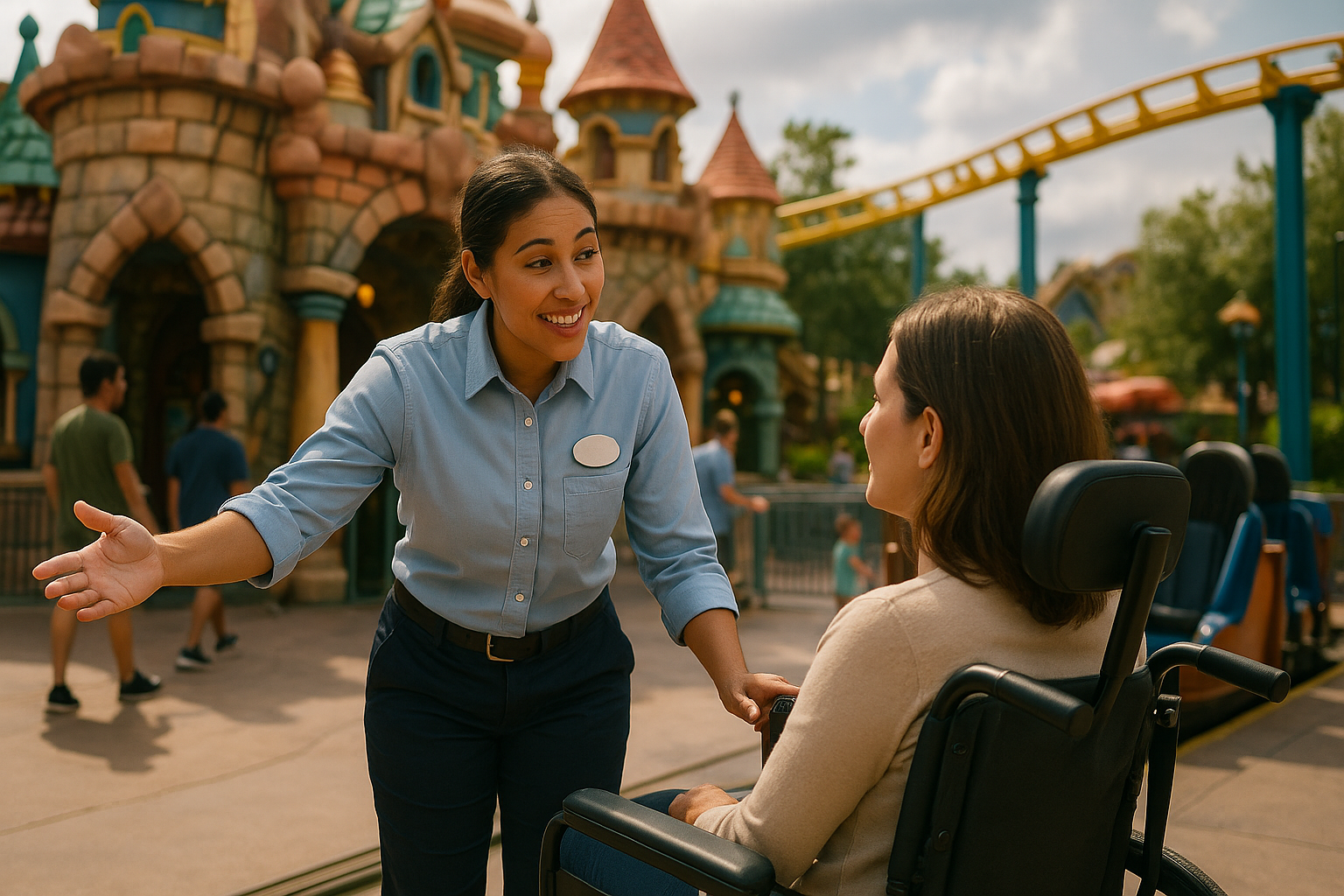
How to Build a Theme Park Career in Accessibility and Inclusion
Theme park careers are not limited to rides, entertainment, food service, or guest relations. As attractions organizations work to create more welcoming experiences, accessibility and inclusion have become important parts of park operations. That creates opportunities for people interested in guest experience, education, operations, training, technology, communications, and community partnerships.
If you want to get hired at a theme park or advance your attractions career, developing knowledge in accessibility can help you stand out. You do not necessarily need a specialized degree or a job title that already includes the word “accessibility.” You can begin by building relevant experience, learning how different departments affect the guest experience, and connecting with professionals who understand this work.
What Does Accessibility Work Look Like in the Attractions Industry?
Accessibility touches nearly every part of a theme park. Team members may help guests understand attraction requirements, navigate facilities, access entertainment experiences, use digital tools, or find appropriate services. Other professionals may focus on training, communications, design, technology, policy, or community outreach.
Possible career paths include:
- Guest accessibility services
- Guest experience and customer care
- Training and learning development
- Human resources and employee inclusion
- Attraction design and project planning
- Digital accessibility and website support
- Communications and content development
- Community relations and nonprofit partnerships
- Operations leadership
Many of these roles require collaboration. A professional working in accessibility may communicate with ride operations, entertainment, food and beverage, facilities, security, technology, and leadership teams. Understanding how those departments work together is valuable for anyone seeking a long-term theme park career.
Start by Learning the Guest Experience
Before pursuing a specialized role, spend time observing the full guest journey. Think beyond whether a guest can enter an attraction. Consider how they find information, purchase tickets, reach transportation, wait in line, access restrooms, experience shows, order food, and ask for assistance.
When visiting a park, pay attention to details such as signage, website instructions, mobile applications, queue layouts, audio and visual information, seating, and staff communication. The goal is not to criticize individual team members. Instead, learn to identify where clear information and thoughtful design can make an experience easier to understand.
You can also build this perspective through customer-facing work outside a theme park. Hotels, museums, theaters, zoos, event venues, restaurants, and visitor attractions all provide experience with guests who have different needs and expectations.
Build Skills Employers Can Use
Accessibility-related careers require more than good intentions. Employers need people who can communicate clearly, follow procedures, protect guest privacy, and work calmly in busy environments. Depending on the role, useful skills may include:
- Professional communication with guests, families, and coworkers
- Conflict resolution and active listening
- Training presentation and instructional writing
- Research and policy interpretation
- Project coordination and documentation
- Digital content and website usability
- Cross-department collaboration
- Patience, discretion, and sound judgment
Look for ways to demonstrate these abilities in your current work. You might volunteer to update an event guide, help train new employees, improve customer instructions, coordinate a community program, or review digital content for clarity. Keep track of what you contributed and what changed as a result.
Use Your Existing Background
Your previous experience may be more relevant than you realize. A teacher may bring skills in adapting information for different learning styles. A hospitality professional may understand service recovery and guest communication. A technology worker may contribute knowledge of accessible digital experiences. A performer may understand sensory considerations in live entertainment.
When applying for theme park jobs, connect your background to the needs of the role. Rather than simply stating that you are compassionate or detail-oriented, explain how you used those qualities in a real situation involving communication, service, training, or problem-solving.
Network With Professionals Across Departments
Accessibility work is often connected to several career areas, so do not limit your networking to one job title. Connect with guest service leaders, trainers, operations professionals, designers, human resources team members, technology specialists, and community relations staff.
When reaching out, ask focused questions about the work. For example:
- Which skills are most useful for entering accessibility-focused roles?
- How does accessibility collaboration work between park departments?
- What experiences helped you move into your current position?
- What should an aspiring attractions professional learn before applying?
Respect people’s time and avoid asking for a job immediately. A thoughtful conversation can help you understand the industry, identify skill gaps, and discover career paths that are not obvious from public job titles.
Look for Accessibility Projects in Any Theme Park Role
You do not have to wait for a specialized position to contribute. In an entry-level or seasonal role, you can build a reputation by providing accurate information, treating every guest with respect, and communicating questions through the proper channels. If you notice recurring confusion, document the issue and share it constructively with a supervisor.
As your experience grows, seek projects involving training materials, guest communications, special events, employee resource groups, or service improvements. These assignments can help you develop a portfolio of relevant experience without overstating your responsibilities.
Be careful not to present yourself as an expert in an area you are still learning. Strong accessibility professionals remain open to feedback and understand that individual guests may have different needs. Curiosity, humility, and a willingness to improve are important parts of professional credibility.
Prepare for Your Next Career Step
Review theme park job descriptions for recurring requirements, but do not focus only on exact titles. Search for terms related to guest experience, training, inclusion, community engagement, operations support, content, and service design. These may lead you to opportunities connected to accessibility without using that word in the position title.
Keep a record of relevant projects, courses, volunteer work, customer service experiences, and professional conversations. When an opportunity appears, you will be better prepared to explain the direction of your career and the value you can bring to an attractions organization.
Connect With the Theme Park Community
Career growth is easier when you can learn from people working in different areas of the attractions industry. ThemeParkConnections.com helps aspiring and experienced professionals connect with theme park colleagues, share career experiences, explore lesser-known roles, and build relationships that can support future opportunities.
Join the community to expand your network, learn from industry professionals, and take the next step toward a theme park career focused on creating better experiences for every guest.