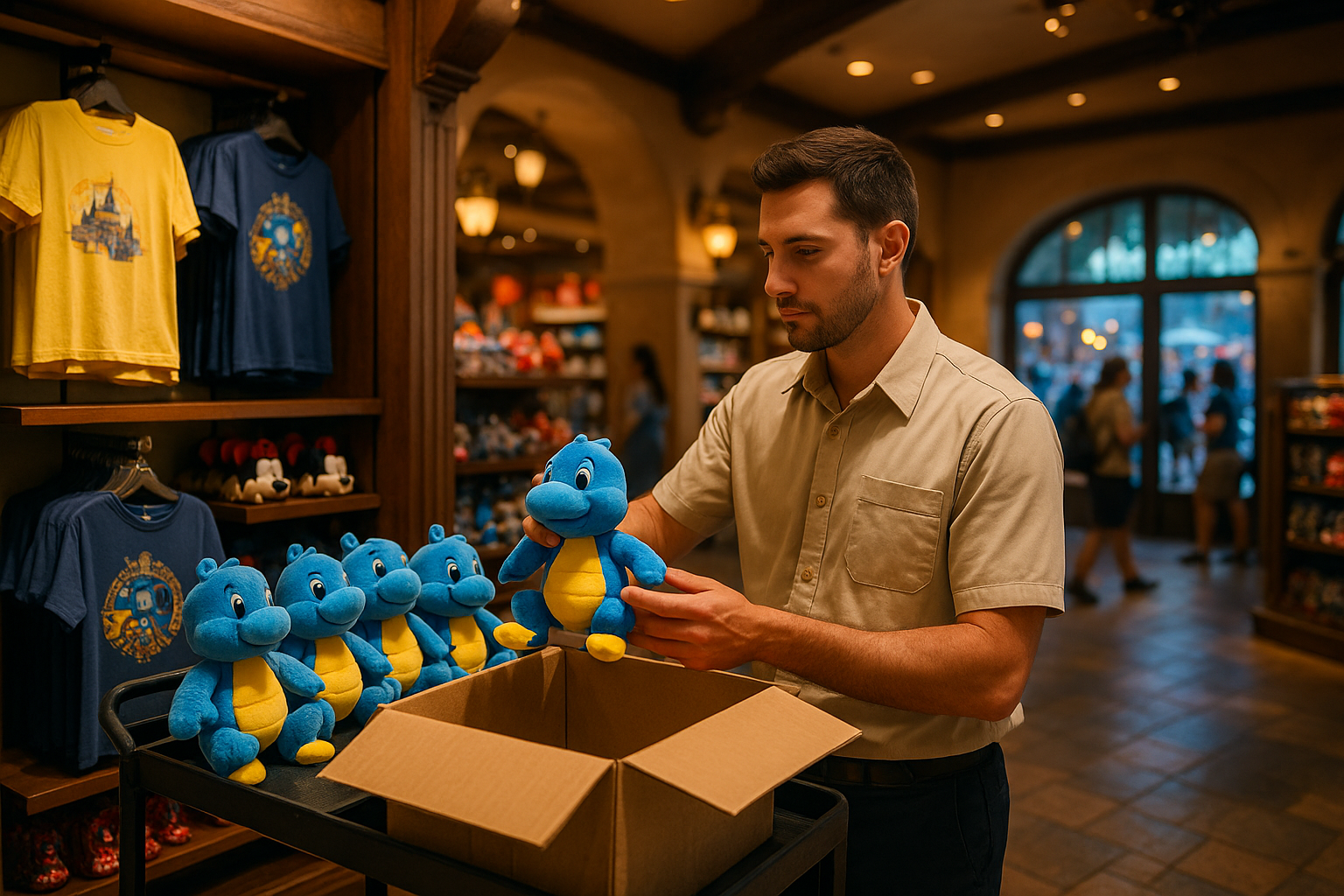
The Retail Replenishment Run: Keeping a Busy Theme Park Shop Guest-Ready
A theme park merchandise location can look fully stocked to guests while employees are constantly moving product, checking inventory, adjusting displays, and responding to unexpected demand. Behind a clean sales floor is a replenishment routine that helps the shop remain organized without pulling the entire team away from guest service.
For retail employees, learning how to replenish efficiently is more than a stockroom task. It develops awareness, prioritization, visual merchandising, communication, and operational judgment—skills that can support future opportunities in retail leadership, inventory, visual presentation, and other park departments.
Why Replenishment Is More Than Filling Empty Shelves
When a product sells quickly, the obvious response is to bring out more. In a theme park, however, replenishment decisions often involve several questions:
- Is the item actually out of stock, or has it been misplaced?
- Is there enough product in the stockroom to justify another trip?
- Will bringing out a full case interrupt guest traffic?
- Does the display still match the intended presentation?
- Is the product selling because of a nearby event, attraction opening, or weather change?
- Does another location need to know that demand has increased?
The goal is not simply to move merchandise from one room to another. The goal is to keep the sales floor easy to shop, visually consistent, and ready for the next wave of guests.
Start by Reading the Sales Floor
Experienced retail employees learn to scan a shop before deciding what to replenish. An empty shelf is only one sign that attention is needed. A display may still contain product but look incomplete because sizes are mixed, colors are scattered, or popular items have been pushed toward the back of a fixture.
During a floor check, look for:
- Empty hooks, shelves, tables, or bins
- Products placed in the wrong location
- Displays that have become uneven after guest handling
- Popular sizes or variations that are nearly gone
- Packaging that is damaged or unsuitable for display
- Merchandise blocking signage, prices, or neighboring products
- Items left in fitting rooms, checkout areas, or unrelated fixtures
This kind of scan helps employees prioritize the work instead of making repeated trips for one item at a time. It also protects the guest experience. A well-maintained display makes it easier for guests to find what they want and reduces the number of questions employees must answer about product location.
Build a Replenishment Route
One of the easiest ways to lose time is to enter the stockroom without a plan. Before leaving the sales floor, identify several needs and group them into one trip whenever possible.
A useful replenishment route might include:
- Checking the highest-priority displays first.
- Noting the product, size, color, or variation required.
- Looking for related items that are also running low.
- Collecting merchandise in an organized way.
- Returning to the sales floor through the least disruptive path available.
- Replenishing, recovering, and inspecting the display before moving on.
The exact process will depend on the location and the direction of the leader, but the principle is consistent: combine tasks when it is practical and safe. Several organized replenishment decisions are usually more efficient than a series of rushed trips based on whatever empty space is noticed first.
Prioritize What Affects the Guest Most
Not every low-stock item requires immediate attention. A nearly empty feature display at the entrance may need faster action than a single missing item on a secondary shelf. A product connected to a special event or seasonal promotion may also deserve priority because guests are specifically looking for it.
Consider prioritizing:
- Feature displays and high-traffic areas
- Products promoted on signs or digital screens
- Popular sizes, colors, or character designs
- Items connected to a nearby event or attraction
- Merchandise that creates a visibly incomplete presentation
- Products that guests have repeatedly asked for during the shift
Protect the Guest Experience During Restocking
Replenishment often happens while guests are shopping. A box in the wrong location can create a trip hazard, block a display, or make a small sales floor feel crowded. Guests may also hesitate to approach a fixture when an employee is unpacking merchandise directly in front of it.
When bringing product to the floor, remain aware of traffic patterns and guest behavior. If a guest approaches the area, make space rather than expecting the guest to work around you. A simple “I can move this so you can take a look” keeps the interaction welcoming and professional.
When possible, restock in smaller groups instead of placing an entire shipment or case on the floor at once. Smaller quantities are often easier to manage, create less obstruction, and allow employees to maintain a cleaner presentation while working.
Replenishment should never take priority over an immediate safety concern or an active guest need. If a guest needs assistance, pause the task and help or connect the guest with the appropriate team member.
Keep the Stockroom Ready for the Next Trip
A disorganized stockroom makes every future replenishment slower. Employees may spend valuable time searching for products, opening the wrong cartons, or trying to determine whether an item is actually available.
After pulling merchandise, take a moment to leave the area in a workable condition:
- Return unopened cartons to their proper location.
- Keep similar products grouped together.
- Do not leave empty boxes where they block access.
- Separate damaged or questionable merchandise according to department expectations.
- Keep walkways and work areas clear.
- Communicate when a product is low, missing, or difficult to locate.
A clean stockroom is not just a matter of appearance. It improves response time during busy periods and makes it easier for another employee to continue the work when the original employee is called to the sales floor.
Communicate Patterns, Not Just Problems
Retail employees often notice demand changes before anyone reviewing inventory numbers does. If guests are repeatedly asking for the same item, a particular size is disappearing quickly, or a display empties after a nearby show, share that information with the appropriate leader.
Useful communication is specific:
- Which product is moving quickly?
- Which variation is most affected?
- When did the increase begin?
- Is the demand limited to one display or happening throughout the location?
- Are guests asking whether more product is available?
This information can help leaders decide whether to adjust the display, request additional product, notify another location, or change the replenishment priority for the rest of the shift.
Replenishment Skills Can Lead to Bigger Opportunities
Employees who consistently manage replenishment well demonstrate more than speed. They show attention to detail, awareness of guest behavior, organization, and an understanding of how merchandise presentation supports the operation.
To strengthen those skills, practice:
- Scanning the entire sales floor instead of focusing only on obvious gaps
- Planning efficient stockroom trips
- Maintaining displays while replenishing
- Recognizing demand patterns
- Communicating shortages clearly
- Balancing task completion with guest service
Those habits can become valuable preparation for responsibilities involving inventory, visual merchandising, stockroom coordination, training, or retail leadership.
Build Connections Beyond Your Store
Retail work in a theme park connects with nearly every other department. Merchandise teams may support special events, coordinate with entertainment, respond to changing traffic patterns, and work alongside food and beverage, attractions, guest services, and resort operations.
ThemeParkConnections.com gives people working throughout the theme park and attractions industry a place to connect with other professionals, share experiences, learn about different departments, discover career opportunities, and expand their professional networks.
A strong replenishment routine may begin in a stockroom, but the skills it develops reach much further. Employees who learn to notice what guests need, protect the presentation, and keep the operation organized are building habits that can serve them throughout a theme park career.