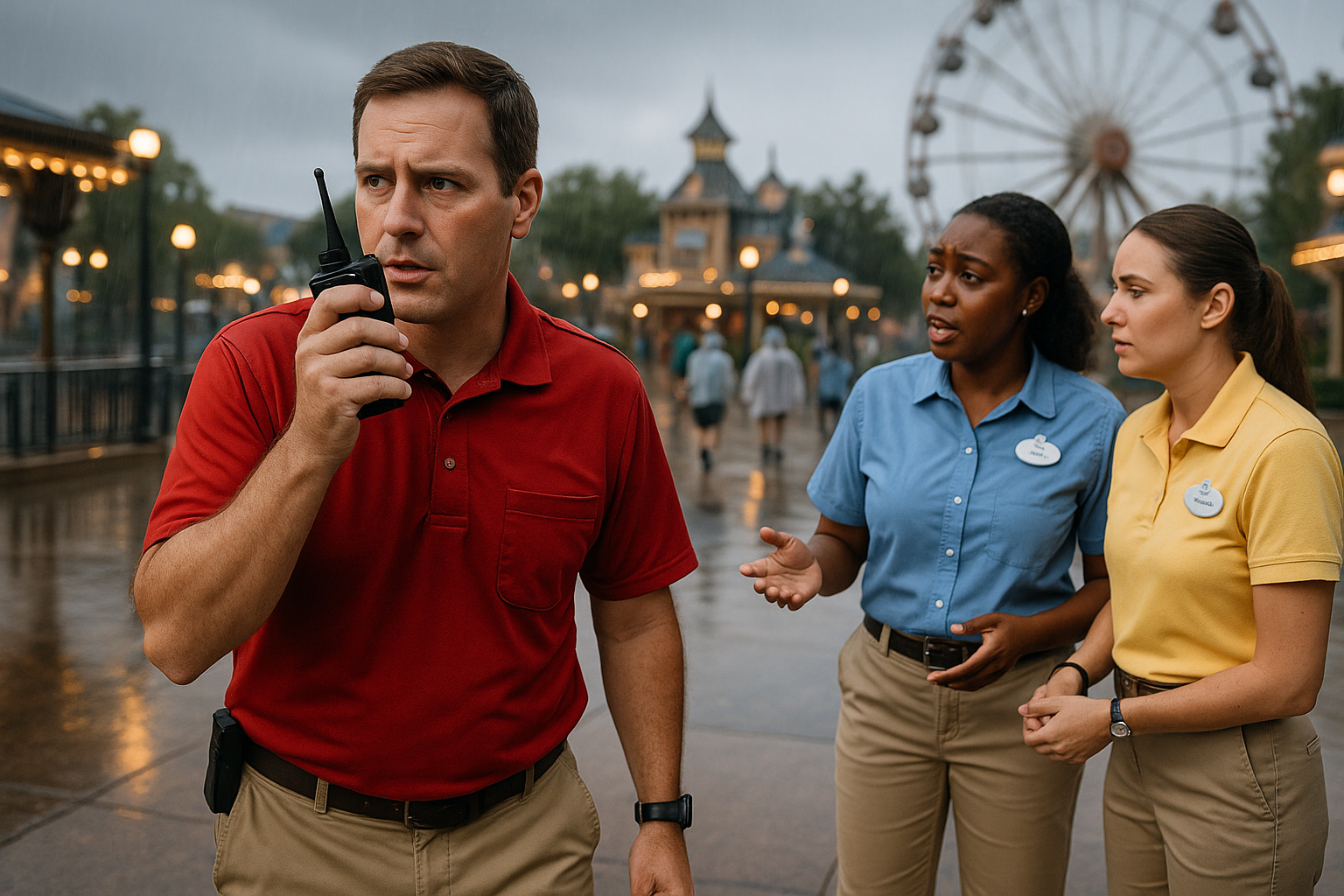
When the Weather Changes the Plan: Communicating Operational Changes Across a Theme Park Team
A weather change can affect nearly every department in a theme park within minutes. A storm may alter attraction operations, outdoor entertainment, food and beverage service, merchandise displays, transportation, custodial coverage, and guest communication at the same time.
For employees, the challenge is not simply knowing that rain, lightning, heat, or high winds may affect operations. The real skill is understanding how to communicate those changes clearly while the situation is still developing. A strong weather response depends on accurate information moving between departments without creating confusion for employees or guests.
Why Weather Communication Matters
Weather-related decisions are often made under pressure. A team may be preparing for an outdoor performance when wind conditions change. An attraction may pause operations while guests are already in the queue. A restaurant may suddenly see a large number of guests seeking shelter. Employees may also need to adjust their own work practices because of heat, wet surfaces, reduced visibility, or changing crowd patterns.
When communication is incomplete, employees may give guests different answers, miss important safety information, or continue working from an outdated plan. Even a short delay can create operational problems.
Clear communication helps teams:
- Keep employees and guests informed without speculation
- Coordinate changes between front-of-house and backstage areas
- Reduce duplicated work and unnecessary radio traffic
- Protect equipment, costumes, food, merchandise, and work areas
- Provide a more consistent guest experience during disruptions
Start With Confirmed Information
One of the most common mistakes during weather disruptions is passing along information before it has been confirmed. Employees may hear that a parade is canceled, a ride will reopen soon, or a resort activity is moving indoors. Repeating that information before it is official can create false expectations.
Use a simple rule: share what is confirmed, identify what is still developing, and avoid guessing about what happens next.
For example, there is a significant difference between saying, “The outdoor show is canceled,” and saying, “The outdoor show is currently paused while the team evaluates conditions.” The second statement is more accurate when a final decision has not been made.
If you do not know the answer, it is better to say that you are checking than to provide a confident but incorrect response. Guests generally respond better to an honest update than to information that changes a few minutes later.
Use the Right Communication Channel
Different information belongs in different places. A radio call may be appropriate for an immediate operational update, but it may not be the best way to communicate a detailed change affecting several departments. Similarly, a quick conversation between coworkers should not replace an official notification when the entire team needs to know.
Radio communication
Use radio communication for information that is urgent, operationally relevant, and useful to multiple people listening. Keep the message brief and organized:
- Identify yourself or your location
- State the current condition
- Explain the immediate impact
- Share the action being taken, if known
- Ask for help or clarification when necessary
A useful message might sound like: “Outdoor dining location reporting standing water near the guest entrance. The area is being redirected while Facilities is notified.” It gives listeners a clear situation without unnecessary commentary.
In-person communication
Face-to-face communication is often better for sensitive or detailed conversations, such as explaining a staffing change, reviewing a safety concern, or coordinating a temporary workspace. If a weather condition creates a risk, do not rely on a message that could be missed. Speak directly with the appropriate leader or department contact.
Written updates
Written communication can help preserve consistency when an operational change lasts for several hours. A shift leader may need to document a temporary entrance, revised meeting location, modified entertainment schedule, or equipment relocation. Follow the communication practices established by your employer, especially for operational and safety-related information.
Think Beyond Your Own Department
Weather rarely affects only one team. A strong response requires employees to consider who else may be impacted by a change.
For example, if an outdoor attraction closes temporarily, the effects may include:
- Guest Services receiving questions from guests looking for alternatives
- Food and Beverage locations experiencing a sudden increase in demand
- Retail teams handling guests who are seeking indoor spaces
- Custodial employees managing wet floors and increased traffic
- Transportation teams responding to changes in guest movement
- Entertainment teams adjusting schedules or moving equipment
You may not be responsible for solving every related issue, but recognizing those connections helps you provide better information. If your team knows that guests are being redirected to another area, communicate that detail to the appropriate department rather than assuming someone else will do it.
Prepare for the Questions Guests Will Ask
Guests often want three things during a weather disruption: to know what is happening, what they can do now, and whether the original activity will return. Employees should be prepared to answer within the limits of their role.
Useful responses are specific without making promises:
- “The attraction is temporarily unavailable while conditions are assessed.”
- “The outdoor performance is paused at this time. Please check the posted schedule or speak with Guest Services for updates.”
- “That walkway is being redirected because of wet conditions. The alternate entrance is just ahead.”
- “I do not have a confirmed reopening time, but I can help you find another activity.”
Avoid criticizing the weather, blaming another department, or sharing internal speculation. Guests do not need every backstage detail. They need accurate information and practical next steps.
Do Not Forget Employee Safety
Weather communication should include employee needs, not only guest-facing changes. Heat, lightning, heavy rain, wind, and cold conditions can affect how safely employees perform their work. Leaders and team members should speak up when conditions create a concern, particularly for employees working outdoors, handling equipment, performing in costumes, or moving through slippery areas.
Employees can help by reporting conditions early, keeping walkways and work areas clear, using approved protective equipment, and following the direction of trained leaders. If a procedure is unclear, ask for clarification rather than improvising.
Small observations can be valuable. A slick service corridor, unsecured outdoor item, blocked drain, or guest buildup near a shelter may become a larger problem if nobody reports it.
Build Better Habits During Every Shift
You do not need to wait for severe weather to practice good operational communication. During routine shifts, pay attention to how your department receives updates, who is responsible for distributing them, and which neighboring teams may need the same information.
Before a forecasted weather event, consider reviewing:
- Where your team meets if an outdoor location becomes unavailable
- Which supervisor or department contact receives weather updates
- How guests will be redirected from your work area
- What equipment or materials may need protection
- What information should be included in a shift handoff
These habits build skills that apply well beyond weather operations. Employees who communicate clearly during changing conditions often become trusted resources during special events, peak attendance, attraction downtime, and other unexpected situations.
Developing a Reputation for Reliable Communication
Theme park operations depend on employees who can remain calm, accurate, and useful when plans change. You do not need to have a leadership title to demonstrate those qualities. Reporting a developing issue, correcting misinformation respectfully, or helping another department understand a change can make a meaningful operational difference.
Over time, dependable communication can strengthen your professional reputation. Leaders notice employees who provide facts instead of rumors, think beyond their assigned area, and help guests navigate uncertainty with patience.
Theme Park Connections gives people working throughout the theme park and attractions industry a place to connect with other professionals, share experiences, learn about different departments, and expand their professional networks. It can also help employees discover career opportunities and build relationships across the attractions industry—connections that are especially valuable when learning how other teams handle complex operational challenges.
Weather may change the plan, but it does not have to create confusion. When employees communicate confirmed information, consider the needs of neighboring departments, and keep safety at the center of the response, the entire park is better prepared to adapt.