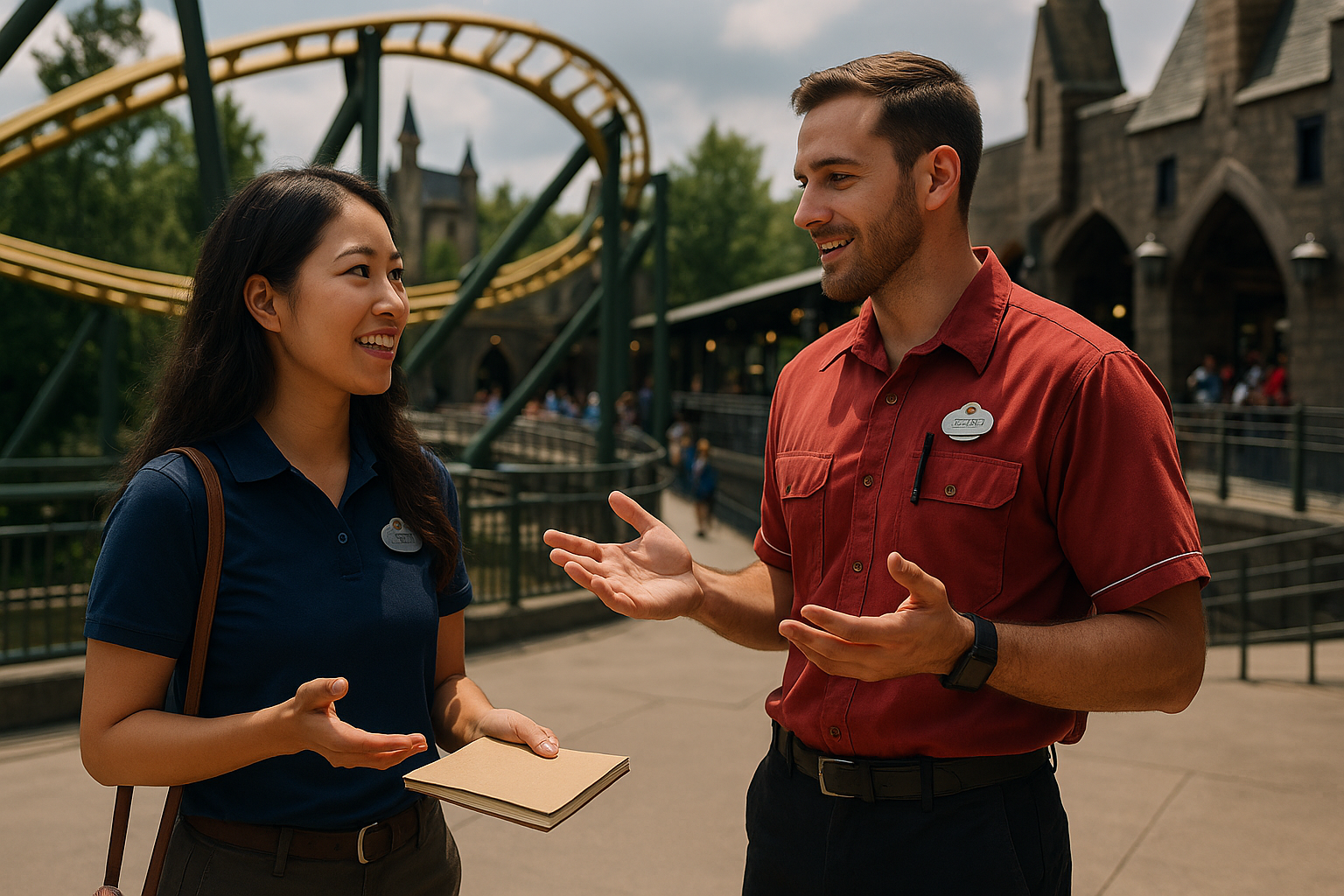
How to Build a Theme Park Career Map Through Informational Conversations
Many people searching for theme park jobs know they want to work in the attractions industry, but they are less certain about which role fits their skills. Guest services, entertainment, operations, food and beverage, maintenance, marketing, technology, and leadership can all lead to different career paths. The challenge is learning what those jobs are really like before investing time in applications or making a major career change.
One of the most effective ways to explore theme park careers is through informational conversations with professionals already working in the industry. These conversations are not job interviews or requests for employment. They are short, focused opportunities to learn how people entered the field, what their work involves, and which skills matter most.
Why Informational Conversations Matter in the Attractions Industry
Theme park job descriptions often provide only a partial view of the work. A posting may mention guest interaction, safety procedures, scheduling, technical skills, or project coordination, but it may not explain how those responsibilities fit into a typical day.
A conversation with someone in the role can help you understand details that are difficult to find online, such as:
- What a normal shift or project cycle looks like
- Which responsibilities take the most time
- What skills new employees often need to strengthen
- How seasonal or front-line experience can lead to other opportunities
- Which related departments may be worth exploring
This information can help you make more informed decisions about where to apply, what training to pursue, and how to describe your experience when seeking theme park employment.
Choose a Career Question Before You Reach Out
A strong networking conversation begins with a specific question. Instead of contacting someone with a broad message such as “Can you tell me about your career?” identify the decision you are trying to make.
For example, you might want to know whether your customer service background could transfer into theme park operations, whether a technical portfolio would be useful for entertainment technology roles, or what entry-level experience could help you move toward event production.
Useful questions include:
- What attracted you to this area of the attractions industry?
- Which skills have been most valuable in your current role?
- What did you misunderstand about this career before entering it?
- What related departments should someone with my background research?
- What kind of experience would make a candidate more prepared for this work?
Specific questions make it easier for the professional to give useful advice and show that you have taken time to think about your career direction.
Find Theme Park Professionals to Contact
Start with people whose work is close to the path you are considering. If you are interested in guest experience, look for professionals in guest relations, park operations, accessibility services, or hospitality. Someone exploring technical careers might connect with employees in ride maintenance, audio-visual production, information technology, or show systems.
You do not need to contact only senior executives. Coordinators, supervisors, technicians, designers, trainers, and department specialists may provide especially practical insight because they remember the early steps of their own careers.
Professional networking communities, industry events, alumni groups, volunteer projects, and attraction-focused organizations can all help you identify potential contacts. When possible, look for a genuine connection, such as a shared school, professional interest, geographic region, or department.
Write a Respectful Outreach Message
Your first message should be brief, personalized, and easy to answer. Explain who you are, why you are contacting that person, and what you hope to learn. Ask for a short conversation rather than requesting a referral or job opportunity.
For example:
“Hello, I am exploring career paths in theme park operations and noticed your experience in guest experience and training. I currently work in hospitality and would appreciate learning how your background prepared you for the attractions industry. If you are available, could I ask you a few questions during a 15-minute call or message exchange?”
A message like this gives the recipient context and sets a reasonable expectation. If they cannot respond, do not take it personally. Theme park professionals often work changing schedules, long operating days, or project-based hours.
Prepare for a Useful Career Conversation
Before the conversation, review the person’s professional background and write down three to five questions. Avoid turning the discussion into a checklist. Let the answers guide the conversation naturally.
Ask about both the appealing and difficult parts of the role. Theme park work can involve early mornings, late nights, changing schedules, high guest expectations, physical demands, or strict operational procedures depending on the department. Learning about those realities helps you evaluate the career honestly.
You can also ask what adjacent roles use similar skills. A person interested in entertainment may discover connections to scheduling, technical operations, casting support, production management, or event coordination. Someone focused on retail may find that visual merchandising, inventory, training, or guest experience offers additional directions.
Turn Advice Into a Theme Park Career Plan
After each conversation, record what you learned and identify one practical next step. You might update your list of target roles, enroll in relevant training, volunteer at live events, build a project portfolio, or gain experience handling high-volume guest interactions.
Create a simple career map with three categories:
- Roles to explore: Positions that match your interests and current strengths
- Skills to develop: Abilities mentioned repeatedly by industry professionals
- People to learn from: Contacts who can help you understand different departments or career stages
Over time, patterns may emerge. Several professionals might emphasize communication, safety awareness, scheduling, technical troubleshooting, or collaboration. Those themes can help you decide how to present your experience when applying for theme park jobs.
Follow Up and Build a Real Professional Relationship
Send a thank-you message after the conversation and mention one specific insight you found helpful. Later, provide a brief update if their advice led to a meaningful action, such as completing training or applying for a role.
Networking should not consist of contacting someone only when you need a referral. A stronger relationship develops through occasional, thoughtful follow-up and genuine interest in the person’s work. Always respect boundaries and avoid expecting guaranteed introductions or employment opportunities.
Connect With More Attractions Professionals
ThemeParkConnections.com gives aspiring and current attractions professionals a place to connect, share experiences, explore career paths, and learn from people working across the industry. Joining the community can help you discover different roles, expand your professional network, and start conversations that make your theme park career goals more concrete.
Join ThemeParkConnections.com to meet industry professionals and continue building relationships across the attractions community.