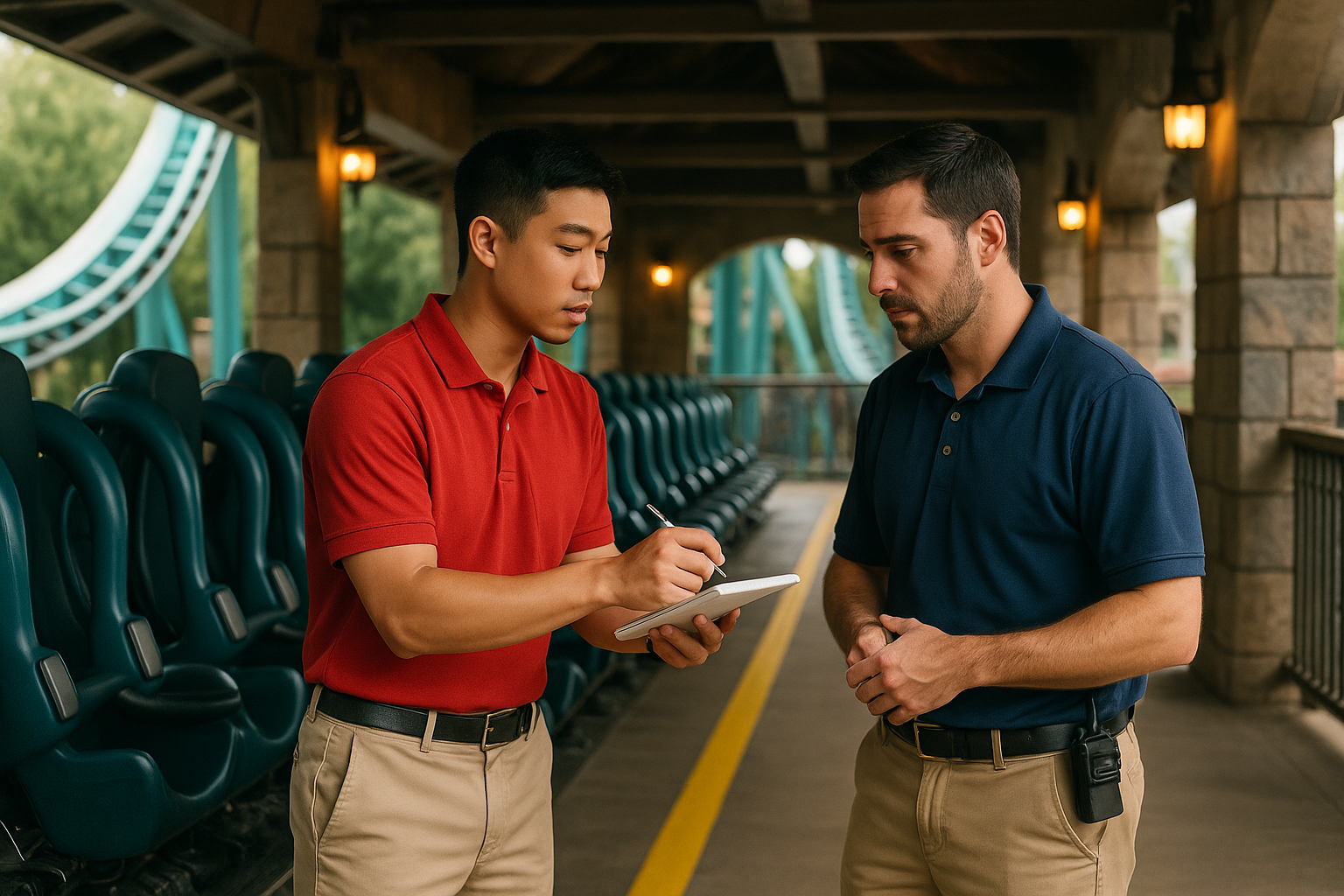
The Five-Minute Handoff That Keeps a Theme Park Day Moving
A theme park shift rarely ends at a clean stopping point. One employee is leaving while a queue is still active, a technician is monitoring an unresolved issue, a restaurant is preparing for a rush, or a parade route is being secured. The next team member needs to understand what is happening immediately—not after several minutes of searching for answers.
That is why a strong shift handoff is more than a courtesy between coworkers. It is an operational skill. Done well, a handoff protects safety, prevents duplicated work, reduces guest frustration, and helps the incoming employee start with confidence.
What Makes a Shift Handoff Effective?
An effective handoff gives the next employee the information they need to make good decisions without overwhelming them with every detail from the previous shift. The goal is not to deliver a complete history of the day. The goal is to communicate what is active, what has changed, and what still requires attention.
A useful handoff usually answers five questions:
- What is happening right now?
- What has already been completed?
- What remains unresolved?
- Who has been notified?
- What should happen next?
This structure works in nearly every department. A ride operator might discuss an attraction that has experienced intermittent downtime. A food and beverage employee might explain that one register is offline and a replenishment delivery is expected. A hotel employee might note a guest request that has been escalated but not completed.
Separate Facts, Actions, and Assumptions
One of the most common handoff problems is mixing confirmed information with guesses. An incoming employee may hear, “The ride is probably going to be down for the rest of the night,” when the only confirmed fact is that maintenance is investigating an issue.
Those statements create very different expectations.
Use clear language
Try separating information into three categories:
- Facts: “The attraction stopped at 2:15 p.m. and has not reopened.”
- Actions taken: “The lead contacted maintenance, and the status was updated on the department communication channel.”
- Next step: “Continue monitoring for an approved reopening update before changing guest messaging.”
This approach keeps the handoff accurate and prevents rumors from becoming part of the operating picture. It also gives the next employee a professional way to explain the situation if a guest or coworker asks for information.
Prioritize What Can Affect the Next Hour
Not every detail from the previous shift deserves equal attention. A handoff becomes difficult to follow when minor information is presented with the same urgency as a safety concern, unresolved guest issue, or operational restriction.
Start with anything that could affect the next rotation or create a decision point. Examples include:
- An active ride restriction or unresolved equipment concern
- A guest situation that has been escalated to a leader
- A special event, performance, or operational change approaching soon
- Equipment that is unavailable or behaving inconsistently
- A staffing gap affecting break coverage or position assignments
- A supply, inventory, or cash-handling issue requiring follow-up
- Weather or environmental conditions affecting outdoor work
If something is already resolved and documented, mention it briefly. If it could require action from the incoming employee, give it more attention.
Use a Consistent Handoff Format
Departments benefit from having a repeatable structure, even when the exact process differs by employer. A consistent format makes information easier to remember during busy periods and helps newer employees develop good habits.
One practical format is status, impact, action, and owner:
- Status: What is the current condition?
- Impact: Who or what is affected?
- Action: What has been done, and what should happen next?
- Owner: Who is responsible for the next step?
For example, a handoff in a merchandise operation might sound like this:
“The east stockroom is waiting on a replenishment delivery. The front display has enough product for the current rush, but the back-up sizes are limited. Inventory control has been contacted, and the next shift should check the delivery status before the evening peak. I recorded the request in the department log.”
This is more useful than simply saying, “We are low on stock.” It explains the present situation, the likely effect, and the next action.
Do Not Rely on Written Notes Alone
Logs, checklists, digital records, and communication systems are valuable, but documentation should support a handoff rather than replace one. A note can be misunderstood, overlooked, or separated from the context in which it was written.
When an issue is active, speak directly with the incoming employee whenever possible. Point out the relevant record, explain any unusual circumstances, and confirm that the employee understands what requires attention.
This is especially important for situations involving:
- Safety-related concerns
- Unresolved guest escalations
- Equipment or facility problems
- Cash, inventory, or access discrepancies
- Changes to the normal operating plan
A useful habit is to ask the incoming employee to repeat the next step in their own words. This is not a test. It is a quick way to catch misunderstandings before the shift becomes busier.
Handoffs During Downtime and High-Volume Periods
Shift changes are particularly vulnerable during ride downtime, parade movement, meal rushes, special events, and end-of-day closing activity. Employees may feel pressure to leave quickly, but rushing the handoff can create more work for everyone else.
During a busy transition, focus first on the information that changes the immediate plan. A short handoff may be appropriate, but it should still include the current status, the latest communication, and the next decision point.
If there is no time for a complete conversation, notify the appropriate lead or supervisor and leave a clear written record according to department practice. Do not assume that someone else will pass along the information.
What Employees Can Learn From Better Handoffs
Strong handoffs build skills that extend beyond a single department. Employees who communicate clearly during transitions often become trusted resources because leaders know they can preserve continuity when conditions change.
Practicing effective handoffs develops:
- Concise verbal communication
- Operational awareness
- Prioritization under pressure
- Professional documentation
- Accountability and follow-through
- Confidence when coordinating with other departments
These skills are useful for trainers, coordinators, leads, supervisors, and anyone working toward a role with greater responsibility. A person who can explain what happened, what matters now, and what needs to happen next is helping the entire operation stay organized.
Make the Next Person’s First Ten Minutes Easier
The best handoff is not the longest one. It is the one that allows the incoming employee to take ownership without starting from zero. Before ending your shift, pause long enough to identify the few details that could affect safety, service, workflow, or team performance.
Then communicate them clearly, distinguish facts from assumptions, identify the next action, and make sure the information is documented when necessary. That five-minute investment can prevent repeated phone calls, conflicting instructions, missed follow-ups, and avoidable guest frustration.
For people working in theme parks and attractions, operational excellence is often built through small moments that guests never see. A thoughtful shift handoff is one of those moments—and one of the simplest ways to make the next team stronger.
Theme Park Connections gives professionals throughout the theme park and attractions industry a place to connect with other employees, expand their professional networks, share experiences, learn about different departments, discover career opportunities, and build relationships across the industry. Those connections can provide valuable perspective as you develop the communication and operational skills that keep a park running smoothly.