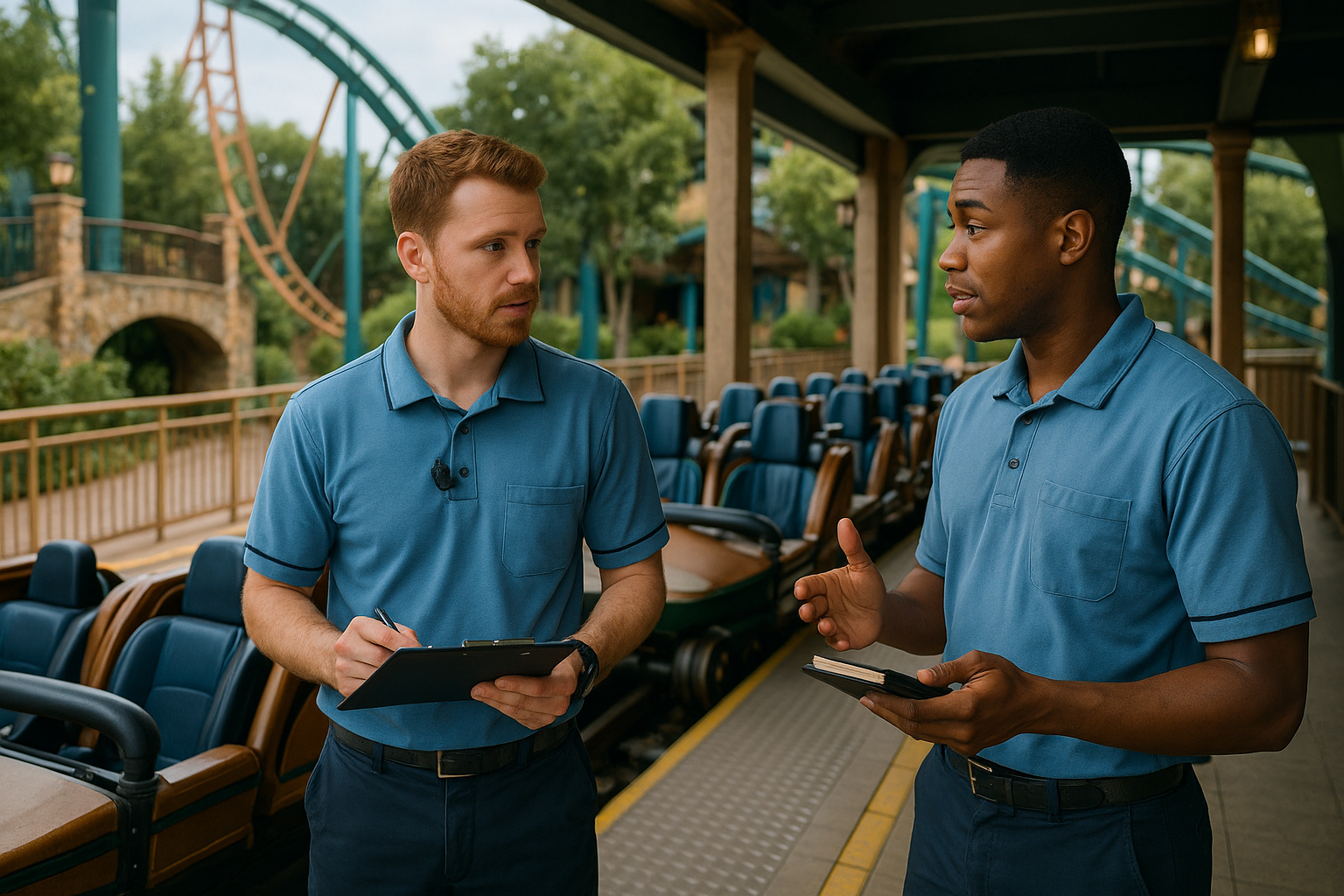
The Handoff Matters: Keeping Theme Park Operations Moving Between Shifts
A theme park day rarely belongs to one employee or one crew. Opening teams prepare the operation, mid-day employees manage the busiest hours, and closing teams leave the area ready for the next morning. In between, information has to move from one shift to another without getting lost.
That transfer of information is the shift handoff. It may happen during a few minutes at a workstation, over a radio, through a logbook, or during a formal briefing. However it happens, a strong handoff can prevent repeated work, missed follow-ups, guest frustration, and avoidable confusion.
For employees throughout attractions, food and beverage, retail, entertainment, hospitality, maintenance, and guest services, learning how to give and receive useful handoffs is a valuable professional skill.
What Makes a Shift Handoff Effective?
A shift handoff is more than saying, “Everything is good.” It should give the next employee or team a clear picture of what has happened, what is still in progress, and what needs attention.
A useful handoff usually answers four questions:
- What happened? Were there delays, equipment concerns, guest issues, staffing changes, or unusual operating conditions?
- What is currently happening? Is an issue still active, or has it already been resolved?
- What action has been taken? Who was notified, what was documented, and what temporary solution was used?
- What needs to happen next? Does someone need to follow up, monitor a situation, contact another department, or complete a task?
The best handoffs are specific without becoming unnecessarily long. “The area had a busy afternoon” is not very helpful. “The queue reached the extended area twice, and the team adjusted positions to support guest questions near the entrance” gives the next team something they can use.
Why Shift Handoffs Matter in Theme Parks
Theme park operations are connected. A small piece of missing information can affect several departments.
For example, a food and beverage team may need to know that a nearby event is drawing unusually large crowds. A retail location may need to prepare for guests redirected from another area. A hotel front desk may need to understand why a guest is returning after visiting the park. An attractions team may need to communicate a recurring operational concern to maintenance or leadership.
Good handoffs help employees avoid starting from zero at the beginning of every shift. They also reduce the temptation to rely on assumptions or informal rumors.
Strong communication is especially valuable during:
- Peak attendance periods
- Weather changes
- Special events and entertainment offerings
- Unexpected staffing shortages
- Attraction downtime
- Large guest recovery situations
- Changes to traffic patterns or operating locations
- Transitions between opening, operating, and closing teams
Separate Facts From Opinions
One of the easiest ways to weaken a handoff is to mix confirmed information with personal assumptions.
Compare these two statements:
- “The guests were being difficult, and they probably complained because they did not understand the policy.”
- “Three guests asked about the same restriction. The policy was explained, and a leader was notified because the questions continued.”
The second version gives the next team observable facts and explains what action was taken. It avoids labeling guests or employees and leaves room for the next person to assess the situation professionally.
This approach is useful when documenting guest concerns, reporting equipment behavior, communicating employee performance issues, or explaining why an operating decision was made. Facts help the next team respond. Opinions can distract from the actual issue.
Include the Details the Next Person Actually Needs
Not every detail belongs in every handoff. The goal is not to repeat an entire shift. The goal is to provide the information that affects the next decision.
For operational issues
Explain when the issue began, what was observed, and whether it is still occurring. If a process was changed temporarily, describe what changed and who approved it according to the applicable chain of communication.
For guest concerns
Share the relevant facts without exaggeration. Include what the guest needed, what was offered, and whether any follow-up remains. Avoid turning a handoff into a personal review of the guest or the employee involved.
For staffing changes
Identify open positions, break coverage concerns, late arrivals, or employees who were reassigned. A vague comment about being “short” does not tell the next leader where the real need is.
For maintenance or facility concerns
Describe the condition clearly and explain whether the concern has already been reported. If a temporary workaround is being used, make sure the next team understands that it is temporary and not a permanent resolution.
Do Not Hide Important Information in Casual Conversation
Theme park employees often communicate quickly during busy moments. A passing comment at a workstation or a message sent to one coworker may feel sufficient, but important information should not depend on one person remembering to pass it along.
If an issue affects safety, operations, guest service, staffing, equipment, or another department, use the communication method expected by your workplace. That may include a formal log, radio communication, a supervisor conversation, or another established system.
A useful rule is simple: if the next shift would make a different decision after knowing the information, the information deserves a clear handoff.
Receiving a Handoff Is Also a Skill
Handoffs often fail because the listener is already thinking about the next task. Taking a few moments to listen carefully can prevent much longer problems later.
When receiving a handoff:
- Give the person your full attention when possible.
- Ask follow-up questions if the timing, location, or status is unclear.
- Repeat back critical information to confirm understanding.
- Clarify which items are complete and which still need action.
- Record information when your department uses a written or digital process.
- Confirm who owns the next step.
“Who is following up on that?” is often one of the most useful questions in a busy operation. Without clear ownership, multiple people may assume someone else is handling the issue.
Make Handoffs Part of Your Professional Reputation
Employees who communicate clearly become people others trust with responsibility. A dependable handoff shows organization, judgment, and respect for the next team.
This skill can support future opportunities as a trainer, lead, coordinator, supervisor, or department specialist. Leaders need employees who can identify what matters, communicate it accurately, and help the operation continue without unnecessary disruption.
It also demonstrates something important about teamwork: the end of your shift is not the end of the operation. The choices you make during handoff affect employees and guests you may never meet.
A Simple Handoff Checklist
Before ending your shift, take a moment to consider:
- What unusual events occurred?
- What problems are still active?
- What has already been reported?
- What needs follow-up?
- Who is responsible for the next step?
- Does the next team need to know about staffing, guests, equipment, weather, or schedule changes?
A few accurate sentences can make the next shift more prepared, more confident, and more efficient. In an industry built around coordinated experiences, that matters.
Theme Park Connections gives professionals throughout the theme park and attractions industry a place to connect with other employees, expand their networks, share experiences, learn about different departments, discover career opportunities, and build relationships across the industry. The conversations started there can be just as valuable as the handoffs that keep a busy operation moving.