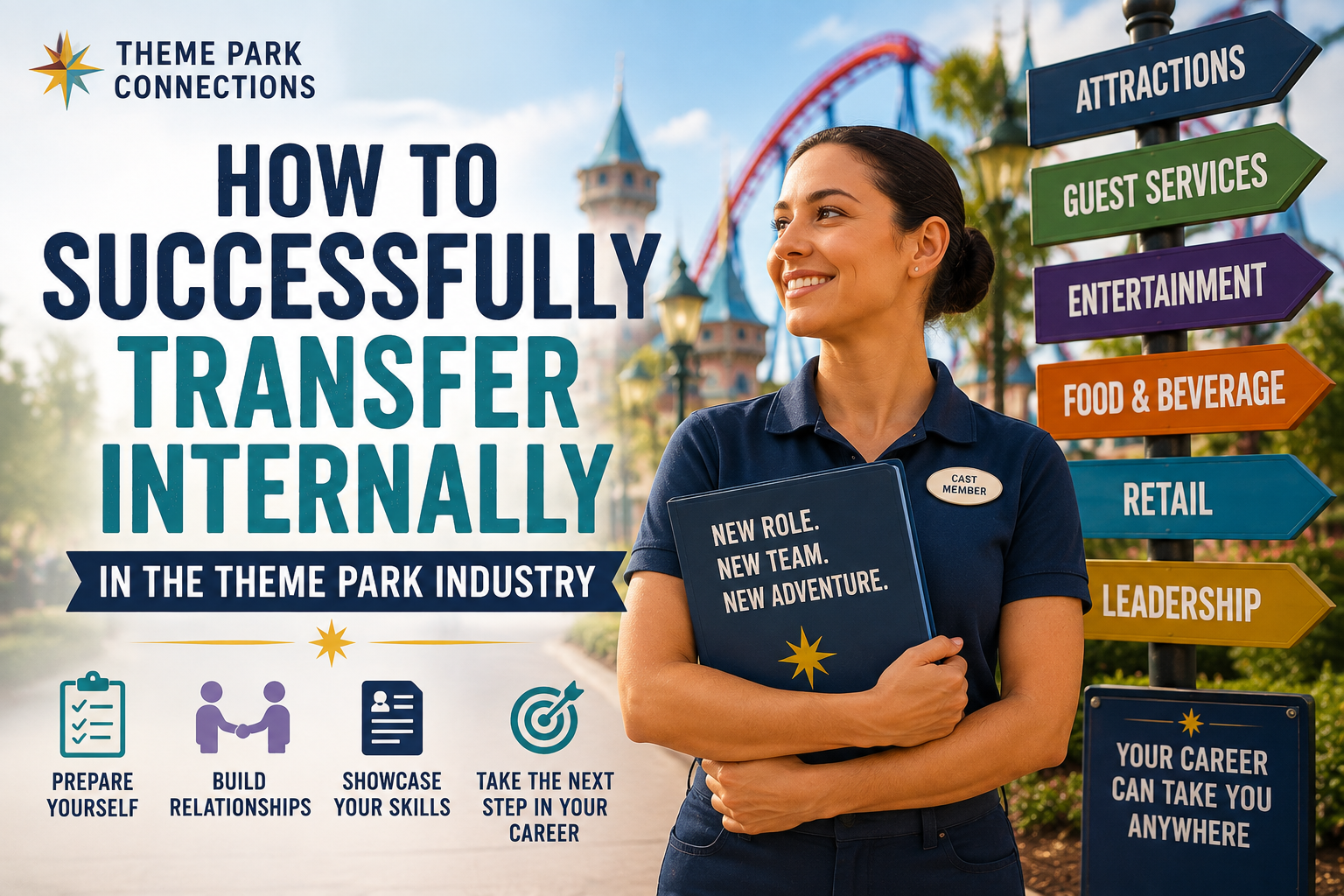
How to Make a Successful Internal Transfer in the Theme Park Industry
Moving from one department to another can be one of the best ways to build a long-term theme park career. A role in attractions can lead to guest services, entertainment, food and beverage, hospitality, training, or leadership. But an internal transfer is more than submitting an application and hoping for the best. It requires preparation, professionalism, and a clear understanding of how your current experience connects to the position you want.
Employees who approach the process thoughtfully can use an internal transfer to gain new skills, expand their network, and discover a career path they may not have considered when they first joined the industry.
Start by Understanding Why You Want to Move
Before looking at job postings, take time to identify what is motivating your interest in a new department. Wanting a change is understandable, but “I’m ready to leave my current role” is not always the strongest explanation during an interview.
Consider what you want to learn or accomplish next. For example, you may want to:
- Develop leadership experience
- Work more directly with guests
- Build technical or operational skills
- Move into entertainment or event production
- Gain experience in resort or hospitality operations
- Prepare for a future supervisory position
A clear goal helps you choose the right opportunity and explain your decision positively. Instead of focusing on frustrations in your current area, talk about the skills you have developed and how you hope to apply them in a new environment.
Research the Department Before Applying
An internal transfer gives you an advantage: you already understand the organization’s culture, guest expectations, and basic workplace standards. However, that does not mean you automatically understand the department you want to join.
Learn as much as you can about the new role before applying. Talk with employees who currently work there, observe how the operation functions, and review the responsibilities listed in the posting. If possible, ask thoughtful questions about training, scheduling, peak periods, and the skills that help new team members succeed.
Questions Worth Asking
- What does a typical shift look like?
- What challenges do new employees usually face?
- Which skills are most valuable in this department?
- How is success measured during training?
- What career paths commonly develop from this position?
These conversations can help you decide whether the role is a genuine fit. They may also introduce you to professionals who can offer useful advice during the application process. Networking internally should not be treated as asking someone to guarantee you a position. The goal is to learn, build professional relationships, and make an informed decision.
Connect Your Current Experience to the New Role
One of the most common mistakes employees make during an internal transfer is assuming hiring leaders already know what they do. They may recognize your department, but they probably do not know the full range of your responsibilities or accomplishments.
Prepare specific examples that demonstrate transferable skills. An attraction operator may have experience with safety procedures, emergency communication, crowd movement, and maintaining composure under pressure. Those skills can apply to guest services, operations leadership, or training.
A food and beverage employee may bring experience with point-of-sale systems, cash handling, allergen awareness, inventory routines, and managing long lines. Those abilities can transfer to retail, hospitality, or event operations.
Entertainment employees often develop strong communication, timing, teamwork, and audience-awareness skills. Maintenance team members may offer troubleshooting, documentation, preventive maintenance, and problem-solving experience that can support many technical or operational roles.
When preparing your résumé or application, describe what you did and the impact of your work. Compare these two statements:
- “Worked at an attraction.”
- “Operated a high-volume attraction while following safety procedures, communicating operational changes, and assisting guests with a wide range of needs.”
The second statement gives a hiring leader a much clearer picture of your abilities.
Speak With Your Current Leader Professionally
Depending on your organization’s process, your current leader may learn about your application during the transfer process. Even if notification is handled later, having a professional conversation early can prevent misunderstandings.
Approach the discussion as a career-development conversation rather than an announcement that you are unhappy. Explain what interests you about the new role, what skills you hope to build, and how you plan to continue supporting your current team while the process moves forward.
A strong leader may be able to help you identify development opportunities, recommend training, or connect you with someone in the department you are considering. They may also provide honest feedback about areas you need to strengthen before applying.
Not every leader will respond exactly as you hope. Some departments may be concerned about staffing, timing, or operational needs. Remain respectful and avoid discussing the transfer casually with coworkers before you understand the official process. Your professionalism during this stage can influence how people remember you long after you move to a new role.
Prepare for the Internal Interview
An internal interview may feel less formal than an external interview, but it still deserves serious preparation. The hiring team wants to know whether you can succeed in a different environment, not simply whether you are a reliable employee in your current position.
Be ready to answer questions such as:
- Why are you interested in this department?
- What have you learned in your current role?
- Tell us about a difficult guest interaction.
- Describe a time you handled an operational challenge.
- What would you need to learn during training?
- How would your current leader describe your work?
Use real examples and explain the result. A simple structure can help: describe the situation, explain the action you took, and share what happened afterward. Avoid criticizing your current department or suggesting that the new role will be easier. Theme park operations are demanding in different ways, and hiring leaders understand that.
Show That You Are Ready to Learn Again
Internal candidates sometimes believe their company experience should allow them to skip the beginner stage. In reality, every department has its own terminology, routines, safety expectations, and guest-service challenges.
Demonstrate humility by acknowledging what you still need to learn. Explain how you have successfully completed training in the past and how you respond to feedback. A candidate who is dependable and coachable is often more valuable than one who assumes they already know everything.
Handle the Transition With Care
If you are selected, continue treating your current team with respect. Finish responsibilities that have been assigned to you, communicate clearly about your transition, and avoid mentally checking out before your final day.
Your reputation follows you throughout the attractions industry. Former coworkers may become future supervisors, trainers, peers, or professional references. Leaving a department on good terms protects those relationships and makes it easier to return to your original area someday if your career path changes.
During your first weeks in the new role, focus on listening and learning. Ask questions, take notes, and pay attention to how experienced employees handle the operation. Your previous experience is valuable, but it should support your development rather than prevent you from adapting to a new department.
Build a Career, Not Just a Change of Schedule
An internal transfer can provide a fresh start, but its greatest value is the experience it adds to your professional story. Each department teaches you something different about guests, operations, teamwork, and leadership.
Approach the move with a clear purpose, prepare examples that show your transferable skills, and maintain strong relationships throughout the process. A thoughtful transfer can become the next step toward supervision, training, specialty operations, or a broader attractions-industry career.
Continue Building Your Theme Park Network
Your next opportunity may come from a conversation with someone outside your current department. Theme Park Connections gives people working throughout the theme park and attractions industry a place to connect with other professionals, expand their network, share experiences, and discover opportunities across different departments and career paths. Join the community and keep building the relationships that can support your career.