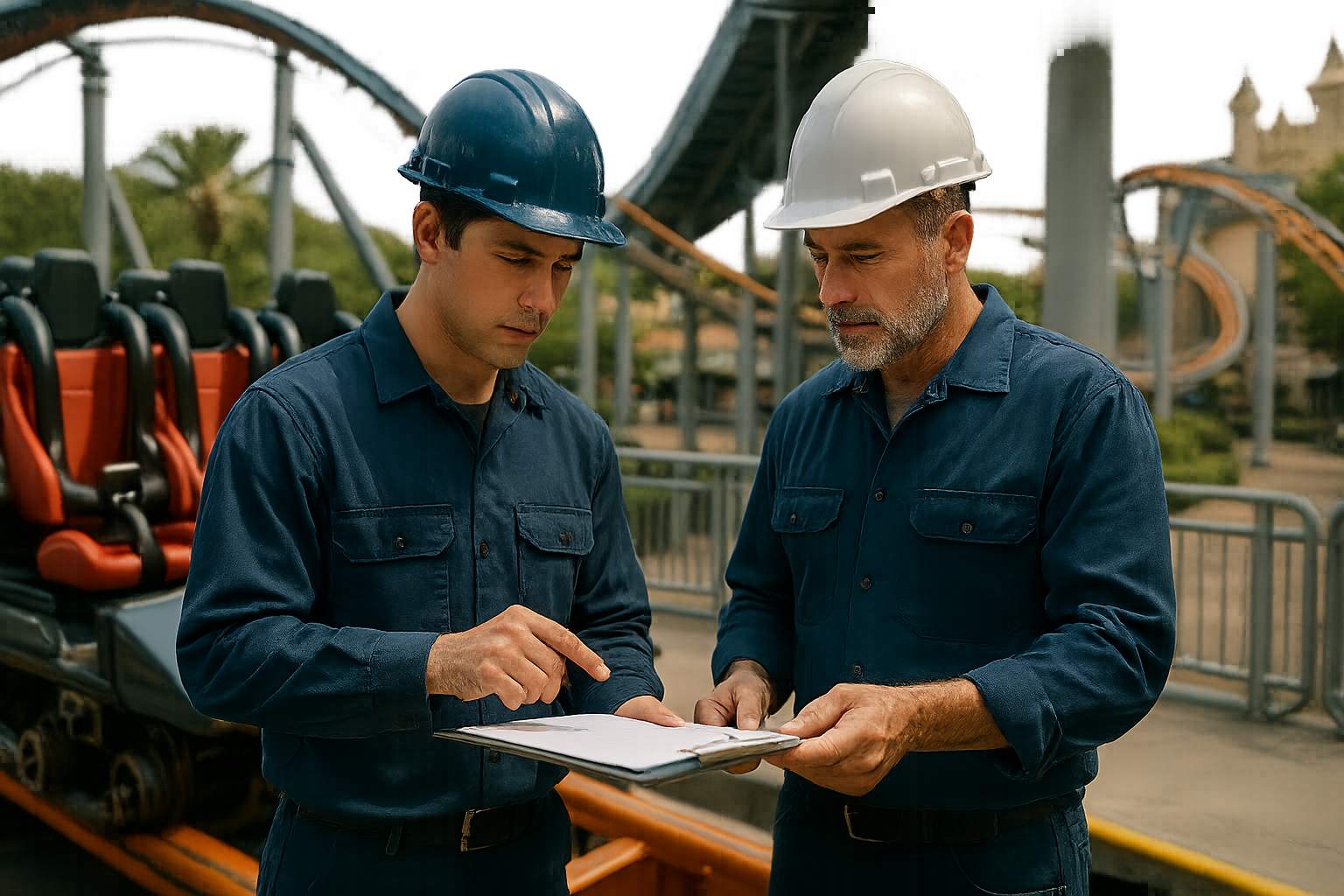
The Shift Handoff That Prevents Small Maintenance Issues from Becoming Major Ride Downtime
A ride does not always go down because of a dramatic mechanical failure. Sometimes the warning signs are much smaller: an unusual sound, a sensor that needed to be reset, a panel that was slower than usual, or a recurring issue that disappeared before the previous shift ended.
Those details can be easy to dismiss when the attraction is operating normally. They can also become extremely valuable information for the next team. A clear maintenance shift handoff helps technicians recognize patterns, prioritize inspections, and address developing problems before they affect operations, guest experience, or employee safety.
Why Maintenance Handoffs Matter
Theme park maintenance teams often work across multiple shifts, days, and specialties. The technician who notices an issue in the afternoon may not be the person responsible for opening inspections the next morning. Without an effective handoff, important information can become scattered across logbooks, work orders, radio conversations, or informal comments in the maintenance shop.
A strong handoff creates continuity. It gives the next technician a practical picture of what happened, what was checked, what remains unresolved, and what deserves additional attention.
This is especially important for issues that are not yet serious enough to remove an attraction from service. A single unusual vibration may not indicate an immediate failure. A repeated vibration reported by several technicians over multiple shifts deserves a different level of attention.
What Belongs in a Maintenance Shift Handoff?
An effective handoff should be specific enough to guide the next shift without becoming a long list of vague observations. The most useful information usually falls into several categories.
1. Unusual Conditions
Report anything that differed from normal operation, even if the attraction continued running. This could include:
- An unfamiliar sound during a particular portion of the ride cycle
- A change in vibration, speed, or movement
- A component that required more adjustment than usual
- A recurring fault or sensor alert
- Evidence of heat, wear, leakage, or unusual residue
- A door, gate, panel, or access point that behaved differently
Avoid relying on descriptions such as “sounded weird” or “acted strange.” Explain what happened, when it happened, and whether the condition could be repeated.
For example, “intermittent metallic noise near the brake run during three observed cycles” gives the next technician something actionable. It identifies the location, the operating phase, and the frequency of the issue.
2. Work Already Performed
The next shift needs to know what has already been inspected, adjusted, cleaned, reset, or replaced. This prevents duplicated effort and helps technicians evaluate whether a temporary correction solved the problem.
A useful handoff might include:
- The component or system inspected
- The tests performed
- Any adjustments made
- Parts or materials used
- Whether the issue improved, disappeared, or remained unchanged
- Any follow-up inspection recommended
“Checked and okay” is rarely enough detail. A better note explains what was checked and under what conditions. The goal is not to create unnecessary paperwork. The goal is to preserve the reasoning behind the work.
3. Open Work and Temporary Conditions
Some repairs or investigations continue across shifts. If a component has been placed under observation, a work area has been secured, or a temporary correction has been made, that information should be clearly communicated.
Temporary conditions deserve particular attention because they can be overlooked when the attraction appears to be operating normally. The incoming team should understand:
- What remains incomplete
- Whether additional testing is required
- What restrictions or precautions apply
- Who has been notified
- What would require the attraction to be removed from service
Employees should follow their employer’s documentation and escalation procedures rather than creating informal workarounds. A handoff supports those procedures; it does not replace them.
Describe the Problem So Someone Else Can Find It
One of the most valuable maintenance communication skills is learning to describe a problem in a way another person can investigate.
Try to include four basic details:
- Location: Where did the condition occur?
- Timing: When in the operating cycle did it happen?
- Frequency: Was it constant, intermittent, or observed only once?
- Effect: Did it affect operation, inspection results, or guest-facing performance?
Consider the difference between these two statements:
Vague: “Lift sounded rough today.”
Useful: “Noticeable increase in mechanical noise during the final portion of the lift on two consecutive cycles; no visible issue found during the visual inspection.”
The second description does not diagnose the cause. That is appropriate. It records an observation without making an unsupported conclusion.
Separate Observations From Assumptions
Technicians naturally develop theories about what may be causing a problem. Experience makes that knowledge valuable, but a handoff should distinguish between what was observed and what is suspected.
For example, “bearing failure” may be a premature conclusion if the only confirmed detail is an unusual sound. A more accurate note might state that an unusual sound was heard near a specific assembly and that further inspection may be needed.
This distinction helps the next technician approach the issue objectively. It also prevents a strong assumption from directing everyone toward the wrong component while another cause remains overlooked.
Use the Handoff to Identify Patterns
A single report may not reveal much. Several similar reports can reveal a developing trend.
Maintenance teams should pay attention when different employees independently report:
- The same sound or vibration
- The same fault appearing under similar conditions
- A component requiring repeated adjustment
- A problem that returns after a temporary correction
- Different symptoms occurring in the same area
Pattern recognition is one reason accurate documentation matters. A minor issue reported once may be routine. The same issue appearing across several shifts may justify a deeper inspection or a change in maintenance priority.
Make the Handoff a Conversation When Possible
Written records are essential, but a brief face-to-face or radio handoff can add important context. The outgoing technician can explain what the issue looked or sounded like, while the incoming technician can ask follow-up questions.
A useful conversation does not need to be lengthy. It might cover:
- The most important condition discovered during the shift
- Any unfinished work
- Concerns that need attention before the next operating period
- Recent changes from normal performance
- Any communication already made to leadership or operations
When time is limited, prioritize information based on risk, urgency, and the possibility that the issue could affect the next shift. Not every detail carries the same weight.
Skills That Make Strong Handoffs Possible
Clear maintenance communication develops through practice. Employees can strengthen this skill by learning to:
- Write concise technical notes
- Use consistent equipment and component terminology
- Record observations promptly instead of relying on memory
- Ask clarifying questions during shift changes
- Recognize the difference between a completed task and a resolved issue
- Escalate concerns through the appropriate chain of communication
These habits are valuable beyond maintenance. Supervisors, trainers, operations leaders, and technical specialists all depend on accurate information moving between people. An employee who communicates clearly during a shift handoff demonstrates judgment, reliability, and respect for the work of the next team.
Small Details Protect Big Operations
A well-written maintenance handoff may seem routine, but it can influence inspection quality, repair planning, attraction availability, and team trust. It ensures that the next technician is not starting from zero and that minor changes in performance are not lost between shifts.
For anyone building a career in theme park maintenance or engineering, learning to provide useful handoffs is a practical way to stand out. Technical ability matters, but so does the ability to leave accurate information for the people who follow.
Theme Park Connections gives professionals throughout the attractions industry a place to connect with other industry employees, share experiences, learn about different departments, and discover career opportunities. Conversations with people in maintenance, operations, leadership, and other areas can provide a broader understanding of how each department contributes to a successful park. Visit ThemeParkConnections.com to expand your professional network and build connections throughout the theme park and attractions industry.