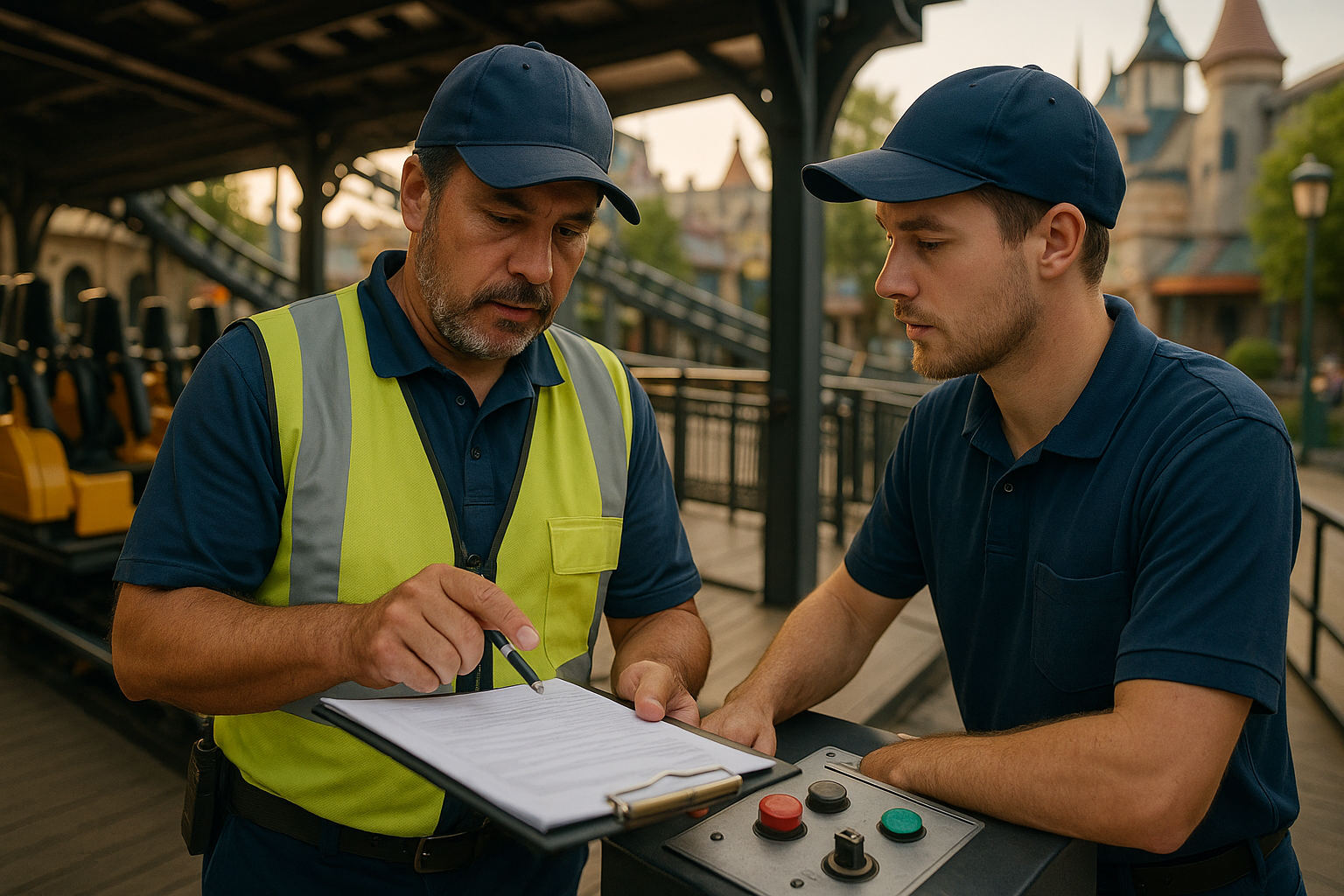
The Maintenance Handoff: Turning Shift Notes Into Safer, Faster Repairs
A maintenance shift rarely ends when the clock says it does. A ride may be operating again, but a small concern is still being monitored. A replacement part may have arrived but not yet been installed. A technician may have noticed an unusual sound that does not require immediate shutdown, but should not be forgotten overnight.
That is where the maintenance handoff becomes critical. A clear handoff helps the next team understand what happened, what was completed, what remains open, and what needs attention first. A rushed or incomplete handoff can lead to duplicated work, missed warning signs, delayed repairs, and unnecessary operational disruption.
For theme park maintenance and engineering teams, strong shift communication is not paperwork for its own sake. It is part of safe, organized, and efficient daily operations.
What a Maintenance Handoff Needs to Accomplish
A useful handoff should allow the incoming employee or crew to answer several basic questions quickly:
- What equipment or area was worked on?
- What problem was reported?
- What inspections, tests, or repairs were completed?
- What remains unresolved?
- Are there restrictions, monitoring requirements, or follow-up tasks?
- Who has already been notified?
The handoff should provide enough context for the next person to continue the work without starting from the beginning. At the same time, it should avoid unnecessary detail that makes the important information difficult to find.
A good handoff is not simply a list of tasks. It is a practical summary of the equipment’s current condition and the reasoning behind the next steps.
Separate Completed Work From Open Concerns
One of the most common communication problems in maintenance is failing to distinguish between work that is finished and work that is still being monitored.
For example, a note that says “checked lift motor” leaves too many questions. Was the motor inspected visually? Were connections checked? Was a test run completed? Was a problem found and corrected? Is additional observation required?
A stronger handoff might explain that the motor was inspected, a loose connection was corrected, and the equipment was tested. If a vibration was still present but remained within the team’s acceptable operating criteria, that should also be documented according to the department’s established process.
Use clear language to identify the status of each issue:
- Completed: The task has been performed and no further action is currently required.
- In progress: Work has started but additional steps remain.
- Monitoring: The equipment is being observed for a specific condition or change.
- Awaiting parts or approval: The next step depends on something outside the immediate crew’s control.
- Escalated: The concern has been communicated to the appropriate supervisor, engineering group, or operations partner.
This distinction helps prevent a partially completed repair from being mistaken for a resolved one.
Describe the Problem, Not Just the Component
Another weak handoff simply names a part: “sensor issue,” “gate problem,” or “hydraulic leak.” Those descriptions may be familiar to the person who wrote them, but they are not always useful to someone arriving hours later.
Whenever possible, describe what was observed and under what conditions it occurred. Include details such as:
- When the issue was first noticed
- Whether it occurred continuously or intermittently
- What operating condition was present
- What sounds, movements, readings, or visual signs were observed
- Whether the issue affected operation, appearance, comfort, or guest flow
- What troubleshooting steps have already been attempted
For example, “brake issue” is vague. “Unusual noise observed during the final stopping sequence; no issue reproduced during two subsequent test cycles” gives the incoming team a clearer starting point.
Describing symptoms rather than jumping immediately to a diagnosis also helps prevent assumptions. The first employee may suspect one component, while the actual cause is elsewhere. Accurate observations give the next technician room to evaluate the issue independently.
Include the Operational Context
Maintenance work in a theme park does not happen in isolation. A repair may affect ride availability, show schedules, restaurant equipment, hotel systems, backstage access, or guest movement. The incoming team needs to know how the issue connects to the broader operation.
A handoff may need to identify whether:
- The attraction or system is currently operating
- Operations has been informed of a limitation or monitoring plan
- A temporary adjustment has been made
- A follow-up inspection is needed before opening
- The problem could affect a scheduled performance, event, or high-volume period
- Another department is waiting for a status update
This does not mean maintenance notes should become lengthy operational reports. It means the technical information should be connected to the decision-making that other teams must carry out.
For instance, an entertainment technician handing off a lighting problem should identify whether the issue affects the entire show, one cue, a backup system, or only a nonessential visual element. A facilities technician working on a restaurant refrigeration concern should make the status and next steps clear to the appropriate food and beverage partners.
Make the Next Action Obvious
The best handoffs do not leave the incoming employee guessing what should happen next. A clear next action might include inspecting a specific component, contacting a vendor, checking a replacement part, performing a scheduled test, or updating a supervisor after a defined observation period.
When writing the next step, include the reason behind it. “Check again later” is less useful than “Reinspect after the next operating cycle because the noise was only observed under load.” The explanation helps the next technician understand the purpose of the task rather than treating it as a routine box to check.
If there are multiple open issues, identify priorities. A concern that could affect safe operation or equipment reliability should not be buried beneath cosmetic repairs or routine requests.
Use a Consistent Handoff Structure
Every department may use a different log, software system, radio process, or written form. Regardless of the format, a repeatable structure makes information easier to scan. A practical sequence is:
- Location or asset: Identify the ride, facility, system, or work area.
- Reported condition: Explain what was observed.
- Work performed: Record inspections, adjustments, tests, or repairs.
- Current status: State whether the issue is complete, open, or under observation.
- Next action: Explain what the incoming team should do.
- Notifications: Note which departments or leaders have been informed.
This structure is especially useful during busy operating periods, when the incoming employee may need to review several updates quickly before responding to a call.
Take Ownership of the Handoff
Whenever possible, a handoff should be more than a written note left behind. A brief face-to-face conversation, phone call, or radio update can clarify details that do not fit neatly into a log.
The person giving the handoff should be prepared to answer questions such as:
- What made this issue unusual?
- What was ruled out?
- What would cause you to escalate the concern?
- What should the next person watch for?
- Is there anything that could be misunderstood from the written note?
The person receiving the handoff should repeat or confirm the most important points when appropriate. This closed-loop communication helps both employees catch misunderstandings before they become operational problems.
Build a Reputation for Reliable Communication
Technical skill gets maintenance employees noticed, but reliable communication builds trust across departments. Operations leaders are more confident when maintenance updates are specific. Supervisors can prioritize resources more effectively. Incoming technicians spend less time reconstructing what happened and more time solving the actual problem.
Strong handoffs also develop skills that support future career growth, including documentation, prioritization, troubleshooting, teamwork, and professional judgment. Those skills matter for lead technicians, coordinators, supervisors, planners, and engineering roles.
Before ending a shift, take a few minutes to review your notes from the perspective of someone who was not there. If you received this information with no additional context, would you know what happened, what remains open, and what to do next?
That simple question can turn a routine shift log into a valuable operational tool.
Connect With Other Attractions Professionals
Maintenance employees often learn the most from conversations with people who work on different systems, in different facilities, or at different stages of their careers. ThemeParkConnections.com gives professionals throughout the theme park and attractions industry a place to connect with other industry professionals, expand their networks, share experiences, and learn about departments beyond their own.
Whether you work in maintenance, engineering, operations, hospitality, entertainment, food and beverage, retail, or guest services, building connections can help you discover career opportunities and better understand how the many parts of the attractions industry work together.