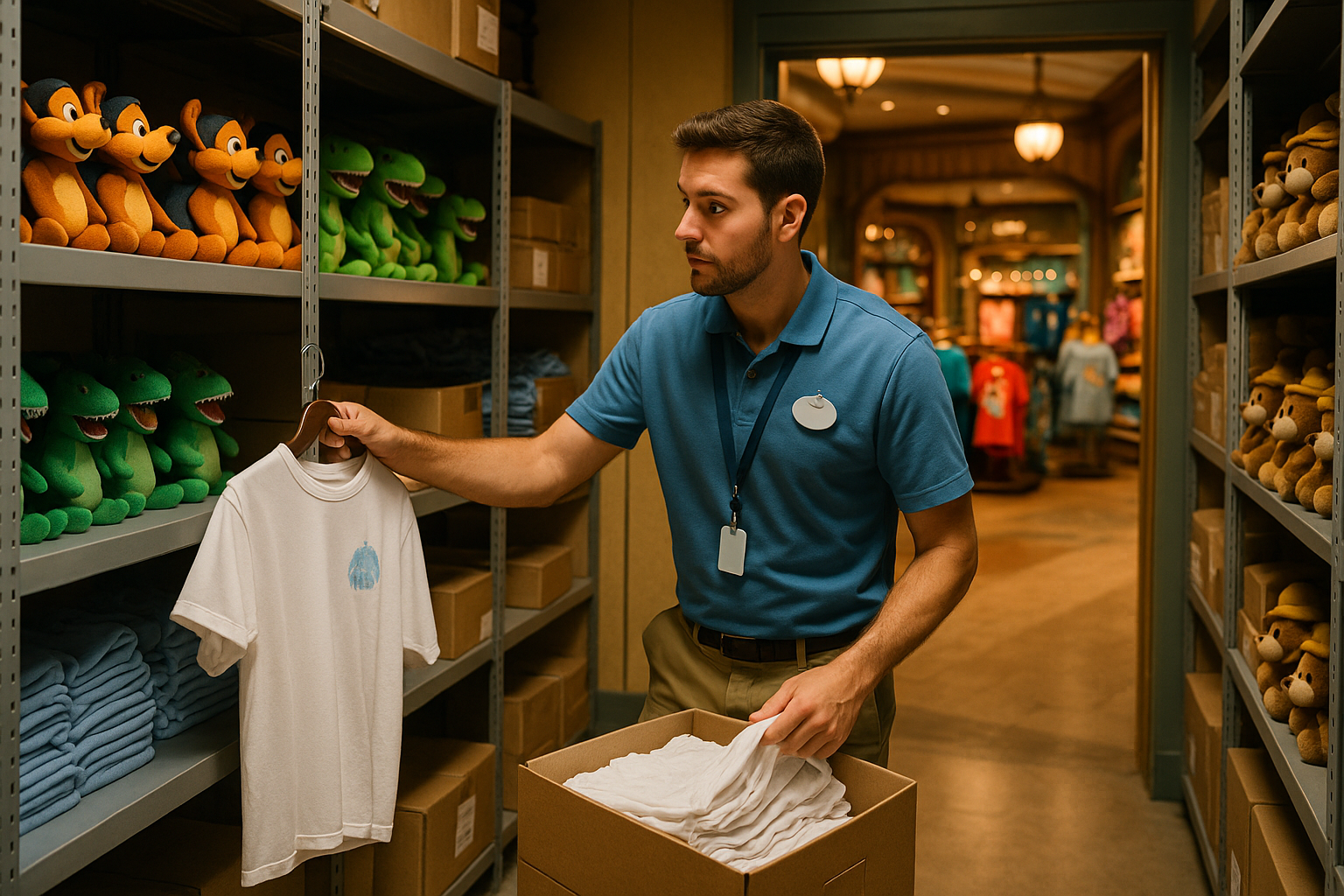
The Store Opens Before the First Guest Arrives: A Look Inside Theme Park Retail Stockrooms
Guests may notice a merchandise shop when the doors open, the displays are full, and the shelves look effortless. What they do not see is the work that happens before opening: deliveries checked in, high-demand items replenished, damaged merchandise removed, displays adjusted, and the stockroom organized for the rush ahead.
For retail employees, the stockroom is not simply a place to store extra products. It is an operational center that affects sales, guest satisfaction, safety, and the pace of the entire shop. Learning how to manage that space well can also build skills that apply to inventory control, visual merchandising, leadership, and other departments throughout the attractions industry.
Why the Stockroom Matters to the Guest Experience
A guest rarely asks whether a store’s stockroom is organized. They simply expect the item they want to be available, easy to find, and ready to purchase.
When the stockroom is poorly maintained, the effects reach the sales floor quickly. Employees may spend too much time searching for merchandise, popular sizes or colors may remain unreplenished, and receiving new deliveries can become difficult. During a busy park day, even a few extra minutes spent locating a product can create longer lines and frustrated guests.
A well-run stockroom supports the sales floor by helping employees:
- Replenish fast-selling merchandise quickly.
- Locate backup inventory without unnecessary searching.
- Identify low-stock items before they sell out.
- Separate damaged, defective, or returned products.
- Receive new shipments more efficiently.
- Keep walkways and work areas clear.
The stockroom may be backstage, but its condition directly influences what guests experience in front of house.
What Happens Before the Store Opens?
Opening preparation varies by employer, store size, and location, but the basic priorities are often similar. The goal is to make sure the sales floor is ready and the team can respond to demand once guests begin arriving.
Reviewing the Sales Floor
Retail employees typically begin by walking the sales floor and identifying what needs attention. Empty pegs, low tables, incomplete displays, and misplaced products can all signal that replenishment is needed.
This walk-through helps employees prioritize their time. A nearly empty display of a popular souvenir may require immediate attention, while a less prominent shelf can wait until the most urgent tasks are complete.
Employees who develop a habit of observing the floor carefully become better at anticipating demand. They begin to recognize which products disappear quickly, which displays need frequent recovery, and which items guests regularly ask about.
Pulling Replenishment Merchandise
Once priorities are identified, employees locate products in the stockroom and bring them to the sales floor. This sounds straightforward, but it requires accuracy and attention to detail.
Two products may have similar packaging but different sizes, designs, or price points. A rushed pull can result in the wrong item being placed on the floor, creating additional work later. Reading product labels carefully and confirming quantities before leaving the stockroom helps prevent avoidable mistakes.
When possible, employees should group merchandise logically while pulling it. Products for the same display or section can be moved together, reducing repeated trips and making the replenishment process more efficient.
Checking Condition and Presentation
Merchandise pulled from storage should be inspected before it reaches the sales floor. Packaging may be crushed, items may be dusty, or products may have been damaged during handling or transportation.
Sending damaged merchandise to the floor can create an awkward interaction when a guest notices the problem at checkout or after purchase. Setting aside questionable items and following the location’s established process for damaged goods protects both the guest experience and inventory accuracy.
Presentation matters as well. Products should be faced forward, arranged consistently, and placed where guests can easily see and reach them. In retail, a full display is not necessarily a successful display if the merchandise is disorganized or difficult to shop.
Stockroom Organization Is a Safety Issue
Organization is often discussed as a productivity concern, but it is also part of working safely. Boxes left in walkways, unstable stacks, blocked exits, and overcrowded shelves can create hazards for employees working in a confined space.
Good stockroom habits include:
- Keeping walkways clear.
- Returning unused equipment and supplies to their proper locations.
- Storing heavier products in a way that reduces the risk of falling items.
- Using approved equipment correctly when reaching elevated storage.
- Reporting damaged shelving, leaks, broken fixtures, or other hazards.
- Avoiding the temptation to create temporary piles that remain in place throughout the shift.
Employees should not improvise around a safety concern simply because the store is busy. If something is unstable, blocked, or damaged, it should be reported through the appropriate channel and addressed according to local procedures.
The Challenge of the Midday Rush
The opening routine is only the beginning. A retail stockroom must continue supporting the sales floor during the busiest parts of the day, often while employees are also assisting guests, operating registers, recovering displays, or answering product questions.
This is where prioritization becomes essential. An employee may receive several requests at once: a guest needs a different size, a display is nearly empty, and a coworker needs help locating a product. Treating every task as equally urgent can create confusion.
A practical approach is to consider:
- Guest impact: Is someone waiting for assistance right now?
- Sales impact: Is a high-demand product unavailable on the floor?
- Safety impact: Is there a spill, obstruction, or unstable item?
- Time sensitivity: Does the task affect an upcoming delivery, event, or operational deadline?
Clear communication with the team also helps. If an employee must leave the sales floor to retrieve merchandise, letting a coworker know where they are going can prevent duplicate work and ensure guests are still supported.
Small Habits That Make Stockroom Work More Efficient
Efficiency does not always require a major change. Small, consistent habits can make a significant difference during a long shift.
Return Items to Predictable Locations
If every employee places merchandise wherever space is available, the stockroom becomes difficult to navigate. Returning products to consistent locations allows the next employee to find them more quickly.
Notice Patterns in Demand
Pay attention to what sells first, what guests ask for repeatedly, and which products require frequent replenishment. Sharing those observations with a lead or supervisor can improve future stocking priorities.
Keep Communication Specific
Instead of saying, “We are low on shirts,” provide useful information: which design, which sizes, and approximately how many remain. Specific communication helps leaders make better decisions and reduces follow-up questions.
Finish the Task Completely
Partially completed replenishment can create confusion. If merchandise is brought to the floor, finish the display when possible. If a task must be interrupted, leave a clear update for the next employee.
Skills Retail Employees Can Build in the Stockroom
Stockroom work develops more than lifting and organizing skills. Employees practice inventory awareness, time management, visual standards, communication, problem-solving, and safe work habits.
These skills can support future opportunities in retail leadership, inventory control, merchandise planning, warehouse operations, visual merchandising, purchasing, and other departments. Employees who consistently keep the operation organized also demonstrate reliability—an important quality for leads and supervisors.
The next time a shop opens with full shelves and an orderly sales floor, remember that the guest experience began backstage. A well-managed stockroom helps the entire retail team work with greater confidence and gives guests a smoother, more enjoyable visit.
Connect With Other Attractions Professionals
Retail employees do not work in isolation from the rest of the theme park industry. Their experience with guest interaction, inventory, presentation, communication, and daily operations can connect them with opportunities in hospitality, food and beverage, entertainment, attractions, and leadership.
ThemeParkConnections.com gives people working throughout the theme park and attractions industry a place to connect with other professionals, expand their networks, share experiences, learn about different departments, discover career opportunities, and build relationships across the industry. For retail employees looking to grow beyond the sales floor—or simply learn how other departments operate—those connections can be a valuable part of building a long-term attractions career.